
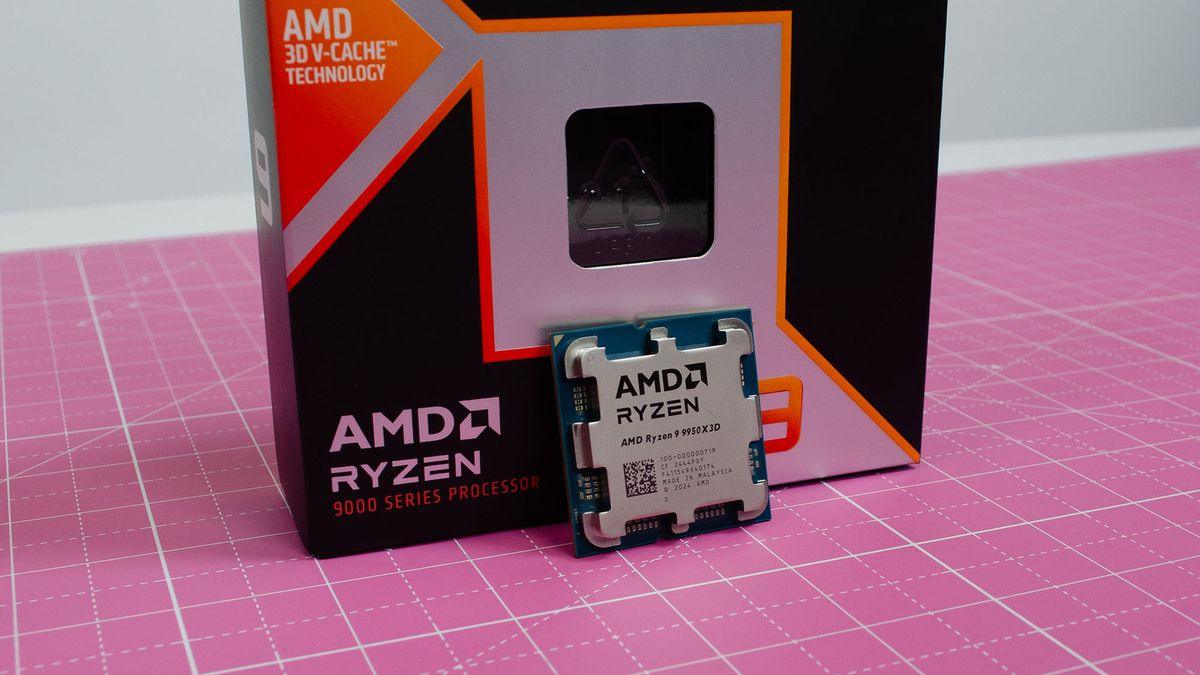
- The AI cacost boost of Asus will improve the load of the workload of the AI by almost 20%
- The tests were carried out with the three most recent AMD Ryzen 9000 processors
- Ryzen 7 9800x3d of AMD seems to benefit the most
Asus launched a BIOS functionality called AI Cache Boost which would increase the performance of the AI workload on the Ryzen 9000 processors of AMD up to 19.35%.
AI Cache Boost is part of a new BIOS firmware update for ASUS AMD 800 series cards, which “would pump AI Ryzen’s AI system performance for AI AMD applications, such as work with large -language models (LLMS).
More specifically, Asus tested the two AMD Ryzen 9950x3d and Ryzen 9,9900x3d recently published processors and their optimizations benefiting “IA enthusiasts”.
To use the technology with a processor of the Ryzen 9000 series and a motherboard of the ASUS AMD 800 series, then, you access the UEFI BIOS utility, head in the Extreme Tweaker tab, then switch AI Boost to “ activated ” and that will be ready to manage more AI workloads.
Asus claims that its cache AI boost includes the overclocking of the infinity fabric clock to 2100 MHz, which would increase the total bandwidth of data transfers between the processor hearts of the Ryzen 9000 series, the cache and the memory to work with models of important languages.
The tests of the material manufacturer were carried out with a Rog Crosshair X870E hero motherboard, an RTX 5090 and 32 GB of RAM DDR5 as a test bench. In addition to the two most recently published AM5 chips, the 9800X3D was also tested in Geekbench AI with the ONNX DirectML frame as a reference.
On average, the boost of the Asus cache experienced a 5% increase in geekbench ai with its precision and half-resort scores for both 9950x3d and 9900x3d. However, the 9800X3D saw the highest difference, from 7.93% with its half-calm score (comparing the default value of 63365 to 68393).
The 12.5% claimed performance hump was also made on the 9800x3d with the computer vision reference of Procyon AI, a radical improvement of 1680 compared to 1490. Based on the published benchmarks, it seems that the popular playing processor could benefit more than the two main models.
Asus recognizes that it is still “first days” for the RTX 5090, so he had carried out tests with the previous generation (but always excellent) RTX 4090. It is this pairing that we see the biggest boost, in tandem with the existing bios feature turbo game (which allows the CPU to function more effectively by deactivating the simultaneous multithreading).
Using both the AI cache mode and the Turbo Game Mode together, the Ryzen 9 9950x3d AMD saw a leap from 1426 to 1702 in the UL procyon AI reference Vision Vision. Without turbo game mode, however, the difference was minimal at only 1485 (4.1%). To get the best experience, you may have the two features of the activated BIOS.
One step ahead for workloads on AI on niche equipment
Asus’s landmarks reveal a slight boost to a significant uprising of AI performance on the Ryzen 9000 series, when associated with graphics cards of 90 classes of 90 to make a good measure. Based on the averages, it seems that the Ryzen 7 9800X3D benefits the most (except one or two high -end exceptions).
That said, to use this feature, you will need a specific series of the motherboard and also the use of the turbo game mode to go further. If you are thinking of building a platform only for AI workloads, it seems that the new BIOS functionality could be a little blow in the arm to make things a little faster and easier, however, it is questionable that around 3 to 6% in most tests deserve to be upgraded.


