
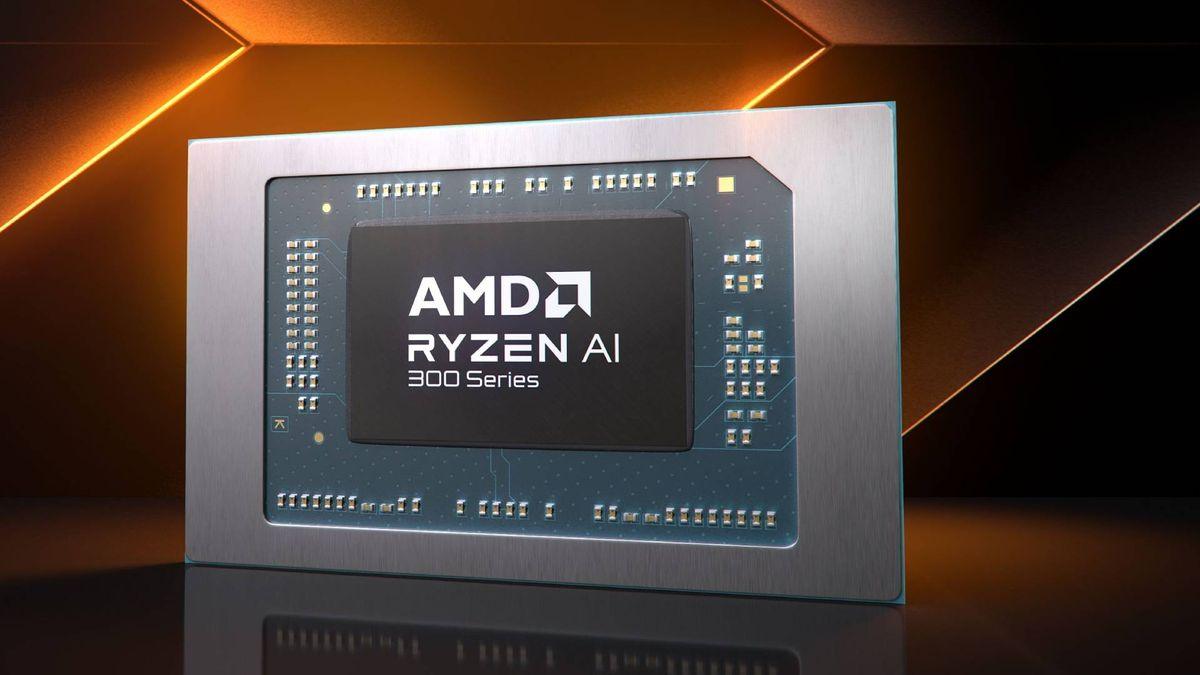
- AMD’s “sound wave” chip is supposed to be an apu based on the arm
- It is supposed to include CUs “RDNA 3.5+” which are “improved” for automatic learning
- Mlid’s sources allege that the chip will have an infinite cache of 16 MB
New alleged information has been discovered on the APU “Sound Wave” AMD “Sound Wave”, saying that it will be more towards automatic learning, with “improved DNA 3.5” CIs.
The news comes from the reliable law of the leakage of Moore equipment is died in a new YouTube video, with a long list of updated specifications cited from “end of March 2025”. This is a substantial update on the previous rumor that we covered in March 2024.
Previously, we thought that the AMD sound wave processor would be a Zen 6 mobile chipset. However, it is now alleged that the processor will be an APU based on ARM, similar to the Snapdragon X range of Qualcomm instead.
More specifically, MLID’s sources claim that the APU of the AMD sound wave will be built on a 3NM TSMC node, targeting the 5-10W factors, with two performance cores, four efficiency cores (six in total) and 4 MB of Cache L3. Above all, it is alleged that there will be four CUs of 3.5 DNA with “improved ML performance” which received the name “RDNA 3.5+” unofficially, to indicate a difference compared to the current RDNA 3.5 CUS available on flea.
Its capabilities for IA computer science seem to be a main objective, as can testify to the supposed “4th generation AI engine” supported by 16 GB of RAM LPDDR5X-9600 which would be for “standard” systems. Mlid does not know if the new RDNA 3.5 Cu will allow FSR 4. However, the game seems to be a secondary concern for this silicon.
An interesting development for the APU of sound waves is that it will include 16 MB of memory access to the last level (Mall) (known to AMD users under the name of Infinity cache) which is unusual for a 5-10W APU. It’s curious because “Strix Point” does not have that, which would be “documented” by Mlid.
Mlid later underlines how the AI engine, the CPU and the GPU will all work on the same controller, so having the additional bandwidth of 16 MB of infinite cache shared between them could be beneficial, even on such a modest chip.
Compromise Ai without the draw
Although it is still early for Sound Wave, all the rumors we heard from the chipset sound as if it were mainly intended for the workloads of AI without the (generally) high power of rival equipment. 16 MB of Infinity Cache does not seem too dramatic of an inclusion at the beginning, however, before taking into account that the chip is only evaluated between 5 and 10 W TDP.
In addition, RDNA 3.5+ CUS could be a large driving factor in AI workloads, according to their optimization for automatic learning. With a release date in 2026 claimed, it is unlikely that we will receive an official word from AMD so early, but we now know that this could be an optimized APU based on ARM rather than the chip that inaugurates Zen 6 as we think before.


