
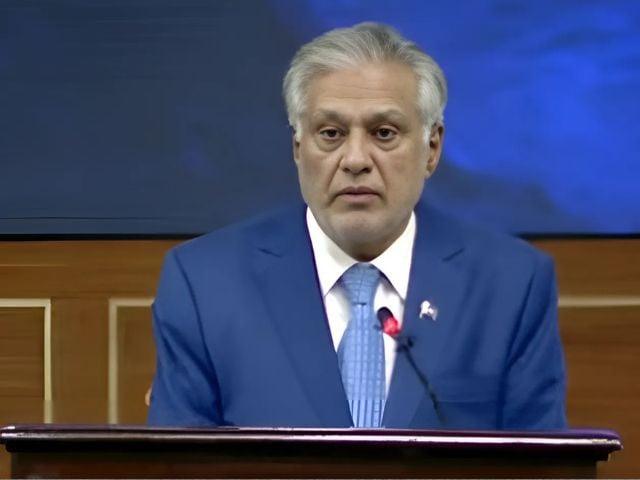
Pakistan Mineral Investment Forum 2025 (PMIF25) opened Tuesday in Islamabad with a high -level commitment to unlock the vast mineral wealth of the country and position it as a competitive mining center in the world.
The two -day forum aims to attract foreign direct investments and to forge long -term partnerships by highlighting the mineral potential of Pakistan.
More than 2,000 participants were present, including 300 international delegates from the United States, China, Saudi Arabia, the United Kingdom, Finland, Denmark and Kenya.
In its opening remarks, Vice-Prime Minister Ishaq Dar said that the country was “strategically placed to emerge as a world mining power”, citing its rich geological landscape and its underused mineral resources.
He said Pakistan housed major deposits such as Reko Diq, as well as large reserves of rare earth elements, industrial minerals and precious stones sought on a global scale such as the peridot and the emerald.
DAR launched the framework for the harmonization of 2025 national minerals at the event – an integrated reform initiative designed to attract investors and rationalize policy in a sector which currently contributes only 3.2% to national GDP.
“The mineral sector can redefine our economy, our supply chains and our export profile,” said DAR. “We lay the foundations for a robust ecosystem for stakeholders, including local and foreign partners.”
The forum, jointly supported by the federal and provincial governments, also experienced the attendance of Prime Minister Shehbaz Sharif and the Chief of Staff of the Asim Murnir army – reflecting solid institutional support behind the reforms.
In a demonstration of international interest, the United States was represented by Eric Meyer, senior manager of the office of the South Affairs and Central Affairs office, while the Minister of Minerals in Saudi Arabia spoke to explore strategic cooperation.
Federal Minister of Power Ali Perviz Malik underlined the government’s constant efforts to stabilize the economy and said that legal and administrative frameworks were harmonized to improve the ease of doing business.
He noted that mining remains a provincial subject, but coordination with all provinces was underway to align the objectives and transparency of operations.
“Thanks to institutions such as the Special Investment Facilitation Council (SIFC), the oil division and the board of directors, we work in unison to bring a pro-investor environment,” said Malik.
He stressed that Balutchistan, in particular, had immense unexploited mineral wealth, adding that a particular concentration was given to the development of the province in this regard.
Commerce Minister Jam Kamal, speaking during a panel session, said Pakistan’s mineral potential could draw regional and global attention if security and regulatory concerns were treated.
“Balutchistan can pave the way in this transformation,” he said. “Our resource base is substantial and we are ready to provide the necessary facilitation for investment.”
Kamal described investment in minerals as a long-term commitment, urging foreign companies to explore joint ventures and public-private collaborations that extend beyond extraction.
The delegation of Saudi Arabia echoed from this point of view, the Vice-Minister of the Kingdom declaring that Riyadh actively evaluated partnership opportunities in the Pakistan mineral value chain.
Throughout the forum, several agreements and memoranda of understanding (MOUS) should be signed, marking what the organizers hope that it will be a turning point in the country’s mineral development strategy.
The event will end on April 9 with sectoral briefings, technical workshops and political panels aimed at identifying priority projects and compensating for regulatory obstacles for incoming investment.
For a country looking for new economic growth engines, the mineral sector is considered a major opportunity to stimulate exports, generate jobs and ensure long -term budgetary stability.


