
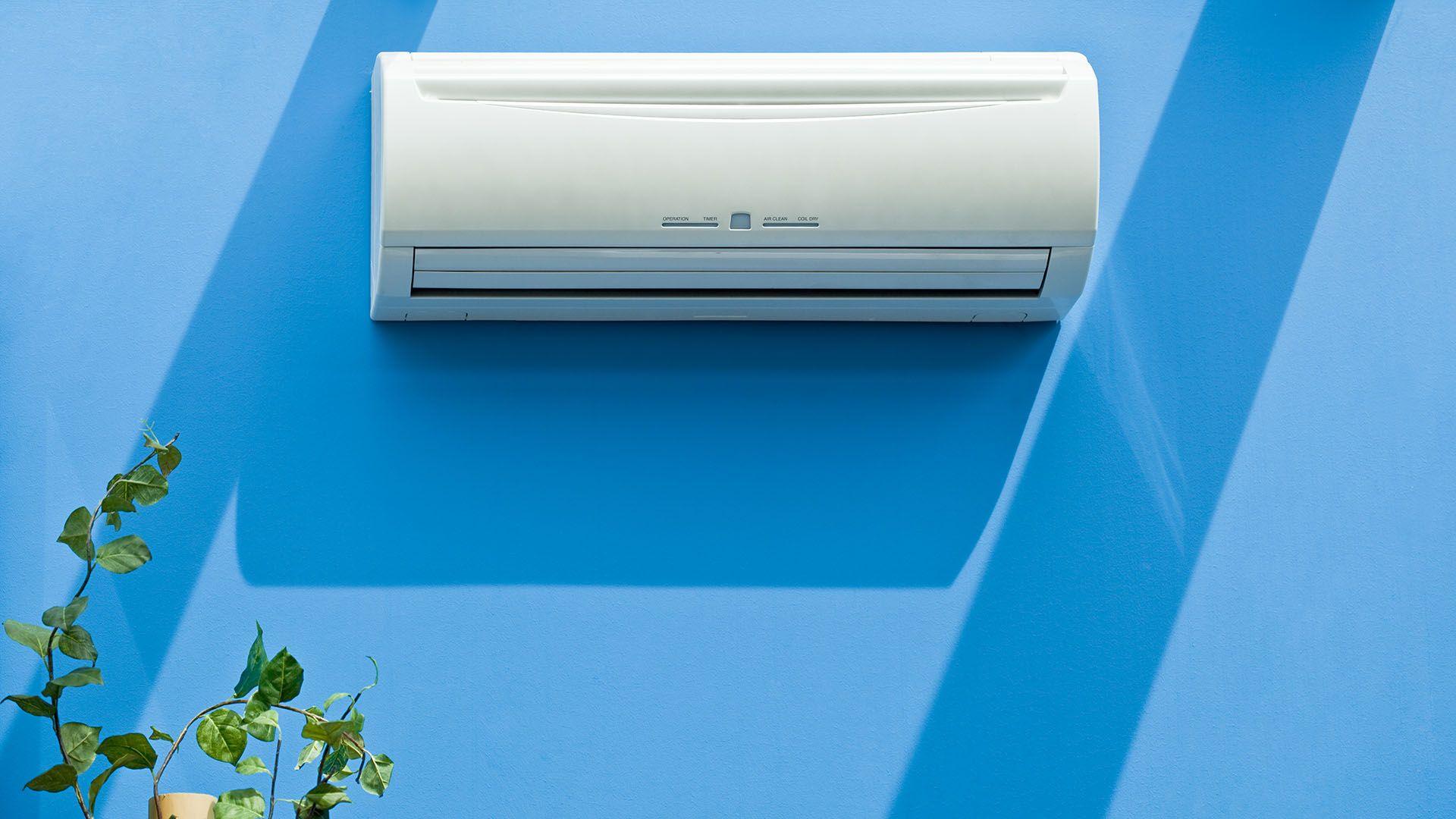
- Planning permission is generally not required unless you are in a conservation area or listed building.
- Cooling-only systems are not covered by permitted development rules
- If in doubt, speak to your advisor
If you’re looking for a way to avoid the sweltering heat of another soon-to-arrive heatwave, air conditioning looks awfully tempting – so much so that in the UK, portable air conditioning units are sold almost everywhere or cost ridiculous money on eBay, while air conditioning installers are reserved for the distant future.
With the coming summers set to get even hotter, many of us are now looking at fully installed air conditioning as a long-term investment in our homes and our health, meaning we are likely to encounter a lot of confusion and misinformation about what you can and can’t do under UK planning and building regulations.
This confusion has been partly fueled by social media and highly misleading newspaper headlines suggesting that net-zero-crazed city councils are demanding that innocent homeowners “rip out” their expensive installations.

The UK Ministry of Housing, Communities and Local Government (MHCLG) says such coverage is incorrect. “In most cases, a building permit is not required to install [air con] for a small house if it does not significantly alter the appearance of the building from the outside.
The most sensational headlines were about air conditioning in London and referenced the London Plan, a city-specific rule that prioritizes passive cooling and discourages heavy use of air conditioning due to the heat it emits outside, which can contribute to heat islands in built-up areas.
As a spokesperson for the Mayor of London told the Telegraph: “The current London Plan does not rule out air conditioning – its policy only applies to major developments and requires new developments to address the risk of overheating from the outset – through measures such as shading, ventilation and other cooling design features. »
If you look in detail at newspaper articles, you will usually find that the problem was not with the air conditioning itself, but with how and where it was installed.
The problem is that even the government press release above saying “Air conditioning units are not banned” also says “However, there is no general rule. People should speak with their local council to check the rules, and councils should take a common sense approach.” So this doesn’t completely clarify things, but there are widely applicable ground rules, which are then modified depending on the situation of the local council.
So here’s an overview of the rules you need to know when considering investing in permanent air conditioning, so that you at least know where you’re starting from and can look at the situation in your area from there.
In this article, we will focus exclusively on adding home air conditioning to an existing residential home that you own. If your house is under a lease in England, you may need to obtain the landowner’s consent in addition to the other criteria.
The Type of Home You Own Matters
The rules depend a lot on the type of accommodation you own. If you are in a listed building you will certainly need to apply for a listed building permit; if you are in a protected areathere will be restrictions on changing the appearance of your home, so there will be limits on where you can place the outdoor unit outside of your home.
If your house is neither listed nor in a conservation areathen the rules are largely common sense: under the rules for “permitted developments” you do not need planning permission provided that your air conditioning meets reasonably simple technical and location criteria.
The specific criteria are similar across the UK and I have linked to it here:
If you are unsure whether your scheme meets the permitted development criteria, we strongly recommend that you discuss this with your municipality’s planning department: if you are wrong, the municipality can have the system removed at your expense. You don’t want to make what could be a very costly mistake.
What are the basic rules for domestic air conditioners in the UK?
The basic rules (before entering conversation areas, etc.) differ depending on the type of air conditioning you plan to install.
If your air conditioner can heat and cool then it is generally permitted under the Permitted Development Rules under their Class G permissionswhich are applied by your local council on a common sense basis.
Provided your external condenser unit (the part of an installed air conditioning unit that goes outside) or your heat pump is not too big, too noisy, too visible or too close to your neighbors, you generally do not need planning permission.
It is this is not the case if the air conditioner cools but does not also have a heating element. You need planning permission for this and councils are keen to discourage such installations.
How big can your air conditioning be in the UK?
Class G permissions allow you to install air conditioning on your property or its ‘curtilage’, which is the land associated with it and immediately surrounding it, including any additional buildings. If you live in a castle, the curtilage is everything inside the castle walls; If you’re in a semi-detached house, curtilage usually refers to your garden, driveway and garage, if you have one.
Most modern air conditioning systems are air-source heat pumps (ASHPs), meaning they can both cool and heat the air they draw in and expel.
Class G permissions were revised in 2025 to specifically include ASHP outdoor units, and they state that in a permitted development:
- You can have up to two ASHPs on a detached house or bungalow
- If you live in a semi-detached or terraced house, you can only have one ASHP.
- If you live in a building with two or more apartments, this also limits you to an ASHP.
For a terraced, semi-detached or detached house ASHP must must not exceed 1.5 cubic meters. For apartments, the limit is 0.6 cubic meters.
A cubic meter is 1 m wide, 1 m high and 1 m deep. This is larger than a stand-alone refrigerator: sizes differ by manufacturer and product, but as an example, the outdoor units of Toshiba’s current RAS multi-split air conditioners range from 0.12 m³ to 0.25 m³, with the largest model measuring 890 x 900 x 320 mm, easily matching internal regulations.
What type of air conditioner can I install?
Under class G your equipment must comply with the microgeneration certification systemor MCS for short. The regulations are a bit strange here because while an air source heat pump must comply with the MCS, it does not need to have a certificate. Details of the MCS are online here.
Where can I install my air conditioner?
The rule prohibiting you from installing your outdoor unit within one meter of neighboring properties has been removed. However, your installation must not negatively impact your neighbors with noise: the sound level of your outdoor unit cannot exceed 42 decibels measured one meter from the front door or window of your nearest neighbor. MCS compatible units will not exceed this limit.
You cannot install the outdoor unit on a sloping roof or within 1 meter of the edge of a flat roof.
If you are not in a protected area or listed building, you can install the outdoor unit on the front wall provided it is on the ground floor.
If you are in a protected area, you cannot install an outdoor unit on an elevation facing a highway.
It is in the location of your outdoor unit that common sense criteria come into play: the outdoor unit, its wiring and any pipes must be located in such a way that they are “as far as possible, located so as to minimize its effect on the exterior appearance of the building” and located “so as to minimize its effect on the amenity of the area”.
If you have a wind turbine in your backyard, you’re out of luck: Class G does not allow any air conditioning installations for properties with a wind turbine in their yard.
Your air conditioning installer is familiar with the regulations and should be able to ensure that your air conditioning meets all relevant requirements, but if you are in doubt, please speak to your local authority’s planning officers, as again, you really don’t want them to have any reason to force you to remove it.
What should I do to make sure there are no special rules in my area?
Your council will likely have a comprehensive website dedicated to helping with planning information, possibly including a map showing whether your home is included in any conservation areas and what the specific orders are around these areas, so you can determine whether they would affect the installation of air conditioning.
If this isn’t the case, or it’s still unclear, your council will have a planning permission inquiry system, so you can ask if what you’re considering requires permission without going through the process – and this means that if you need one, they can tell you exactly what is required.

Follow TechRadar on Google News And add us as your favorite source to get our news, reviews and expert opinions in your feeds.


