
KARACHI:
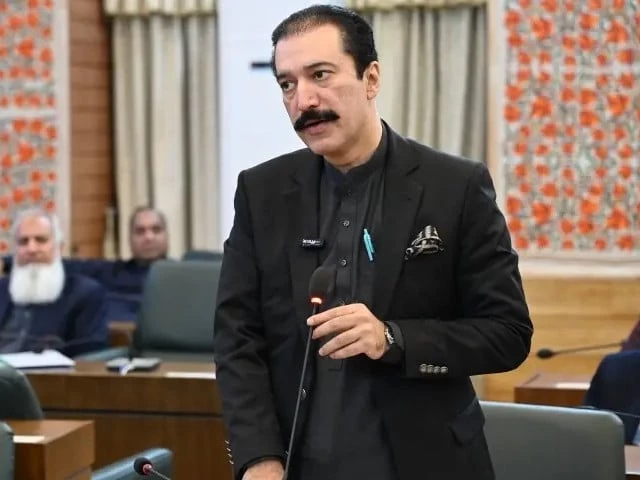
Prime Minister Raja Faisal Mumtaz Rathore offered to resume negotiations with the JAAC, urging the protesters to return to the dialogue table.
Meanwhile, deadly clashes in Azad Jammu and Kashmir (AJK) have given rise to conflicting accounts over casualties, governance grievances and political legitimacy, with official sources confirming at least seven deaths.
According to official statements, the recent unrest in areas such as Rawalakot has resulted in clashes between law enforcement agencies and militants associated with the banned Jammu Kashmir Joint Awami Action Committee (JAAC).
Authorities said the situation escalated during a lengthy attempted march planned for this weekend, triggering a large security deployment and subsequent clashes on the ground.
Police sources say six security officers, including three from the Rawalakot police and one from the Border Police, have been killed in separate incidents since June 6.
Officials further claim that three protesters lost their lives due to internal firing during clashes.
Civil society representatives and political observers say the absence of real-time reporting from remote areas of AJK has created an “information vacuum”, allowing unverified claims and increased speculation to circulate widely on digital platforms.
“There is a growing gap between the reality on the ground and the stories online,” said a senior journalist familiar with the region, noting that restricted mobility of media personnel has historically contributed to information asymmetry in the region.
The clashes reportedly intensified when protesters attempted to continue a long march towards Rawalakot, leading to the deployment of security forces and violent clashes.
Authorities maintained that law enforcement showed “restraint and proportional response.”
Dialogue with the banned committee
Meanwhile, as tensions persist, conflicting political narratives have emerged over whether dialogue with the banned committee is legally and politically viable.
The region’s former chief justice, Chaudhry Ibrahim Zia, said engagement remains the only sustainable option. “Negotiation is the only solution to any conflict. It can take place with any party,” he said, stressing the need for restraint given the sensitivity of the region.
Similarly, representatives of the Kashmir Bar Association argued that the legal designation does not preclude political engagement aimed at restoring stability. Lawyer Haroon Riaz Mughal said even opposing sides in armed conflicts eventually enter into negotiations, adding that “dialogue is essential for long-term peace and stability.”
Members of the legal fraternity and regional bar councils jointly called for de-escalation and urged stakeholders to seek constitutional and political solutions.
A press conference held in Islamabad also expressed concern over the deteriorating situation and demanded immediate dialogue between the authorities and protest leaders.
The JAAC, which organized the protests and strike, had presented a broad charter of demands, including an end to the privileges enjoyed by the ruling elite, the removal of 12 assembly seats reserved for refugees and the abolition of the quota system.
On the other hand, the establishment and its representative political parties argue that removal of these seats is only possible if the petitioner party contests the elections and enters the Assembly through an electoral victory.
This is practically difficult, because which side these 12 seats from Punjab and Sindh lean towards will determine the outcome of the elections, and these 12 members will never vote against their own existence.
This begs the question: what is more important, the clear will of the people or the rituals of any political system, democracy in this case?
This is therefore the time for all segments of society to apply reason and allow the emergence of a functional balance between its different components, where the public, the assembly and the armed forces each play their constitutionally defined roles to ensure a stable and balanced society.
Meanwhile, political developments indicate an attempt to defuse tensions. Prime Minister Raja Faisal Mumtaz Rathore offered to resume negotiations with the JAAC, urging the protesters to return to the dialogue table.
“The people protesting in AJK are ours. There is no doubt about it. Agents and traitors? I don’t think so. Disillusioned? Naturally. Misguided? Surely,” the AJK Prime Minister said in an X message.
“Come and sit with us. This is not an issue that cannot be resolved at the cost of human lives,” the Kashmiri prime minister said in a television interview, adding that past negotiations had failed due to unresolved clauses.
Rathore also acknowledged that while some protest demands, particularly those related to refugee sieges, require careful consideration, the solution must come through discussion rather than confrontation.
Separately, a group of British parliamentarians have reportedly written to the British Foreign Office to express concern about the situation in AJK and call for diplomatic engagement.


