
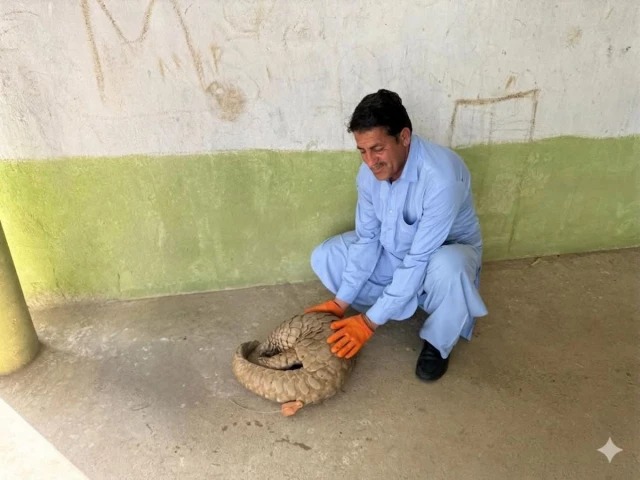
WWF says the rescued pangolin underwent quarantine, rehabilitation and monitoring by veterinarians to ensure its recovery.
The pangolin rescued in Mardan. PHOTO: WWF PAKISTAN
MARDAN:
A rare pangolin was rescued, rehabilitated and released into the wild on Monday in a joint effort between WWF-Pakistan and the wildlife department of Mardan division.
The highly endangered species was saved from illegal hunting and released into its natural habitat.
According to a WWF spokesperson, following the rescue, the pangolin underwent quarantine and rehabilitation under veterinary supervision, with continued health monitoring to ensure a full recovery.
Before its final release, the animal was also tagged with support from Lincoln University. The animal is now in its natural habitat within the “pangolin protection zone” in Mardan.
The animal was marked and released into its natural habitat. PHOTO: WWF PAKISTAN
Wildlife officials said the move highlights the importance of institutional cooperation and joint efforts to protect pangolins, one of the most trafficked and poached species in the world.
Learn more: WWF warns government development plans in Margalla Hills could cause ‘irreversible damage’
The Indian pangolin is one of the most endangered species in Pakistan. Also called the thick-tailed pangolin or scaly anteater, the population of this mammal has declined rapidly due to several factors, including poaching, illegal trade, habitat destruction and the effects of climate change.
The third Saturday of February is celebrated every year as World Pangolin Day to raise awareness about this beautiful, heavily trafficked creature.

Wildlife workers trying to locate the animal with the radio. PHOTO WWF PAKISTAN
Classified as endangered on the International Union for Conservation of Nature’s red list, the Indian pangolin population continues to decline. Particularly in the Pothohar region, the pangolin has disappeared from more than 80% of its historical range.
Although exact population figures are not available, studies suggest that the global population of this mammal could drop by 50% over the next 20 years.
According to WWF-Pakistan, the Indian pangolin is protected under federal and Sindh wildlife laws. Since 2016, it has also been listed in Appendix I of the Convention on International Trade in Endangered Species, which prohibits international trade in pangolins and their products, including their scales. However, these laws have done little to alleviate the threats the species faces.


