In a world conditioned to impasse, Pakistan did not simply welcome diplomacy. It made it work.
Islamabad created the conditions that brought two long-time adversaries to the same table, at a time when the region was on the brink of danger. At a time of extreme instability, Pakistan has transformed deep uncertainty into a genuine opportunity for dialogue.
It was a calculated, high-stakes intervention at a critical moment in global politics. For decades, relations between the United States and Iran have been defined by hostility, distrust and fragile attempts at engagement. Since the breakdown of diplomatic relations, the two countries have gone through cycles of confrontation and difficult pauses, but rarely a process of sustained dialogue.
What happened in Islamabad marked a break with this long history. Through persistent shuttle diplomacy, patient engagement and continued coordination, Pakistan kept both sides engaged in dialogue when the dynamic could easily have shifted towards escalation.
This diplomatic effort reflected the alignment of the highest levels of Pakistani leadership. President Asif Ali Zardari has played a central role in shaping the diplomatic environment, drawing on his political experience and regional relationships to build support and create space for de-escalation. President Bilawal Bhutto Zardari added diplomatic engagement and statesmanship, reinforcing Pakistan’s message of restraint and regional responsibility.
Prime Minister Shehbaz Sharif gave a strong policy direction and ensured that the full weight of the state supported the process. COAS-CDF Marshal Syed Asim Munir brought strategic clarity, institutional coordination and operational stability, anchoring the process during its most fragile phases. Deputy Prime Minister and Foreign Minister Ishaq Dar strengthened the diplomatic effort through constant engagement and coordination.
By the time the talks began in Islamabad, Pakistan had already prepared a vast ground. Messages were passed across capitals, discreet understandings were established, and channels remained open even when distrust ran deep. Pakistan remains engaged at all levels to ensure that frustration, fatigue or miscalculations do not derail the process.
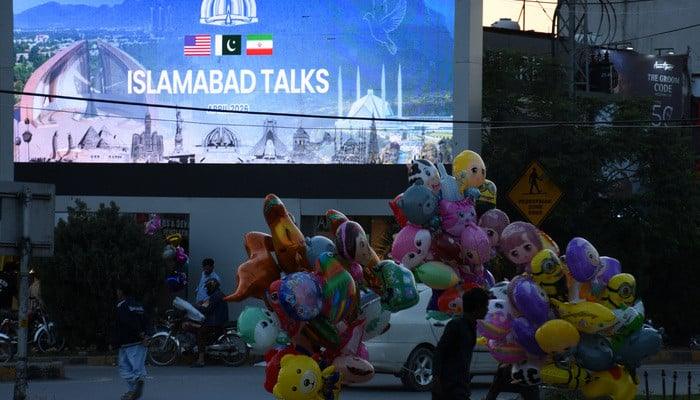
What followed was remarkable. The United States and Iran engaged in direct negotiations in Islamabad 21 hours ago, an extraordinary development after decades of strained relations. As Iranian Foreign Minister Abbas Araghchi said, the two sides were inches away from finalizing a memorandum of understanding in Islamabad, underscoring how close the negotiations were to a breakthrough and how substantial the progress made in Islamabad was.
The April 7 warning that an entire civilization could disappear was a stark reminder of what was at stake. What Pakistan helped avoid was not a minor escalation but a looming global catastrophe. A direct conflict between the United States and Iran would have caused enormous loss of life, sent oil prices skyrocketing, shaken global financial markets and pushed already fragile economies into crisis.
The consequences would not have stopped at the region’s borders. This would have impacted global markets, disrupting supply chains, weakening currencies and destabilizing political systems. By avoiding war, Pakistan helped spare the world a crisis that could have changed the geopolitical and economic landscape for years to come.
A commitment of this magnitude is never an instant. It is a process that requires patience, discipline and political courage. No one expected a final settlement in a single round of negotiations. What matters is that communication was resumed, that the channels were reopened and that the diplomatic channel remained intact at a time when a confrontation seemed much more likely.
Pakistan came forward when the world needed it most. It proved that credible diplomacy, steady leadership and strategic restraint can still change the course of history, even in the most explosive circumstances. But maintaining this fragile opening cannot rest solely on Pakistan. The United States and Iran must now demonstrate the same seriousness that has brought them this far, and the international community must protect this space for dialogue before it closes.
History will remember that the world was on the brink of disaster and Pakistan helped reverse it. What happens next will determine whether this moment becomes a turning point or a missed opportunity. The opening created in Islamabad must not disappear.
The writer is a member of the National Assembly. She holds a doctorate in law and serves on the special committee on Kashmir of the National Assembly.
Disclaimer: The views expressed in this article are those of the author and do not necessarily reflect the editorial policies of PK Press Club.tv.
Originally published in The News