
Canada’s proposed ban on crypto political donations moved a step closer to becoming law on Friday, moving through Parliament with cross-party support and little opposition.
Bill C-25, Strong and Free Elections Act, passed second reading in the House of Commons and was referred to committee for further consideration. In the Canadian system, this vote indicates that lawmakers broadly agree with the basic principles of a bill before it is subject to further review and possible amendments.
The legislation would ban political contributions made in crypto, as well as money orders and prepaid payment products, grouping them as difficult-to-trace financing methods.
The ban would apply to the entire federal system: registered parties, riding associations, candidates, leadership and nomination contestants and third parties that distribute election advertising.
Recipients would have 30 days to return illegal crypto contributions or remit them to the Receiver General, the Canadian equivalent of the U.S. Treasury.
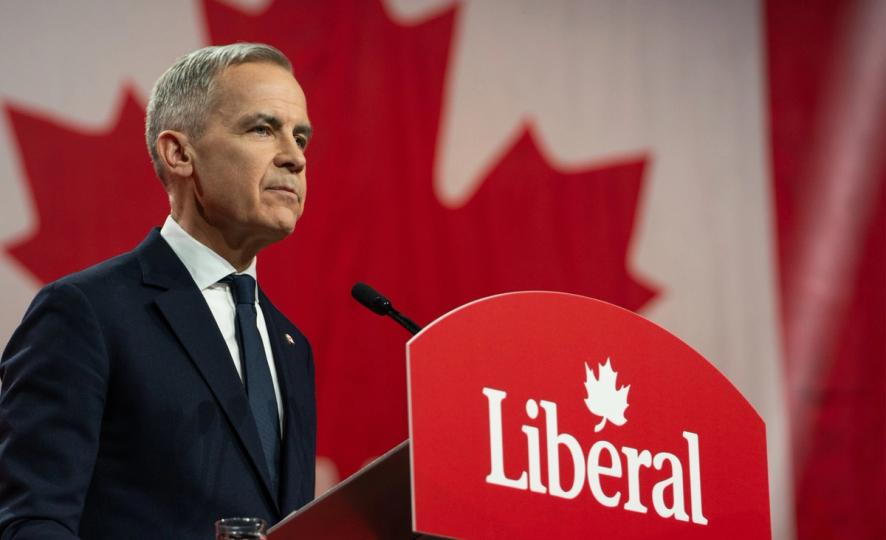
The bill’s main advocate on the ground was Kevin Lamoureux, the Liberal parliamentary secretary to the government House leader, a junior civil servant who helps manage the governing party’s legislative agenda and acts as a spokesperson during debates.
His keynote address addressed AI deepfakes, foreign interference and administrative sanctions. According to an official transcript, crypto was not discussed. When a Liberal colleague asked him to choose among three priorities – foreign interference in appointments, transparency in political financing or artificial intelligence – Lamoureux chose AI.
Several Conservative MPs – the party is led by Pierre Poilievre, who presented himself as pro-crypto in the last election – have raised questions about political financing rules and how the new restrictions would be enforced.
But the issue never became a central point of contention.
Conservatives supported sending the bill to committee, while other opposition parties expressed concerns about different elements of the legislation, but did not focus their arguments on crypto.
The limited resistance also reflects the little use of crypto in Canadian politics.
Canada has technically allowed crypto donations since 2019, when Elections Canada classified them as non-monetary in-kind contributions similar to goods. But no major federal party has publicly embraced crypto, and no contributions have been disclosed in recent elections.
Bill C-25 is itself a new version. Its predecessor, Bill C-65, contained identical cryptographic language and died when Parliament was prorogued – suspended without dissolution – in January 2025.
Canada’s Chief Electoral Officer recommended tighter regulation of crypto donations in 2022, then, in November 2024, he recommended an outright ban, citing pseudo-anonymity and difficulty verifying the identity of contributors.
The United States is moving in the opposite direction. The Federal Election Commission has allowed cryptocurrency donations to American campaigns since 2014.
Earlier this year, the United Kingdom passed a law banning cryptocurrency donations, citing concerns that digital assets could be used to hide the origin of foreign money in British politics.


