
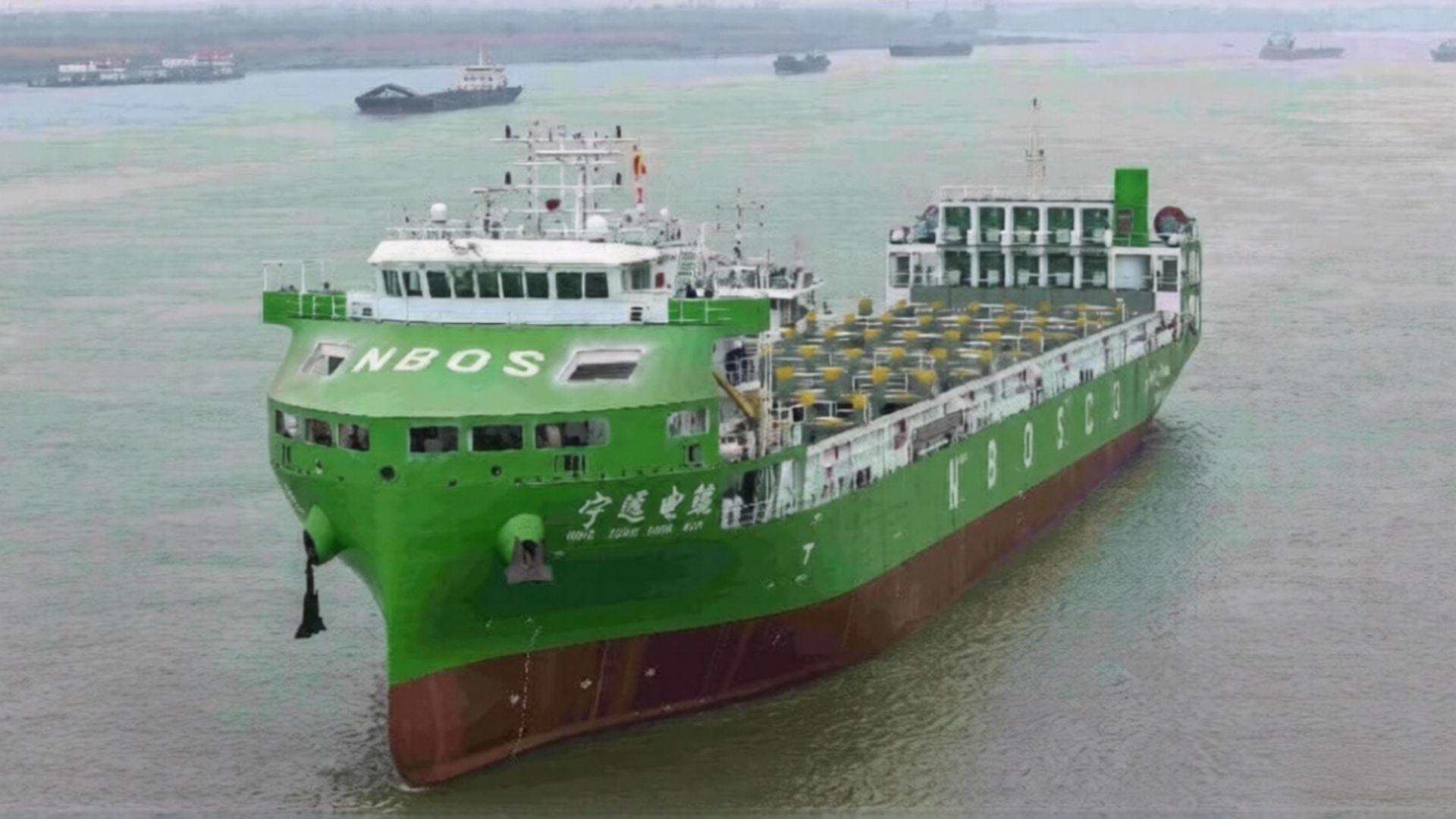
- Ning Yuan Dian Kun, a 10,000-ton container ship, is powered by the equivalent of 250 Tesla-grade batteries.
- It can swap the ten batteries on the dock like a giant phone
- Two 875 kW motors push this electric giant to 11.5 knots
When most people think of electric vehicles, they imagine a sedan or SUV, not a ship that underwent sea trials off the coast of Shanghai in February 2026.
The Ning Yuan Dian Kun, an electric vessel, stretches nearly 128 meters from bow to stern, longer than a standard American football field, including both end zones.
With a dead weight of 10,000 tonnes, this Chinese container ship operates on a scale that few battery-powered machines have ever attempted.
Article continues below
A floating battery with a propulsion system
The ship carries ten containerized batteries that together store 19 megawatt hours of energy, which is roughly equivalent to 250 Tesla-scale 75 kWh batteries combined.
It also hosts two permanent magnet motors, each rated at 875 kilowatts, which convert the ship’s stored energy into forward motion at a maximum speed of 11.5 knots.
A shipyard official described the ship as “a combination of green and smart shipbuilding,” a phrase that reflects both its environmental ambition and technical complexity.
Unlike cars that simply recharge overnight, this vessel offers two options for replenishing energy: high-voltage shore connections or a complete swap of all ten battery containers for pre-charged units.
There are also solar panels on deck which provide additional electricity for the hotel’s onboard loads, reducing consumption of the main battery bank.
The sea trials of this vessel took place between February 6 and 13, 2026 and evaluated much more than just battery performance.
Engineers tested an autonomous navigation system that could handle route planning and collision avoidance without constant human intervention.
The vessel also features intelligent engine room operations and automatic docking and undocking functions.
Essentially, the Ning Yuan Dian Kun serves as a floating test bed for autonomous driving technology applied to commercial shipping.
A deliberate step in the evolution of short sea shipping
Owned by Ningbo Ocean Shipping, this vessel will provide replenishment services to Ningbo-Zhoushan Port once delivered.
A second ship in the same series, the Ning Yuan Dian Peng, was launched recently and will join the fleet later this year.
The superstructure sits unusually far forward, giving bridge crews a clear view even when containers pile up at the bow.
An aerodynamic front end further improves efficiency, suggesting that every design choice prioritizes range and operating economy.
As interesting as this may sound, one might reasonably question whether large-scale battery swapping is practical for a vessel of this size, given the crane infrastructure and port turnaround times required.
Additionally, the China Classification Society oversaw construction according to its rules, but data on the long-term reliability of the 19 megawatt-hour marine batteries remains thin.
The ship represents a true technical milestone, even if its ultimate importance remains to be proven.
Whether this is a major change in the industry or a niche demonstration is highly dependent on the conclusion of these sea trials and the performance of the vessel over several years.
Via Baird Maritime
Follow TechRadar on Google News And add us as your favorite source to get our news, reviews and expert opinions in your feeds.


