
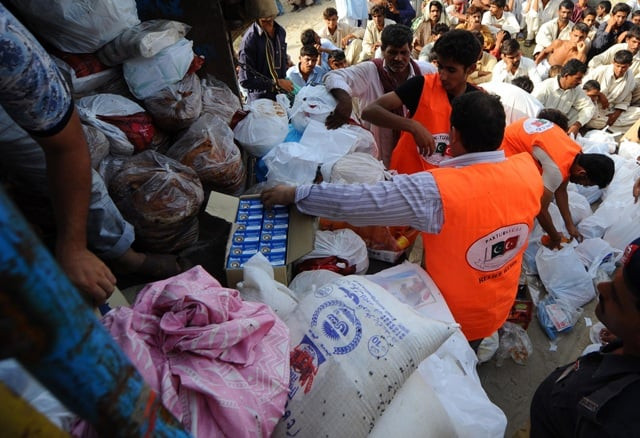
LAHORE:
Council of Islamic Ideology (CII) Chairman Dr Raghib Naeemi said there is a fundamental difference between Zakat and voluntary charity (Sadaqa). Zakat, he said, is governed by clearly defined rules in Islamic law, while Sadaqa can be given freely, regardless of the amount, for the sake of Allah.
In an interview with Express News, Dr Naeemi said the amount of Zakat and the categories of people eligible to receive it are specifically defined in Islamic teachings. Sadaqa, on the other hand, is a voluntary charity that can be offered in various forms to help those in need.
He explained that charity is not limited to financial assistance, but can also be given in the form of clothes, essential goods, books for students, or by providing equipment or machinery to help someone earn a living.
He said the Holy Quran identifies eight categories of people eligible to receive Zakat, including the poor, the needy, the indebted and individuals working in the cause of Allah, among other deserving groups.
According to him, Zakat should only be given to those whom Islamic law deems eligible. Dr Naeemi said good deeds done with wealth earned through illegal means are not accepted by Allah.
He said that if a person gives alms or Zakat from illicit income, it does not bring any reward and can instead become a cause of sin.
He noted a growing trend in society where some people accept aid simply because it is handed out for free, even if they don’t actually deserve it. He said those giving Zakat have the responsibility to properly verify beneficiaries so that the funds reach those who are actually eligible.
He said a financially well-off person should not receive Zakat, although voluntary charity could be accepted if necessary. He also advised people to avoid giving Zakat or charity to professional beggars and instead look for self-respecting people who are in need, but do not ask others for help.
Fitra, Zakat distribution system
Speaking about fitra (charity given at the end of Ramazan), Dr Naeemi said that if a child is born before the Eid prayer, payment of fitra on behalf of that child becomes obligatory.
He explained that usually the father pays the fitra on behalf of his dependent children, while a woman can pay her own fitra, although it is also valid if her husband pays it.
He said that fitra serves to compensate for the deficiencies of fasting and enable deserving people to share the joy of Eid by meeting their food and basic needs.
Responding to a question on the government’s Zakat system, Dr. Naeemi said that while some concerns exist regarding the official system, Zakat funds are distributed to deserving individuals through institutions, hospitals and vocational training centers.


