
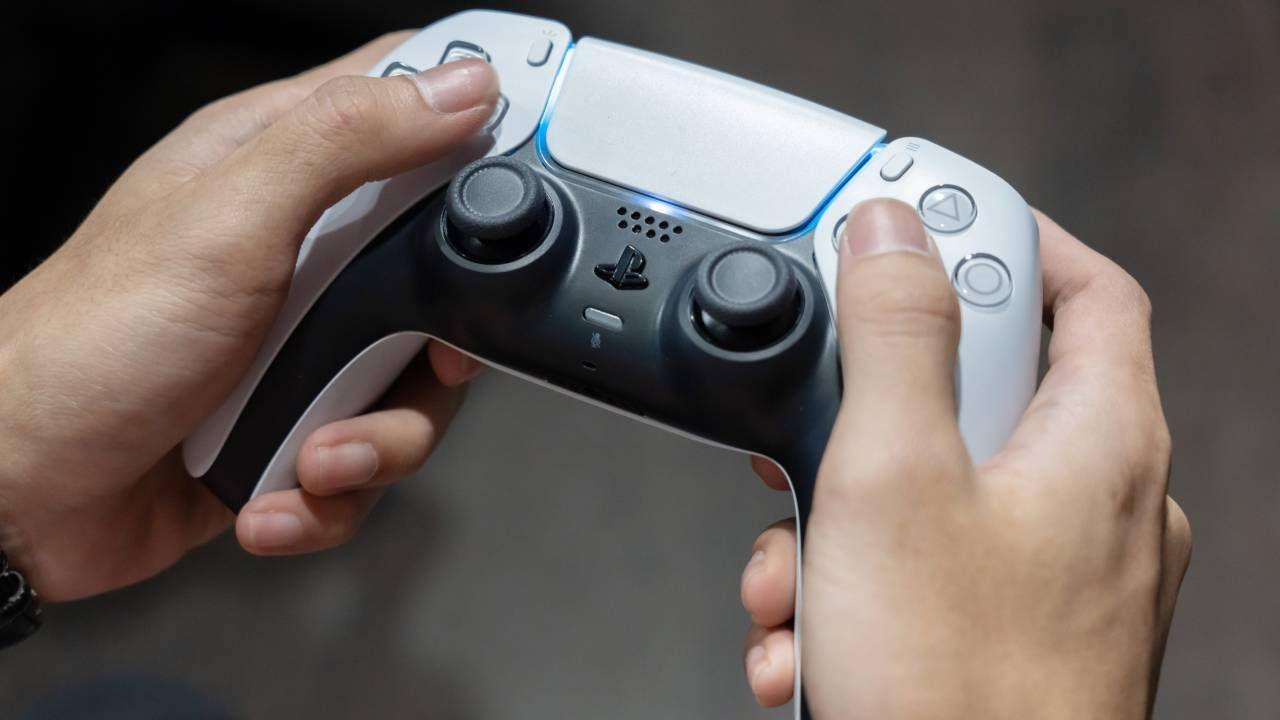
- A modder found a way to use a DualSense controller wirelessly on PC without losing haptics and adaptive triggers
- It uses a 2W Raspberry Pi Pico as a bridge between the controller and the PC
- This solution apparently doesn’t seem to have any noticeable additional latency, at least for non-competitive games.
If you’re using a PS5 DualSense controller to game on your PC, you might well be frustrated that you have to connect it via cable, rather than wirelessly, to get full functionality – but that’s no longer true, thanks to this clever use of a Raspberry Pi.
Tom’s Hardware reports that a new creation built with an inexpensive Raspberry Pi Pico 2 W (the wireless variant of the Pico 2) acts as a bridge between the PC and the controller. This allows the DualSense to connect via Bluetooth and function like on PS5 with haptic feedback, nifty adaptive triggers and other benefits.
In case you don’t know, these functions work fine on PC when you connect with the cable, but this is not the case if you connect (directly) to the PC via Bluetooth. Indeed, the Windows implementation of Bluetooth does not have all the bandwidth required by the DualSense to allow the wireless transmission of all its functions.
Article continues below
The project, called “DS5Dongle,” was highlighted on Reddit and is the creation of a developer named “awalol” on GitHub.
How does it work? Essentially, the Raspberry Pi Pico 2 W is plugged into the PC and acts as a bridge, meaning the PS5 controller connects to it (rather than the computer) – with the Pi then presenting itself to Windows 11 as a wired DualSense.
It’s a smart workaround, and you can purchase the products needed to create your own DS5Dongle for less than $20 in the US (or a roughly equivalent expense in your region). All you need is a 2W Pi Pico and a microUSB cable, and of course, the project file from GitHub.
Analysis: an interesting solution, and the latency does not spoil the pleasure of playing wirelessly
This shortcoming has annoyed many PC gamers who want to use their PS5 DualSense with games better suited to a controller than a mouse and keyboard. It’s not ideal to have to limit yourself to plugging in your DualSense, because wireless obviously offers a lot more freedom.
Once you’ve created your own Pi dongle, all you have to do is first handshake with the controller, and then your DualSense will automatically connect to the PC every time you turn on the controller (assuming you leave the dongle in place, of course).
Are there any disadvantages? The obvious problem is that it’s an extra step between the PC and the controller, which can introduce some input latency, which is a point raised by some Redditors on the thread above.
According to the original poster, this is not a problem. They observed: “I can only speak from my experience, that is, I didn’t feel any difference compared to wired. But I only play single player games.”
It may not be an ideal solution for competitive gaming, but it’s certainly one of the smartest pieces of DIY tech I’ve seen for PC gamers this year. There are possible issues with the current implementation of the DS5Dongle, as noted on GitHub, including potentially choppy controller audio. The project is still under construction.
The best graphics cards for every budget
Follow TechRadar on Google News And add us as your favorite source to get our news, reviews and expert opinions in your feeds. Make sure to click the Follow button!
And of course you can also follow TechRadar on YouTube And TikTok for news, reviews, unboxings in video form and receive regular updates from us on WhatsApp Also.


