
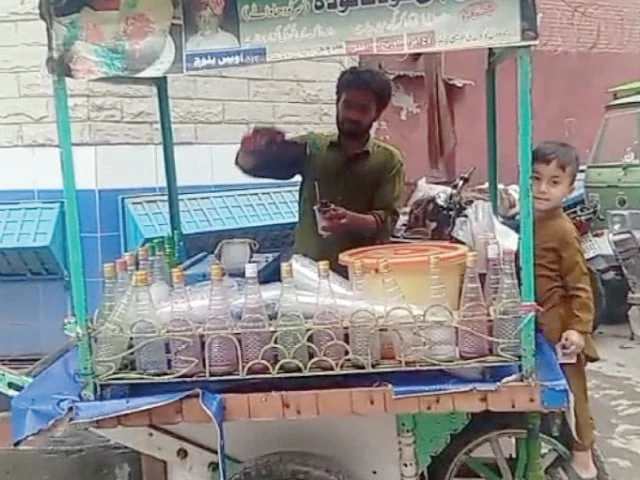
Vendors sell unsanitary flavored frozen treats outside schools and in neighborhoods
SUMMER TREATS WARNING: A vendor sells flavored ice cream balls to children at his stall in a Rawalpindi neighborhood. PHOTO: EXPRESS
RAWALPINDI:
With the arrival of summer, brightly colored ice cream scoops and flavored drinks sold on the streets and outside schools began to raise health concerns in the city.
Ice cream scoop sellers regularly congregate outside public and private schools during recess and closing hours, offering treats for 10 to 20 rupees. Along with the ice balls, artificially flavored cold drinks in seven to eight different colors are also sold at a price of Rs 10 per glass.
The products are available in red, green, blue, yellow, orange and brown colors, while the ice cream scoops are usually prepared using three or four colors of the customer’s choice. Not only children but also adults buy these treats because of their low prices.
From 8:00 a.m. to midnight, stalls and carts selling colorful drinks and scoops of ice cream can be seen in neighborhoods, markets and shopping areas. Vendors also sell poor quality flavored juices in the name of various fruits at low prices, thereby contributing to the spread of diseases.
Children are increasingly spending their pocket money to buy these scoops of ice cream after school hours, while no action is taken against the sellers.
Former medical director of Rawalpindi Heart Institute Dr Ayaz Haider said ice balls were very harmful to health and caused throat and stomach diseases.
He said although the ice cream seemed cold, its effect on the body was harmful, adding that the colors used on the ice cream balls did not meet hygiene standards. Red coloring in particular is extremely dangerous to health, he added.
Dr Haider said the syrups used on the ice cream scoops were unbranded and usually made at home. He said throat diseases were spreading rapidly these days because people preferred poor quality ice creams, ice cream scoops and syrups from the market instead of taking precautions in hot weather.
He added that smoke emitted from vehicles had also contaminated these food items. During summer, people are naturally attracted to cold drinks, ice cream scoops, kulfi, market syrups, sattu and sugarcane juice, making it a profitable season for roadside vendors, he added.
He warned that dust deposited on unhygienic kulfi, cold drinks and ice cream scoops could also prove harmful to health. Seasonal changes often trigger throat and stomach illnesses, while even minor negligence can lead to illness, he said.
Dr Haider advised parents to avoid such products and provide their children with fresh fruit and vegetable juices prepared at home.


