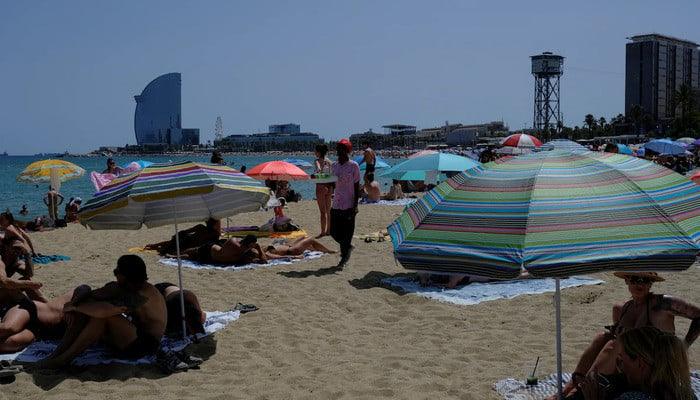
A severe heatwave hit much of Europe on Sunday, with temperatures near 40 degrees Celsius (104 degrees Fahrenheit), prompting nationwide warnings, transport disruptions and signs of pressure on wildlife and tourist hotspots.
The heat wave of June 21, the summer solstice in the northern hemisphere and generally the start of the three hottest months of the year, raised fears of the early and persistent appearance of extreme conditions.
After several days of temperatures above 35°C, Italian authorities issued a red alert for June 21 in eight cities, including Bologna, Florence, Milan and Turin.
In Rome, pilgrims in St. Peter’s Square used parasols and umbrellas to protect themselves from the blazing sun as the pope led a traditional Sunday prayer from a window in the apostolic palace.
The rise in temperatures is caused by a mass of warm air moving north from the Sahara, fueled by a powerful high pressure system known as the “African anticyclone.”
Meteorologists say the system creates what is called a “heat dome”, trapping warm air over western and central Europe and allowing temperatures to rise day by day.
Madrilenians and tourists alike were fanning and drinking lots of cold drinks while browsing the city’s famous El Rastro flea market.
“I wear all white because it’s so hot and I carry my little electric fan everywhere I go,” said Haily San Cesario, a 22-year-old engineer from Miami.
Spain’s weather agency AEMET issued red and orange alerts in several regions, warning of temperatures exceeding 39C to 40C in much of the Iberian Peninsula and Mallorca, and said the heatwave would last at least until midweek.
Trains canceled in France
The extreme heat began to disrupt infrastructure.
Speaking from Paris’ Montparnasse station, SNCF chief Jean Castex said the rail network was “heavily impacted” by high temperatures which risk damaging overhead power lines and track extensions.
He said 3,500 people had been mobilized to monitor the network and another 2,000 would carry out emergency repairs. He urged vulnerable passengers to delay their travel. The operator canceled 71 intercity trains until Monday on key routes.
In Germany, where temperatures have already reached 38°C, the DWD weather service warned of violent thunderstorms in eastern regions, notably in Berlin, where heavy rain disrupted the open-air Music Festival.
Organizers had to evacuate the grounds of the Berlin Open due to heavy rain and strong winds, and as fans awaited the final of the singles tennis tournament between American Jessica Pegula and Czech Linda Noskova.
Heat stress on chicks
Wildlife rescuers also report growing pressure.
A center near the Belgian town of Namur said it had taken in around 150 animals under heat stress in recent days, with young birds particularly at risk.
“Baby birds prefer to jump rather than let themselves die and literally cook in their nest,” said CREAVES founder Romain De Jaegere, adding that centers across Belgium were overwhelmed.
Experts say the situation reflects a wider trend, with heatwaves in Europe becoming more frequent and intense due to climate change.