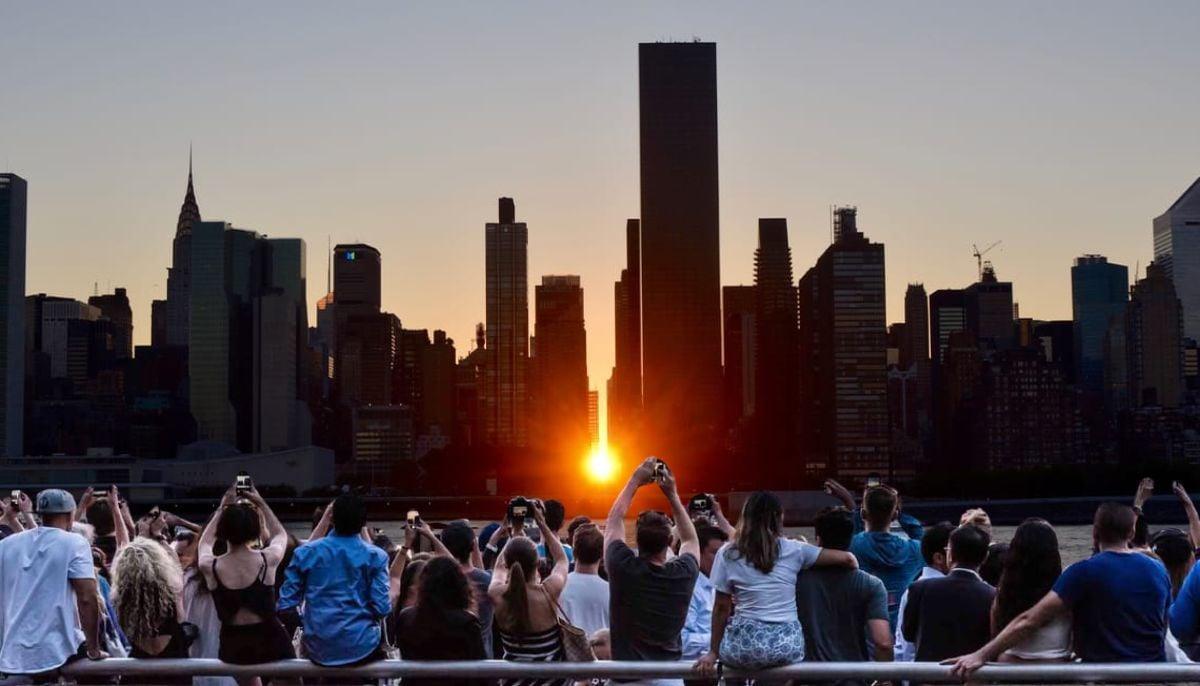
Sunsets are always attractive; they invite a calming experience to relax and refresh for a new beginning.
Manhattanhenge 2026 is what New Yorkers look forward to all year long.
It’s a phenomenon when the skyscrapers of New York escape with the corridor of the setting sun and the grid of the streets of Manhattan.
Manhattanhenge is a semi-urban celestial event that occurs when the corridor of the rising or setting sun rises through the gaps between New York City’s giant skyscrapers, creating a dazzling spectacle.
Don’t be surprised; this should only be attributed to New York’s founding architect who designed it in 1811.
Manhattanhenge 2026 has already started on Thursday, May 28 and will continue on Friday, May 29, 2026, with the last edition of the year between July 11 and 12, 2026, when the setting sun aligns perfectly with the Manhattan street grid.
When does Manhattanhenge occur?
Determining specific dates depends entirely on when Manhattan’s street grid aligned perfectly with the major compass directions (N, S, E, and W).
This would mean that Manhattanhenge falls as the Sun crosses the celestial equator, which would mark the start of astronomical spring and autumn.
A fun fact is that since Manhattan’s street grid rotates 29 degrees clockwise, the alignment of the Sun and the streets rotates on several dates.
Manhattanhenge at sunset:
The Sunset Manhattanhenge occurs when the directional angle of the sunset is 299.1 degrees.
This celestial phenomenon occurs twice a year, 22 to 23 days before the June solstice (around May 28 and 29) and 22 to 23 days after (in mid-July).
The Sunrise Manhattanhenge:
The Sunrise Manhattanhenge occurs when the directional angle of sunrise is 119.1 degrees.
Like sunset, this also happens twice a year, 22-23 days later (early January).
Sunset & Sunrise Manhattanhenge dates revealed
Sunset Manhattanhenge is the cause of all the buzz on social media for New Yorkers who wait for this dazzling sunset all year round.
To catch it, you need to observe it from the east-west streets, looking west.
Thursday, May 28, 2026, at 8:14 p.m. ET
Friday, May 29, 2026, at 8:13 p.m. ET (full sun)
Saturday, July 11, 2026, at 8:20 p.m. ET (full sun)
Sunday, July 12, 2026, at 8:21 p.m. ET (half-Sun)
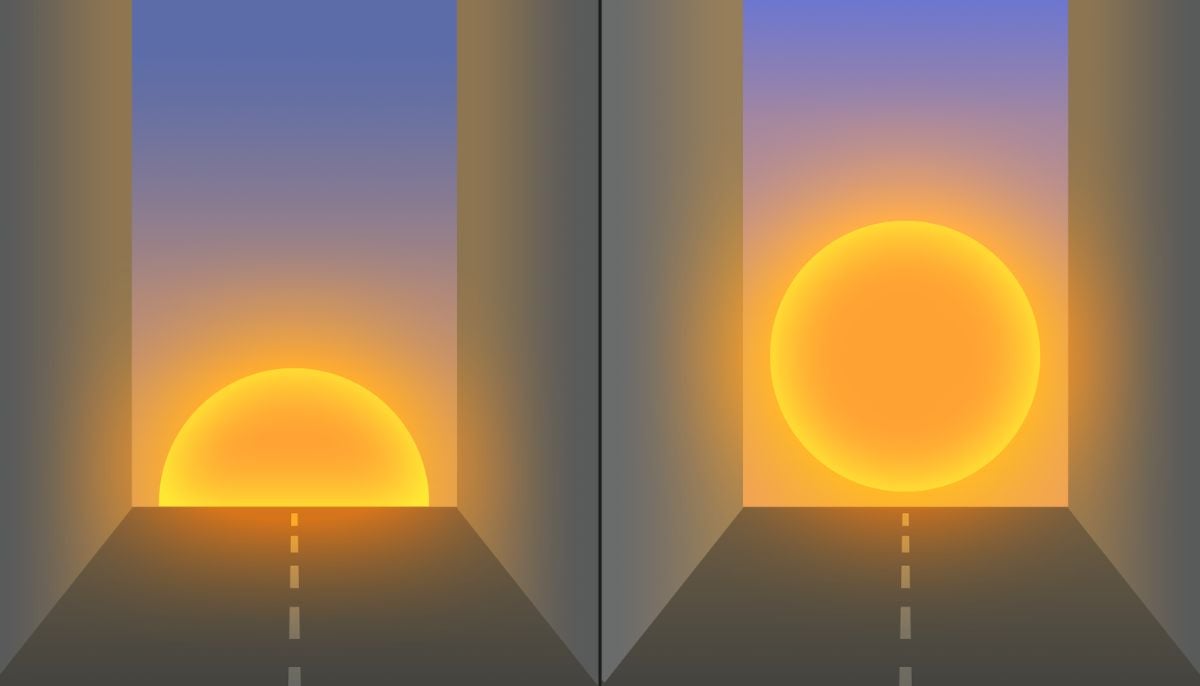
The Reverse Manhattanhenge, as it is commonly known, can be viewed from the east-west streets; what you need to do is simply face the opposite direction.
November 29, 2026, 7:05 a.m. ET
November 30, 2026, 7:04 a.m. ET
January 10, 2027, 7:23 a.m. ET
January 11, 2027, 7:24 a.m. ET
What are the observation points at Manhattanhenge?
Traditional vantage points offering the best visual experience are those stretching from east to west; animated points include:
14th street
23rd street
34th street
42nd street
57th street
For foreigners, naive to the City of Lights, here is an essential guide.
The streets of Mahanttan are designed according to a grid. So the main streets run from west to east (like 14th Street and 42nd Street).
While the avenues are arranged at a 90 degree angle, from south to north (like Fifth Avenue).