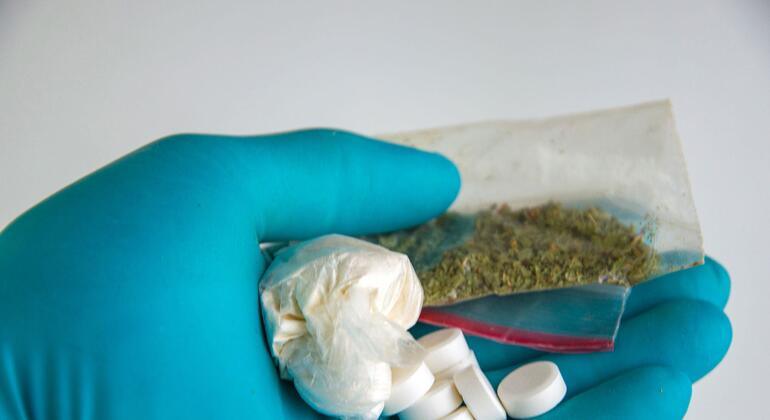
“We have seen an unprecedented increase of new types of drugs on the market and, worryingly, some are more potent or more dangerous than before,” said Monica Juma, executive director of the United Nations Office on Drugs and Crime (UNODC).
An estimate 331 million people used drugs in 2024, equivalent to 6.2 percent of the world’s population aged 15 to 64, compared to 5.2 percent ten years ago.
Cannabis remains the most consumed drug, with 256 million users, followed by opioids (63 million), amphetamines (32 million), cocaine (25 million) and ecstasy (21 million).
The report also highlights the rapid evolution of synthetic drugs. In 2024, authorities identified 755 new psychoactive substances, including 118 reported for the first time, while the number of different drugs detected in seizures is now five times higher than before 2000.
“The market is becoming very diverse, but perhaps also more dangerous,” said Chloé Carpentier, lead researcher on the report, in an interview with PK Press Club.
“We don’t always know what we’re getting, and first responders don’t know what they’re reacting to. »
Reshaping the global market
The UNODC said the global opioid market is reaching a turning point. Following the ban on opium cultivation in Afghanistan in 2022, illicit heroin production has fallen sharply.
Although opium production in Myanmar increased from 420 tonnes in 2021 to more than 1,000 tonnes in 2025, along with production from Laos and Mexico, it did not replace the more than 6,000 tonnes produced by Afghanistan in 2022.
Instead, traffickers appear to be increasingly turning to synthetic opioids such as fentanyls, nitazenes and orphines.
The report warns that the shift away from plant-based opioids could permanently transform the global opioid market, with potentially greater health risks because some synthetic opioids are even more potent than fentanyl.
“We’re seeing a lot of nitazenes now,” Ms. Carpentier said. “The worry actually is that synthetic opioids could replace heroin and cause far more harm..”
Change traffic patterns
Methamphetamine has become a truly global market, with new trafficking routes extending into the Near and Middle East, Africa and parts of Europe.
Seizures have increased by an average of 13% each year, as suppliers have expanded beyond Myanmar to include North America, West and Southern Africa, and Southwest Asia.
At the same time, cannabis trafficking has become increasingly international, with 57 countries and territories outside North America identifying the region as a source of seized cannabis between 2015 and 2024, compared to just 11 in the previous decade.
Effects of inequality
The report highlights that the harms associated with drug use are determined not only by the substances themselves, but also by poverty, homelessness, poor mental health and unequal access to healthcare.
Women remain significantly less likely than men to receive treatment, even though they progress more quickly toward drug dependence.
Globally, only one in 23 women with drug use disorders receive treatment, compared to one in nine men. Women who inject drugs are also 20 percent more likely than men to live with HIV.
Young people remain another major concern.
“Adolescence is really a critical time when the brain is still developing,” Carpentier said. “Adolescent drug use will have lasting effects on cognition and behavior. »
Conflict worsens crisis
People displaced by conflict and humanitarian emergencies face increased risks.
According to the report, refugees and internally displaced people are more vulnerable to drug use disorders and often struggle to access treatment, as humanitarian responses naturally prioritize food, shelter and other immediate needs.
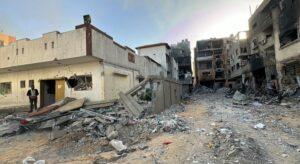
Conflict and drug trafficking reinforce each other, creating a cycle in which instability fuels illicit markets while profits from trafficking help fund more violence.
As drug markets become increasingly complex and interconnected, Ms. Carpentier said international cooperation remains essential, stressing that “we cannot achieve anything without international cooperation.”