
Bitcoin minors rush to adapt to the world prices of Trump, which are ready to increase the prices of ASIC minors, electrical equipment, network infrastructure and more.
“It’s a complete race,” said COO Louxor Ethan Vera Operating pod Roundup of the news. “Since the ASIC trading front and brokerage, minors have not been very proactive here. They do not necessarily have orders and put them in the United States … They operate in a period of less than a week here to ensure that all the expeditions that come out of Asia are collected and delivered. ”
This article appeared for the first time on BlockSpace Media, the main publication of the Bitcoin industry dedicated to the coverage of Bitcoin Tech, markets, mining and ordinal. Get blockspace items directly in your reception box by clicking here.
ASIC prices have slightly decreasing in the past year, according to data from the ASIC price index in the Hashrate index. A new generation model, like the S21, currently manages minors of around $ 3,400.
Overtime work to advance the ASIC orders before these prices which were to take effect on April 9, large companies chartered the flights to 2-4x the usual rate, between 2 and 3.5 million dollars per flight according to estimates provided to Space space of the CEO of Synteq Digital Taras KULYK and Vera de LOUXOR.
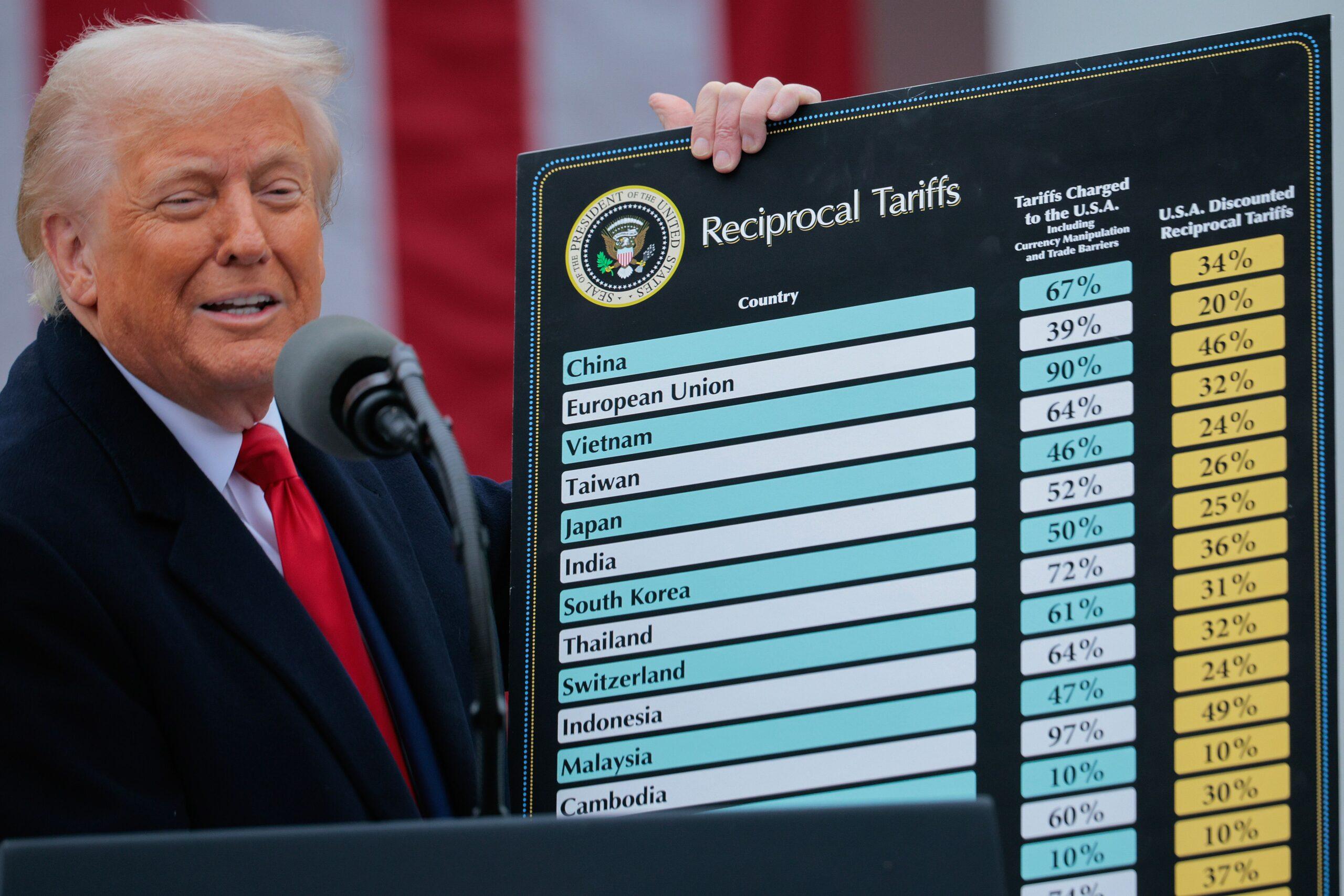
But initial panic was in response to the tariff policy which is now exceeded. Before the 90 -day Wednesday break on all prices except Chinese, the Trump administration had offered general prices on more than 180 countries, including 24% on Malaysia, 36% on Thailand and 32% on Indonesia – three countries that mainly manufacture ASIC mining computers which are beating in the heart of the mining sector.
During the 90 -day grace period, the Trump administration lowered the reciprocal prices at a flat rate of 10% for all affected countries, with the exception of China. So the scrambling seems to have been somewhat vain. Or maybe not – administration’s trade policies are so mercurial, so it is anyone to assume whether the 10% rate will be held once the grace period is over.
Even at 10%, prices are material enough to hinder efforts to deploy Hashrate in the United States, the market currently dominating with an estimated share of 35 to 40% of Bitcoin hashrate. In the current state of things, it is likely that prices will significantly slow the growth of the Hashrate of Bitcoin this year compared to previous expectations.
BlockSpace estimates that American bitcoin minors imported more than $ 2.3 billion in ASIC minors last year and more than $ 860 million in T1, starting with Malaysia, Thailand and Indonesia, the main manufacturers of these machines.
The reciprocal rates originally proposed
Bitmain and MicroBT, which collectively get stuck at 90% of the ASIC minors market, have moved their ASIC manufacturing capacity outside of China to Malaysia, Thailand and Indonesia in response to Trump’s Chinese prices during its first mandate. Microbt opened an American assembly plant in 2023, and Kulyk said Bitmain opened his first American mounting chain in January. However, these factories represent a fraction of the total production of one or the other manufacturer.
Kulyk said that “American production will have a material discount” compared to imported equipment. But they will always suffer from raw material prices such as aluminum, electronic components for control cards and others. Thus, the ASICs produced in America will be always more expensive than before the introduction of prices, especially if the 125% price offered on Chinese products is valid.
Vera said that Chinese electrical components are planned for a 50% or more rate (and could even be submitted to 125% depending on a rate updated in the Trump administration). This will affect everything, from the prices of ASIC minors to electrical infrastructure in the mines themselves.
As prices increase the cost of ASIC minors imported and other mining equipment, all the others being equal, all existing facilities in the United States should become more precious. Even thus, American minors who seek to develop could find acquisitions an easier itinerary than the import of equipment. Consequently, Kulyk expects the prices to provide merger and acquisition agreements, explaining that “suddenly, these minors who have older equipment that resemble zombies in fact resemble interesting acquisition opportunities”.
“A big hit” for the American mining sector Bitcoin
Kulyk said that currently “nobody buys” on the secondary market while waiting to see where the fleas fall.
In the medium term, prices are undoubtedly a “big blow” for the American mining sector of Bitcoin, which “will certainly stagnate the growth of the industry if these prices are continuing,” said Vera.
“If you pay more for a machine than your competitor in Canada or Russia, it will be difficult to compete with international minors.”
“Canada, from an economic point of view, will actually be a much more attractive place to do business. Company taxes should be reduced.
Mark Carney, the Precursor of the Liberal Party in the Canada Elections, supports the strengthening of the Canada Data Center and the energy industries. But the Canadian provinces such as Ontario and Quebec have moratories on new power applications for Bitcoin minors, so doubts remain on the attractiveness of Canada for minors as an alternative to the United States
Kulyk believes that northern Europe could also be identified for the expansion of Hashrate, while Vera said that minors could find some opportunity gigawatts in South America and parts of Africa.
However, growth will be limited if minors cannot exploit the United States, which has resulted in global hash growth since the Bitcoin exploitation of 2021 of China. Vera believes that the impact of prices on the extraction of bitcoin will be from a scale similar to the mining ban in China, and that Hashrate will move from the United States to other countries. Prices could also considerably reduce the cost of ASICs on other markets, as international minors will not compete with the largest buyers, American minors, for the allocation.
“In terms of geopolitical impact scale, it is probably relevant to think of this as being tied with the ban on China,” said Vera. “The advantages will be international minors, who will probably access the machines at a much cheaper cost now because they are not in competition with so much demand from the United States”
“You might argue that the Hashrate network will continue to increase … But the United States has been a large part of its growth as an energy superpower … There is not much power to do,” concluded Vera.
April 10 update, 22:04 UTC: corrects Trump’s pricing policy


