- Trump calls talks with Iran “very good” but warns against “blackmail.”
- Iran warns that the Strait of Hormuz could be restricted if the blockade remains in place.
- Pakistan, Egypt and an optimistic ceasefire deal could soon be reached.
The crucial Strait of Hormuz will not reopen until the United States lifts its naval blockade on Iranian ports, Tehran said, as a senior official warned that a final peace deal remained “far away” from here.
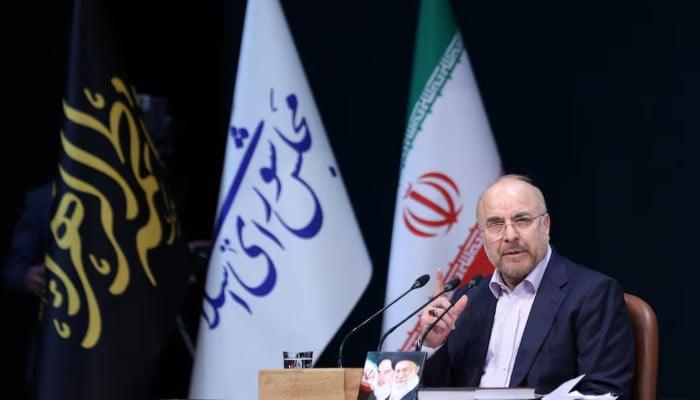
Mohammad Bagher Ghalibaf, speaker of Iran’s parliament, said in a televised speech that there had been “progress” in negotiations with Washington “but there are many gaps and some fundamental points remain.”
“We are still far from the final discussion,” said Ghalibaf, one of Tehran’s negotiators in talks aimed at ending the war launched by Israel and the United States against the Islamic Republic.
A two-week ceasefire is set to end on Wednesday unless it is renewed.
US President Donald Trump meanwhile said “very good conversations” were underway with Iran, but warned Tehran against any attempts to “blackmail” the United States.
Tehran on Friday declared open the Strait of Hormuz, which usually carries a fifth of the world’s oil and liquefied natural gas, after a ceasefire was reached in the war between Israel and Iran’s ally Hezbollah in Lebanon.
This sparked elation in global markets and sent oil prices tumbling, but as Trump insisted the blockade of Iranian ports would continue until a deal was reached to end the war as a whole, Tehran said it was closing the strait again.
“If America does not lift the blockade, movement in the Strait of Hormuz will definitely be restricted,” Ghalibaf said.
Iran’s Supreme Leader, Mojtaba Khamenei, who has not yet been seen since coming to power, said in a written message that the Iranian navy “stands ready” to defeat the United States.
Trump, speaking to reporters at a White House event, accused Iran of being “a little cute” with its recent actions and warned Tehran not to try to “blackmail” Washington with its about-face on the Strait of Hormuz.
“We have some very good conversations going on,” the president said, adding that the United States is “taking a strong stance.”
” Target “
Iran’s Revolutionary Guards warned that any attempt to cross the strait without permission “will be considered cooperation with the enemy and the offending vessel will be targeted.”
A handful of oil and gas tankers passed through the strait early Saturday during the brief reopening, tracking data shows, but others pulled out and tracking rigs showed virtually no ships crossing the waterway by late afternoon.
A British maritime security agency said the Revolutionary Guards fired on an oil tanker, while security intelligence firm Vanguard Tech reported the forces threatened to “destroy” an empty cruise ship fleeing the Gulf.
In a third incident, the British agency said it received a report that a ship “was hit by an unknown projectile which caused damage” to shipping containers, but no fire.
India’s foreign ministry said it had summoned the Iranian ambassador to New Delhi to protest a “shootout” involving two Indian-flagged ships in the strait.
A French peacekeeper killed
Diplomatically, Egypt, which participated in mediation efforts alongside Pakistan, was optimistic on Saturday, with Foreign Minister Badr Abdelatty saying that Cairo and Islamabad hoped to reach a final agreement “in the coming days”.
Two major sticking points in the negotiations have been Iran’s stockpile of weapons-grade enriched uranium and the future of the Strait of Hormuz.
Trump said Friday that Iran had agreed to hand over its approximately 440 kilograms of enriched uranium. “We’re going to get it by approaching Iran, with a lot of excavators,” he said.
Iran’s Foreign Ministry said the stockpile, believed to be buried deep under the rubble of U.S. bombing during the 12-day war last June, was “not going to be transferred anywhere” and that its handover “to the United States was never discussed in the negotiations.”
The war in the Middle East began on February 28 with a massive wave of US-Israeli surprise attacks on Iran, as Washington and Tehran were engaged in negotiations at the time.
The conflict quickly spread across the region, with Iran targeting neighboring Gulf countries and Hezbollah drawing Lebanon into the conflict by launching rockets at Israel.
A French soldier was killed and three others injured Saturday in an ambush on U.N. peacekeepers in Lebanon that French President Emmanuel Macron blamed on Hezbollah, an accusation the group has denied.
UN Secretary-General Antonio Guterres condemned the attack in a statement and said an initial assessment by the United Nations Interim Force in Lebanon (UNIFIL) found it had been carried out by Hezbollah.