
Calls for complete abolition of oil tax and reduction of diesel and electricity prices
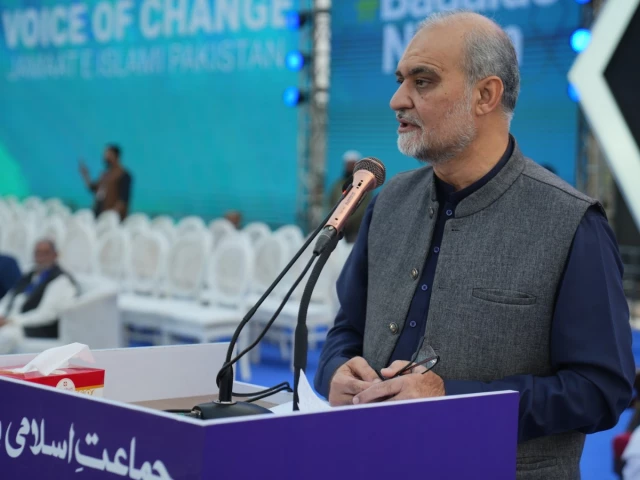
Jamaat-e-Islami Emir Hafiz Naeemur Rehman addresses the opening session as the party’s three-day congregation begins at the historic Minar-e-Pakistan in Lahore. Photo:X
LAHORE:
Jamaat-e-Islami (JI) Hafiz Naeemur Rehman on Thursday demanded an immediate reduction in oil prices and announced nationwide protests against inflation and oil tax on June 19, warning that sit-ins would be staged in all four provinces if the government’s demands were not met.
Addressing a press conference at Mansourah in Lahore, Hafiz Naeem hailed the ceasefire and agreement between Iran and the United States, describing them as a positive development for the region. He said Pakistan had played an important and constructive role in the process, while efforts by other countries in the region to achieve a ceasefire were also commendable.
He said the deal would help improve relations between Iran and Gulf countries and stressed the need for practical steps to strengthen unity among Muslim nations. He proposed enhanced cooperation between Pakistan, Saudi Arabia, Iran and Turkey to promote regional solidarity and collective strength in the Muslim world.
Referring to the agreement, the JI chief said oil prices should now be reduced significantly. He demanded that the price of petrol be immediately fixed at Rs225 per liter and frozen for the next three years. He also called for the complete abolition of the oil tax and a reduction in diesel and electricity prices.
“Reducing fuel prices by just Rs 10 or 20 per liter will not be enough. The public deserves meaningful relief,” he said.
Criticizing the federal budget, Hafiz Naeem said salaries of parliamentarians had been increased by 300 to 500 percent, while only a 10 percent increase had been proposed for government employees. He alleged that the government had increased the tax burden on citizens despite wartime conditions and collected substantial revenue through the oil tax.
He claimed that motorcycle users alone had paid Rs400 billion in taxes, while only Rs10-12 billion was collected in taxes from big landowners.
Read: Hafiz Naeem slams government for lawlessness in southern KP
Hafiz Naeem also called for the removal of development funds from lawmakers, arguing that legislation was the primary responsibility of elected representatives. He alleged that government policies had strengthened mafias in the flour, sugar and pharmaceutical sectors.
He said the proposed minimum wage of Rs 41,000 was insufficient and urged the government to formulate economic policies based on the needs of common citizens. He also demanded an income tax exemption for people earning up to Rs 125,000 per month, as well as an increase in Employees’ Old Age Benefits Institution (EOBI) funds and pensions.
Expressing concerns over allocations for education and agriculture, Hafiz Naeem said university budgets had been slashed despite claims of an education emergency. He also criticized the outsourcing of thousands of government schools in Punjab.
He said neglect of the agricultural sector had contributed to the decline in cotton production, forcing the country to rely on imports.
Commenting on the situation in Azad Jammu and Kashmir (AJK), he said all issues should be resolved through dialogue and negotiations, emphasizing that force should under no circumstances be used.
He said the causes of political instability and public unrest in the region required close attention. According to him, anti-Pakistan elements should have no place in the Joint Action Committee and efforts should focus on addressing the genuine concerns of the Kashmiri youth.
He further said that the right of representation of Kashmiris who had migrated from Indian-administered Kashmir could not be abandoned.
Responding to a question, Hafiz Naeem said the issue of Pakistanis kidnapped in Somalia had also been raised with government officials and the concerns of the affected families should be addressed on priority.
Learn more: Government criticized for Trump peace committee
He said his party remained committed to maintaining dialogue and engagement at all levels to resolve public issues.
The JI chief said he had no objection to an increase in the defense budget, but called for a review of administrative expenses, privileges and salaries. He urged the government to reduce unnecessary benefits given to senior civilian and military officials and redirect national resources towards public welfare, education, health care and employment.


