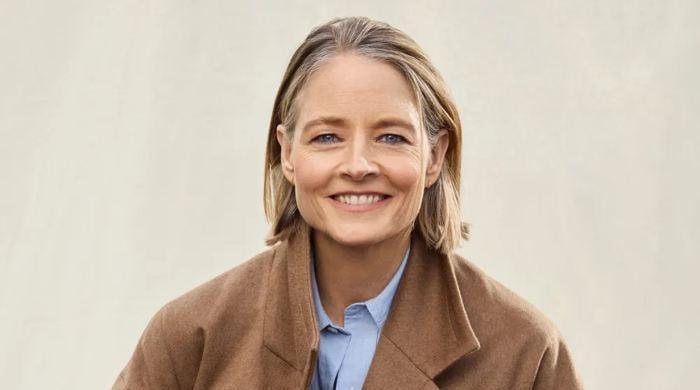
Jodie Foster tagged F1 as an “AI” film, arguing that the structure and dialogue of Brad Pitt’s blockbuster appear to have been generated by a computer.
Speaking at the Aspen Ideas festival in Colorado, the Oscar-winning actress and director used Joseph Kosinski’s sports drama to illustrate how some modern films appear to be entirely generated.
Even though she was using the film as a conceptual example rather than literally claiming it was written by artificial intelligence, her comments certainly sparked a fascinating debate about the creative state of Hollywood.
The discussion took place during a Tuesday session focused on the question of who owns the future of the entertainment industry.
Sitting down with media executive and former Sony boss Michael Lynton, Foster explored the massive forces currently reshaping the film industry, from changing audience habits to the impact of the pandemic and recent strikes.
When the conversation turned to the inevitable topic of artificial intelligence, the filmmaker questioned humanity’s long-term control over technology, wondering if we can actually dominate it for more than a few years.
When Lynton asked whether AI could actually replace human writers or actors, Foster pointed out that the industry was already using the technology to swap faces, comparing it to what regular people can do on an iPhone, but only for “real sophisticated people.”

In explaining how this affects finished projects, she noted that many existing films appear entirely computer-generated.
“I don’t say this in a derogatory way, how could I? This movie made millions of dollars, but look at a movie like F1. I’m, like, F1 was made by AI,” Foster remarked to the live audience.
This is a striking criticism given the high-profile cinematic pedigree behind the film.
F1 was actually nominated for four Academy Awards, including Best Picture, and won the Academy Award for Best Sound.
Director Joseph Kosinski wrote the screenplay alongside Oscar-nominated screenwriter Ehren Kruger, while the hard-hitting production team included Jerry Bruckheimer, Brad Pitt and Formula One champion Lewis Hamilton.
Additionally, the production team has previously publicly stated that they intentionally relied on practical effects whenever possible, using digital wizardry primarily to ensure safety on the track.
Visual effects supervisor Ryan Tudhope revealed that his team replaced real cars or added background vehicles digitally to make the audience feel part of the race.
He explained that some stunts were simply too risky to perform with the main vehicles, so a stuntman would instead use a smaller F3 car, which the effects team would later replace with their signature APXGP car.