
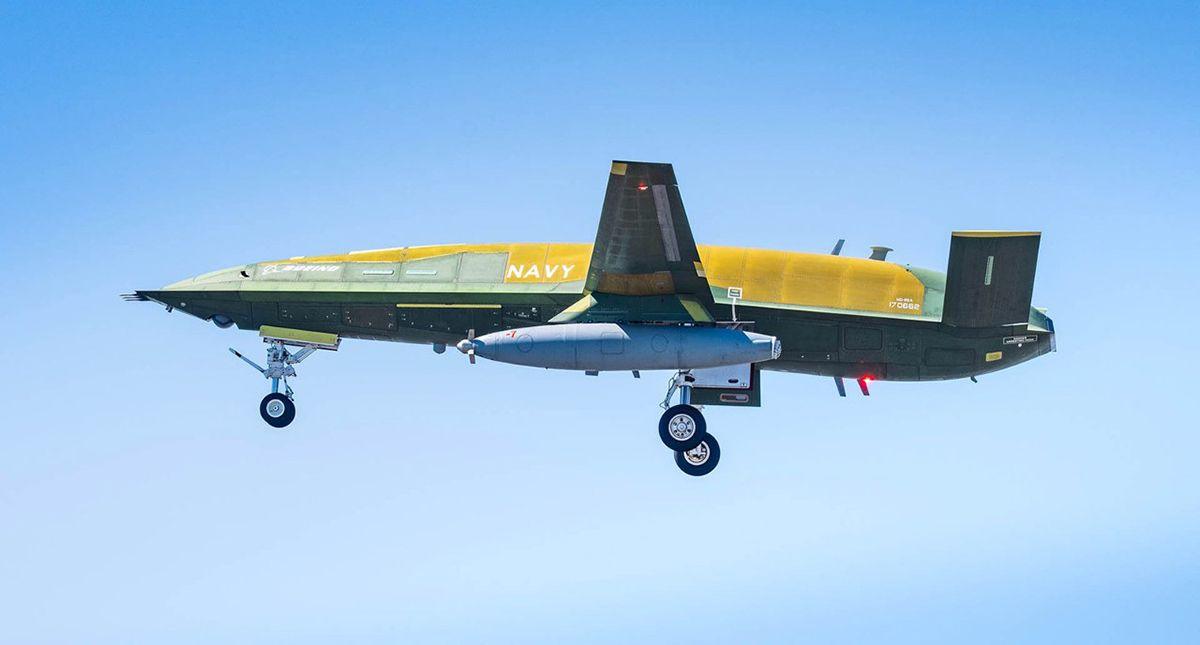
- Autonomous refueling drone completed two-hour maiden flight validating basic flight systems
- The MQ-25A will replace fighter jets in the aerial refueling role aboard aircraft carriers
- Additional testing planned before transition to carrier qualification operations in Maryland
The US Navy’s MQ-25A Stingray autonomous refueling drone, the service’s first operational unmanned aerial refueling tanker, has made its maiden flight.
The two-hour test took place over southern Illinois, where the aircraft performed a series of maneuvers to validate its basic flight controls and onboard operations.
During the mission, the drone followed a predetermined plan that saw it roll, take off, fly and land autonomously, all triggered by commands issued by the Unmanned Aviation Mission Control System’s MD-5 ground control station.
Article continues below
Navy plans autonomous operations
Air vehicle pilots establish the route and set waypoints before launch, then monitor performance throughout the flight and maintain the ability to abort or adjust the mission if necessary.
The aircraft alone managed propulsion, guidance, subsystems and flight controls once the mission began, showing how the U.S. Navy plans to conduct autonomous operations while keeping human oversight in the loop.
“Today’s successful flight builds on years of learning from our MQ-25A T1 prototype and represents a major maturation of the program,” said Dan Gillian, vice president and general manager of Boeing Air Dominance.
“The MQ-25A is the most complex autonomous system ever developed for the carrier environment, and this historic achievement brings us closer to safely integrating the Stingray into the carrier air wing.”
The Stingray fills a very specific gap in aircraft carrier operations, taking on the air-to-air refueling role that currently falls to the F/A-18 Super Hornets and allowing them to return to strike and combat roles.
Rear Admiral Tony Rossi, US Navy program manager for unmanned aviation and strike weapons, said: “The MQ-25A is not just an aircraft: it is the first step in integrating unmanned aerial refueling on the carrier deck, directly enabling our manned fighters to fly further and faster.
Previous tests using the MQ-25A T1 prototype helped set the stage for this flight, with this previous demonstrator logging approximately 125 flight hours to prove the concept before the production aircraft took over.
DefenseScoop reports that the test also validated the Rolls-Royce AE 3007N engine and confirmed integration with the ground control system that operators will rely on once the aircraft moves to carrier testing.
Additional test flights are planned from MidAmerica St. Louis Airport before the aircraft transitions to Naval Air Station Patuxent River, Maryland, where preparations for carrier qualification flights will begin.
Look on it

Follow TechRadar on Google News And add us as your favorite source to get our news, reviews and expert opinions in your feeds.


