
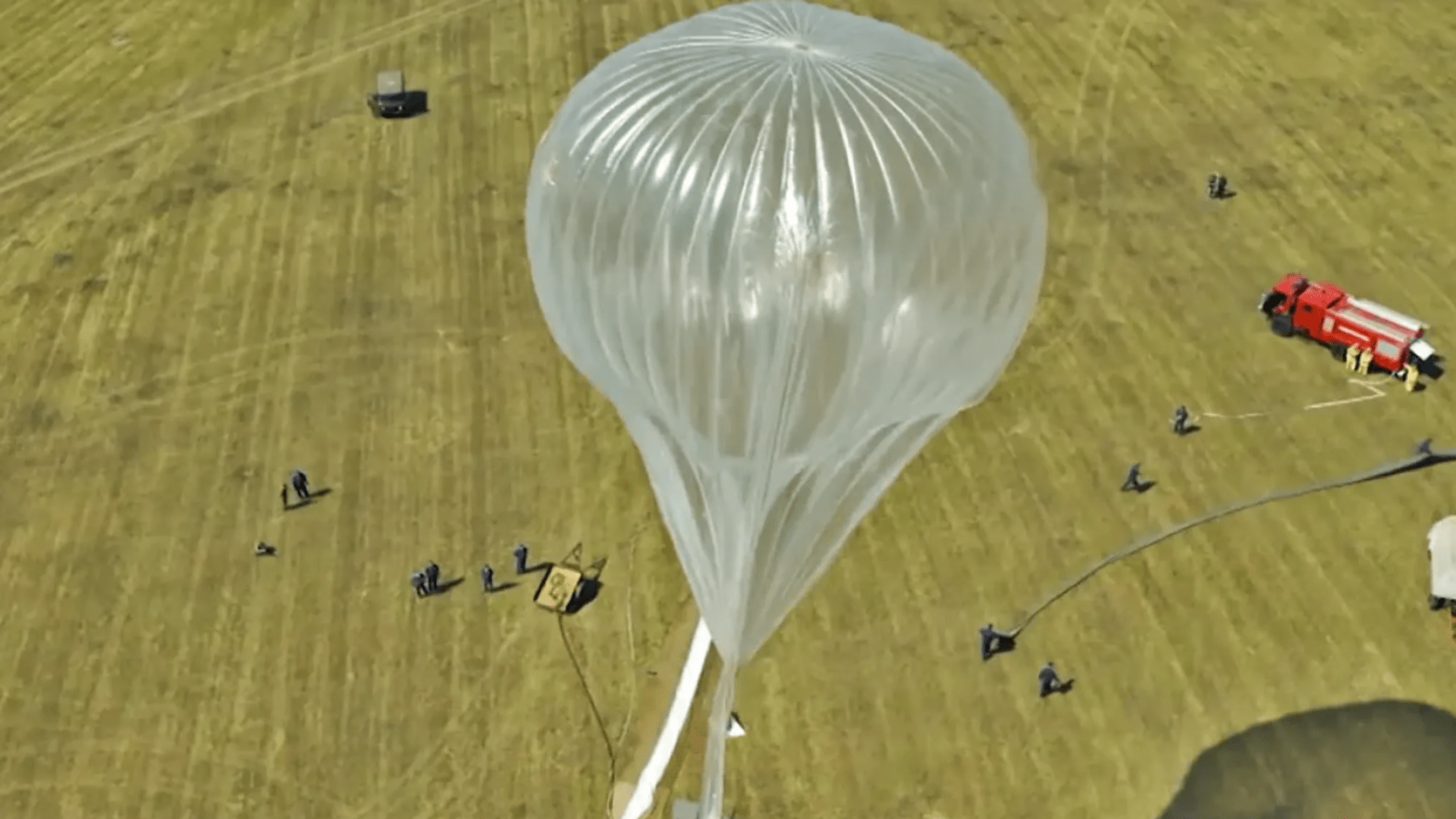
- kyiv has launched more than 1,000 cheap balloons into Russia as decoys, relays and now even launch platforms, with a balloon-dropped Hornet drone reportedly doubling its attack range to around 300 km.
- The DART missile falls from the balloons at a distance of 12-18 km and deliberately kills its own navigation in the terminal phase, leaving Russian jammers with no opportunity to attack.
- The prevailing winds from west to east give Ukraine a virtual monopoly on this tactic, even as Russia tests its Barrazh-1 relay balloon as an alternative to Starlink.
Google may have abandoned its Project Loon, a goal to use stratospheric balloons as flying cell towers, for economic reasons, but they’re back in an unexpected context: a deepening frontline between Ukraine and Russia.
This is largely because Ukraine broke the economy with a business model that Alphabet, Google’s parent company, could not have: a cheap, easy-to-use weapons platform that cannot be jammed or shot down cheaply, while enhancing its threat to Russian cities far from the front lines.
DART is a balloon-launched missile system deployed in Ukraine, developed by the Ukrainian Center of Innovative Technologies Program (CITP), which launches projectiles from the lower stratosphere towards intended targets.

A smart and “stupid” approach to missiles from their design
While most of the world continues to focus on better satellite- or laser-guided smart missiles (or precision-guided weapons), Ukraine is taking a completely different approach, and it could be a much smarter play considering how this could play out.
The balloon-based DART missile launches in a “smart” manner, relying on satellite guidance to align and aim at a target before cutting off guidance completely for the final 6 kilometers of the journey, relying solely on its solid-fuel engine to reach its intended position.
This approach, while slightly rudimentary, renders Russian jammers completely ineffective, unable to divert a DART missile from its target or “confuse” it in any way. The target does not appear to be civilians or combatants, but rather to restrict Russia’s ability to wage war by targeting infrastructure due to the operation of the missile.
DART carries an approximately 10-kilogram warhead that disperses conductive graphite filaments, a small-scale graphite bomb intended to short-circuit electrical infrastructure. This also means that it may not need the level of precision of many other missiles: power plants and grids tend to spread out, making them much easier targets than others.
Most impressive may be that the balloons, which often cost as little as $200, can attract the expensive S-300 and S-400 interceptors to respond, thereby depleting much more expensive munitions and batteries on the Russian side.
Ukraine also benefits directly from geography: winds across the front generally blow from west to east, allowing Ukrainian balloons to easily reach Russian territory, while Russian balloons have to fight against the current and often return to their own territory.
Although DART is still not codified by the Ukrainian military, it has already been demonstrated at trade shows, with the Eurosatory defense show outside Paris in June marking its first major release. Allies and adversaries alike are taking note, as the Ukraine conflict continues to offer modern lessons on the battlefield.
The US military has been evaluating tethered aerostats for drone detection and communications relay, with a view to launching drone swarms from them in the future.
The Russians, for their part, are investing in a different type of drone technology: the Barrazh-1, a stratospheric relay balloon carrying a communications payload of around 100 kilograms, which they say is built entirely domestically and aims to make up for the lack of Starlink terminals the country has for data and internet services on the battlefield.

Follow TechRadar on Google News And add us as your favorite source to get our news, reviews and expert opinions in your feeds.


