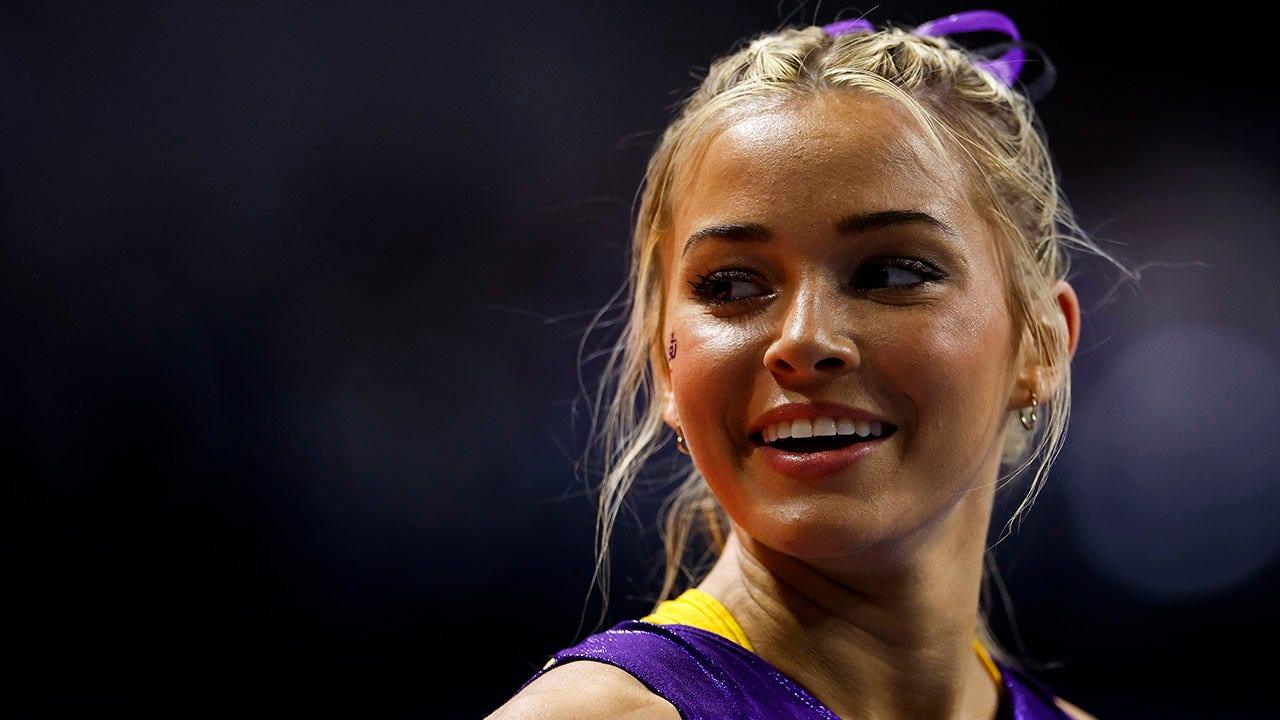
Olivia Dunne, one of the most followed collegial athletes on social networks, testified against the House Regulations of $ 2.8 billion in the NCAA at the final hearing on Monday.
Dunne was one of the four university athletes who testified against the colony. The LSU gymnast expressed its objections to the formula used to define the value of the name, image and resemblance (zero) of an athlete. She insisted that her zero estimate was too weak.
CLICK HERE for more sports cover on Foxnews.com
Olivia Dunne des Tigers LSU looks before a meeting against the Gators of Florida at the Stephen C. O’Connell Center on February 23, 2024 in Gainesville, Florida. (Images James Gilbert / Getty)
She described herself as “an athlete in division I, a businesswoman, and I was the most paid female athlete since zero rules changed”. She said that the regulations had not recognized its true value.
“These regulations use an old logic to calculate modern value,” said Dunne. “We need a narrow snapshot of a still ripening market and freezes it, ignoring the trajectory we were and the offers we have lost and the future we could have.”
A lawyer for the complainants later said that the gymnast would receive an updated allowance.
Florida wins the NCAA tournament on Houston after erasering the 12 -point deficit in an exciting way
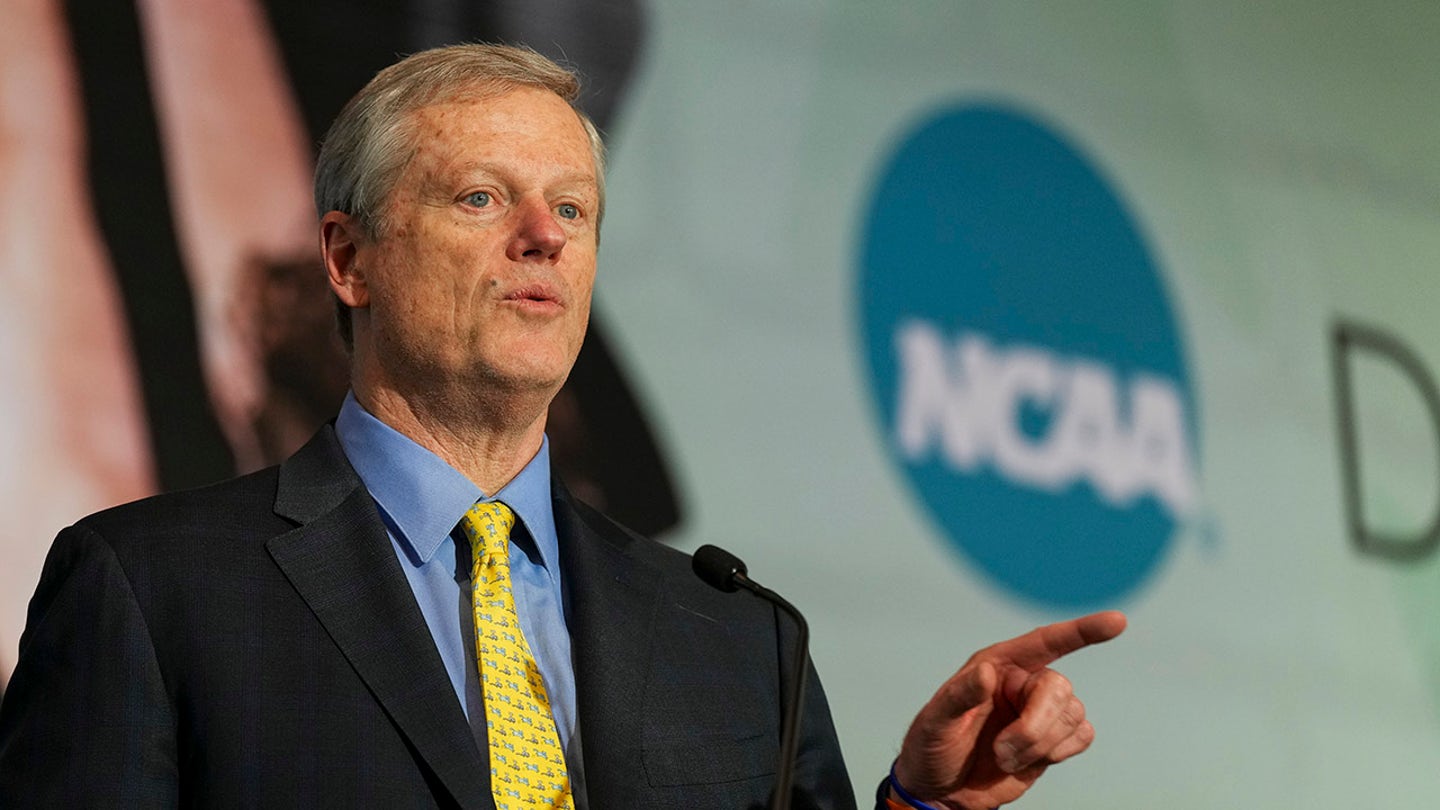
The president of NCAA, Charlie Baker, speaks during the business session of division I of the organization during their annual agreement on Wednesday January 15, 2025 in Nashville, Tennessee. (AP photo / George Walker IV, file)
The regulations of the Chamber, named after the house of swimmer of the state of Arizona, will allow schools to pay 22% of their income from the rights of the media, ticket sales and sponsorships directly to university athletes for the use of Nile. Payments from external sources would always be allowed.
Nola.com noted that the regulations would offer more than 2.5 billion dollars to athletes who could not earn any money in any way before the NCAA has changed its rules in 2021. The report also noted that most of the damages would be paid to former football and male basketball players of electric conference schools because their sports are the most income.
The regulations also requested an exchange center to ensure that any zero transaction worth more than $ 600 is fixed at a just market value to try to thwart the supposed payment offers.
On Monday, the American district judge Claudia Wilken gave no indication that complaints changed their minds about the regulations. She recognized the concerns and asked each lawyer for new comments on several subjects. His decision should arrive in a few weeks.
“Basically, I think it’s a good regulation, don’t quote me, and I think it’s worth continuing,” said Wilken. “I think some of these things could be corrected if people were trying to repair them and it was worth trying to repair them.”
Wilken has already granted the preliminary approval of the regulations involving NCAA and its largest conferences. It should come into force on July 1.
The NCAA logo on the entrance panel outside the NCAA headquarters on February 28, 2023 in Indianapolis. (Mitchell Layton / Getty images)
“Today’s hearing on the historic regulation was an important step in the modernization of university sports,” NCAA said in a press release. “If it is approved, the regulations will allow students-athletes the possibility of receiving almost 50% of the income from the sports department in a sustainable and fair system for the coming years.”