
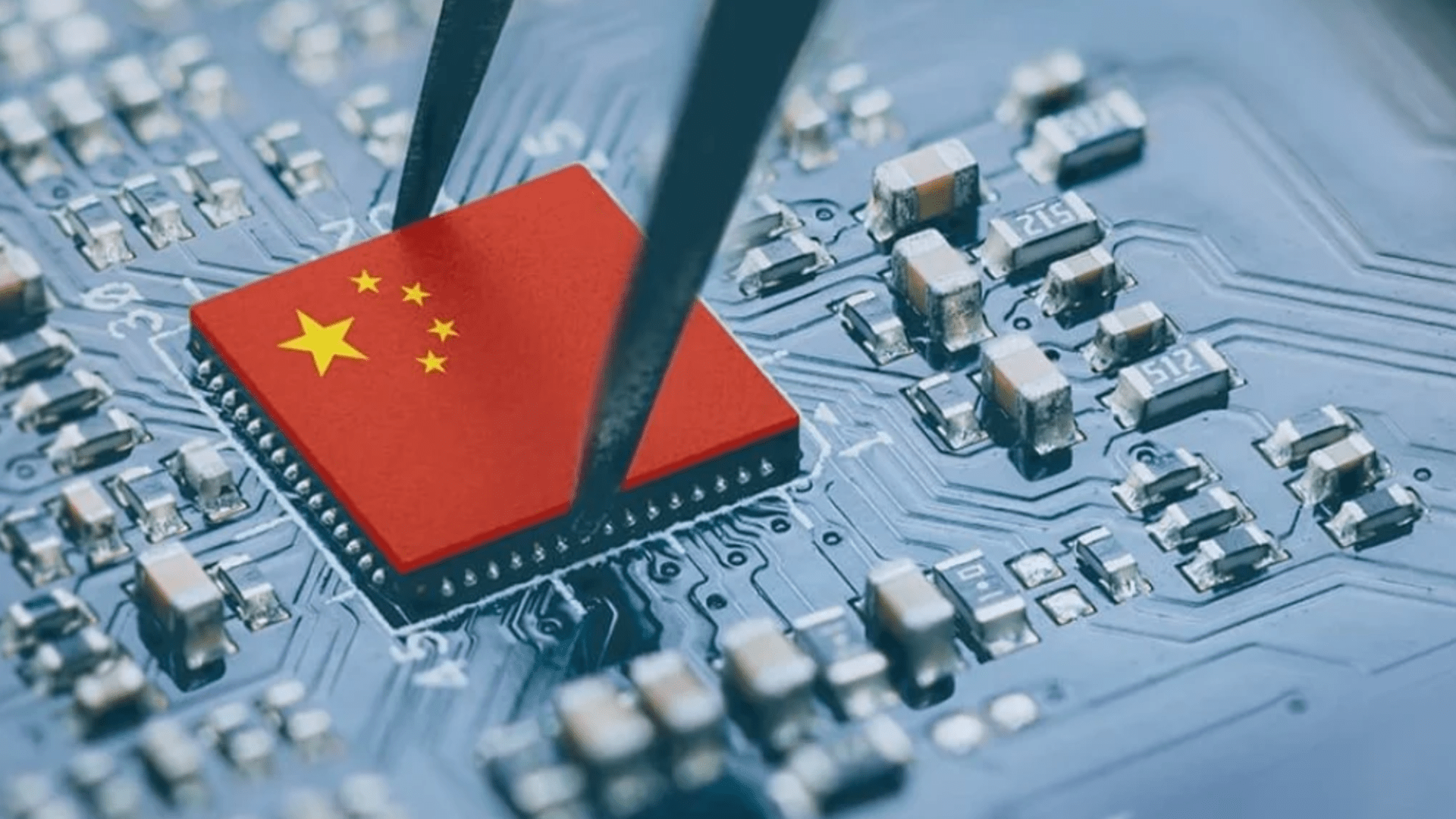
- LongCat-2.0 contains 1.6 trillion parameters and a million token context
- Meituan trained the model using more than 50,000 domestic AI accelerators
- The model completed pre-training entirely without any Nvidia hardware involved
Meituan released LongCat-2.0, a large open source language model containing 1.6 trillion parameters and supporting a million token pop-up.
This scale puts the model roughly on par with DeepSeek’s flagship V4-pro, launched in April this year.
Meituan claims that LongCat-2.0 underwent comprehensive training on a computing cluster containing more than 50,000 domestic AI accelerators, making it the first trillion-parameter model to achieve this scale.

Home equipment takes the next step in training
The announcement comes as China continues to expand its domestic computing capabilities amid export restrictions limiting access to advanced U.S. graphics processors.
Unlike DeepSeek V4-pro, which relied only on Chinese chips during inference, LongCat-2.0 also completed the much more demanding pre-training stage using domestic hardware.
This means that the company has completely avoided using foreign AI hardware such as Nvidia’s.
The company said the system is built entirely on large AI ASIC superpods while using Huawei’s collective communication library to improve the stability of communication between processors.
AI chips produced in China have been widely adopted for model inference as part of Beijing’s push for technological autonomy, although pre-training has remained much more difficult.
Meituan claims that LongCat-2.0 showed strong performance in coding and agent-based tasks, while outperforming Google’s Gemini 3.1 Pro on several tests, including Terminal-Bench 2.1 and SWE-Bench Pro.
Nonetheless, he acknowledged that his latest model still lags behind OpenAI’s GPT-5.5 and Anthropic’s Claude 4.8 Opus when it comes to broader frontier capability assessments.
“This put to rest any concerns about the Atlas-950 SuperPoDs [being] unable to form large LLMs for [Zhipu AI] and DeepSeek,” said technical analyst TP Huang.
Technical obstacles remain despite greater ambitions
Despite the successes Meituan has recorded, it doesn’t come without the significant hurdle of replacing Nvidia hardware.
The company faced significant engineering challenges throughout development, even though it trained without relying on restricted foreign graphics processors.
Meituan said memory had become the main bottleneck because each domestic accelerator offered significantly less capacity than Nvidia’s H800 chip, which remains unavailable for export to China under U.S. rules.
So engineers built additional optimization systems intended to maintain stable, secure, and scalable training across the cluster despite its considerable size and complexity.
Hanchi Sun, a PhD researcher in computer science, described the feat by writing, “Near-borderline performance, trained on 50,000 Chinese national accelerators,” before adding, “The first to achieve this goal!”
LongCat-2.0 has not yet appeared in major independent evaluations, including Artificial Analysis, Arena, Agents’ Last Exam or CyberGym, leaving external verification of several reported capabilities pending.
However, the statement suggests that Chinese developers are trying to reduce their dependence on Nvidia by expanding domestic hardware beyond any deduction in large-scale training.
Broader benchmark results on AI tools will ultimately determine how competitive this approach becomes in the future.
Via SCMP

Follow TechRadar on Google News And add us as your favorite source to get our news, reviews and expert opinions in your feeds.


