
Not long ago, Lionsgate – the last major independent film company – seemed headed for the Hollywood scrap heap.
He didn’t seem to find any success. The studio released 17 films in 2024 and only generated $251 million in ticket sales domestically. That figure was 85 percent below Lionsgate’s 2012 peak, when Katniss Everdeen, the “Twilight” vampires, Madea and the “Expendables” mercenaries helped generate $1.72 billion. As the crisis persisted last summer, Lionsgate shares fell to $5.76, their lowest level since the Covid-19 pandemic, when most theaters closed with no reopening in sight.
The conventional wisdom on Wall Street and Hollywood: Lionsgate’s best hope was to find a buyer. If old-fashioned cinema giants like Paramount and Warner Bros. had concluded that they had to merge to compete with Big Tech, what chance did little Lionsgate have?
But the studio has since done something few thought possible: it gave itself options.
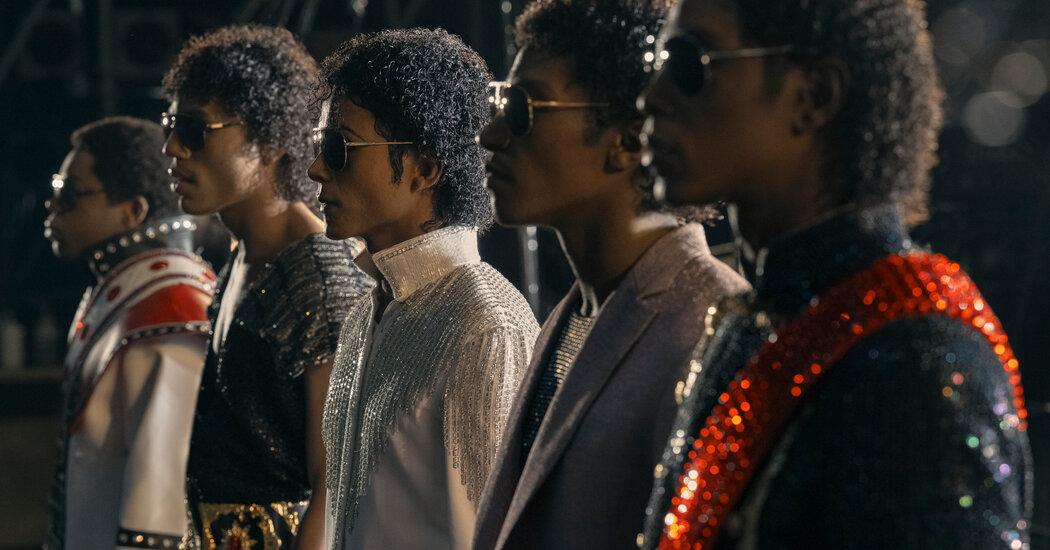
Over the weekend, Lionsgate’s controversial Michael Jackson biopic “Michael” surpassed $1 billion at the worldwide box office, becoming the studio’s first film to reach that milestone, according to Rentrak, a movie data service. Lionsgate took over the $150 million project after Hollywood’s biggest studios died, believing that decades of child molestation accusations against Mr. Jackson made the project too risky. (Universal and Kino Films have partnered with Lionsgate to distribute the film overseas.)
“Michael” followed “The Housemaid,” a Lionsgate thriller based on the book by Freida McFadden. It cost $35 million to make and grossed $400.5 million, a figure that left Hollywood speechless. Lionsgate is already planning sequels to both films. No other studio has found two new theatrical franchises this year.
In November, Lionsgate is releasing a sequel to “Hunger Games.” Its longer-term pipeline includes a “Rambo” prequel, two more “John Wick” films, “Now You See Me 4” and two sequels to Mel Gibson’s blockbuster “The Passion of the Christ.” The studio also teamed up with horror producer Jason Blum to reimagine “The Blair Witch Project” and with filmmaker James Wan to revive the lucrative “Saw” series.
“The lion roars,” said Sean Diffley, who heads media and entertainment research for Morgan Stanley.
Lionsgate shares are up about 130% since June of last year. In the last quarter, which ended before “Michael” arrived in theaters, operating profit increased 52 percent. Earnings per share rose to 24 cents, compared with a loss of 44 cents a year earlier.
“They have proven that they can operate on their own effectively — that they can still create big hits and find new intellectual properties in a tricky market,” Mr. Diffley said, referring to intellectual properties like the “Housemaid” trilogy of books.
“At the same time,” Mr. Diffley added, “there is certainly a view in the market that scale matters.”
Before conglomerates and streaming rewrote the rules, every Hollywood studio looked a little like Lionsgate. A single blow could restore the balance sheet. Today, Lionsgate is the only major studio not part of a company that makes most of its money in related businesses. Disney, for example, owns seven movie studios. Yet its films represent such a small portion of its revenue that the company no longer presents them in its financial reports, but instead includes the results in a line item called “content sales.”
The challenge for an independent studio like Lionsgate, of course, is that there’s no theme park division or consumer products empire to cushion the blow when films disappoint.
Lionsgate has periodically attracted potential buyers, including Sony Pictures Entertainment, Hasbro and Legendary Entertainment, home to the “Godzilla” and “Dune” film franchises. Last month, rumors spread through Hollywood that Netflix was suing the studio. Netflix quickly shot them down.
The debt made us think; Lionsgate has $1.78 billion in long-term debt and an additional $1.29 billion in borrowings tied to individual films and television series.
The contenders also had to take on Lionsgate’s two largest shareholders. Mark Rachesky, the studio’s chairman, and Steven Mnuchin, who joined Lionsgate’s board in January, together control about a quarter of the shares. (Last year, however, Lionsgate eliminated its dual-class stock structure, leaving only one class of voting stock — a simplification that can make merger negotiations simpler.)
Along with films, Lionsgate makes many television shows, sometimes in partnership with other studios. The biggest include “The Studio” on Apple TV, “The Rookie” on ABC and “The Hunting Wives” on Netflix. Jon Feltheimer, Lionsgate’s chief executive, told analysts in May that the studio would “nearly double” the number of scripted episodes delivered this year compared to last year.
Lionsgate also has a 20,000-title film and television library that generates more than $1 billion in annual revenue.
But the studio’s current engine is movies, and Adam Fogelson deserves a lot of the credit.
Mr. Fogelson, a former chairman of Universal Pictures known for his franchise savvy, took over the Lionsgate Motion Picture Group in 2024. Production had been scrambled by the Covid-19 pandemic and strikes in Hollywood, leading to a parade of heists, including “Borderlands,” an action comedy that cost $115 million and raked in $33 million worldwide.
As a practice, Lionsgate reduces risk by selling most distribution rights overseas and spending less on marketing (sometimes much less) than the major studios. But even these guarantees were not enough to save the company’s bottom line.
The first films to be directed by Mr. Fogelson began arriving late last year. Almost all of them were successful, including “The Long Walk,” an inexpensive horror thriller, and the sequel “Now You See Me: Now You Don’t.” According to IMDBpro, a movie data service, Lionsgate captured 10 percent of the domestic box office this year, nearly double that of Warner Bros.
The pressure is now on Mr. Fogelson to continue his momentum. In an interview, he said he expected to have an update on a “Michael” sequel later this summer. He also said he was excited about the new movie “Dirty Dancing,” with Jennifer Gray returning as Baby. Lionsgate also continues to explore ways to bring the “Twilight” franchise to a new generation.
“I am incredibly optimistic about where we are headed,” Mr. Fogelson said, “with each project driven by the distinct creative vision of some of the most talented filmmakers in the industry.”


