
NEWYou can now listen to PK Press Club articles!
Major League Baseball’s next union fight officially has its opening proposal.
The MLB Players Association made its first official offer to owners Wednesday as the sport begins work on a new collective bargaining agreement, and the union’s initial wish list is exactly what fans can expect: higher salaries, more protections for players and a new mechanism to force lower-spending teams to invest more money in the on-field product (cough, Pirates, cough).
Among the most important elements of the proposal is a massive increase in the league’s minimum salary. The MLBPA is seeking a minimum of $1.5 million starting in 2027, according to a proposal document published by Bob Nightengale of USA Today. This would almost double the current minimum of $780,000.
OUTKICK IS NOW ON THE FOX APP: CLICK HERE TO DOWNLOAD
The union also proposed expanding the pre-arbitration bonus pool, expanding salary arbitration eligibility, increasing protections against service time manipulation, eliminating the qualifying offer and removing penalties for clubs that sign free agents.
But the most interesting element might be the proposed “competitive integrity tax”.
MLB players want to raise the payroll floor, challenge cheap owners and reshape the salary cap debate before the CBA expires in December 2026. (Justin Edmonds/Getty Images)
Under the proposal, the tax would apply to clubs that don’t meet minimum payroll criteria, with teams spending less than $150 million. In other words, players aren’t just targeting the biggest spending teams (cough, Dodgers, cough). They also target franchises that collect league revenue while refusing to spend enough on major league talent.
This is where the next union fight could become particularly interesting.
SMALL MARKET MLB TEAMS OUTPERFORM BIG SALARIES, UNDERMINING OWNERS’ PUSH TO CANCEL 2027 SEASON
MLB already has a competitive breakeven tax, more commonly known as a luxury tax, that punishes teams for spending above certain payroll thresholds. The MLBPA proposal would increase the base luxury tax threshold from $244 million to $300 million and remove non-monetary penalties, such as draft consequences, according to ESPN’s Jeff Passan.
So the union’s message is clear: stop punishing aggressive spenders so harshly and start putting pressure on non-spending teams.
The proposal also includes changes to revenue sharing. The Sports Business Journal reported that the MLBPA plan would guarantee each small-market team at least $240 million in annual revenue, but with conditions requiring those funds to be used to improve on-field performance. The proposal would also create penalties for clubs that do not spend revenue sharing payments on team payrolls.
It’s a plan that fans of low-spending teams are likely to support (cough, Reds, cough).
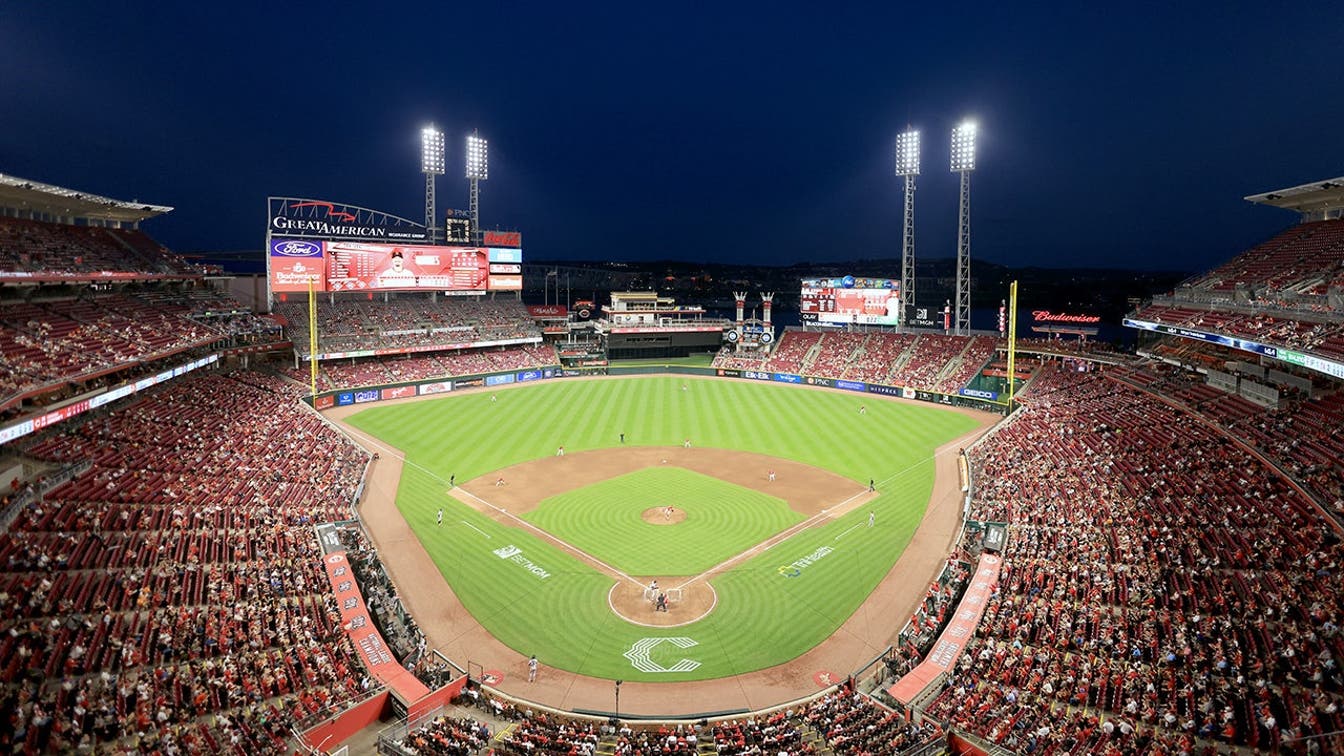
General view of Great American Ball Park, home of the MLB’s Cincinnati Reds. (Justin Casterline/Getty Images)
The economic argument for baseball usually revolves around the Dodgers, Mets, Yankees and other big spenders. Owners who want a salary cap often point to the competitive balance and financial gap between big-market and small-market teams. But the players’ proposal cleverly attacks the problem from the other direction.
Instead of capping what wealthier teams can spend, the MLBPA wants to raise the floor for teams that spend very little.
ANGELS OWNER ARTE MORENO DRAWS CRITICISM FROM MLBPA AFTER SAYING FANS DON’T PRIORITIZE WINNING
The union also proposed allowing players with at least five years of service and who have reached the age of 30 (as of November 1) to qualify for free agency. Under the current system, players generally need six years of major league service to reach free agency.
The proposal is only the first step in a work process that promises to be difficult. The current collective agreement expires on December 1 and the owners are likely to resort again to a version of a salary cap and floor system. The MLBPA has long opposed a salary cap, and its interim executive director, Bruce Meyer, has argued that economic reform can be accomplished without a salary cap.
This question is at the heart of the dispute.
Players want more money spent on salaries without limiting what teams at the top can spend. Homeowners want greater cost certainty and are almost certainly considering a ceiling and floor system as a solution to balance the competition.
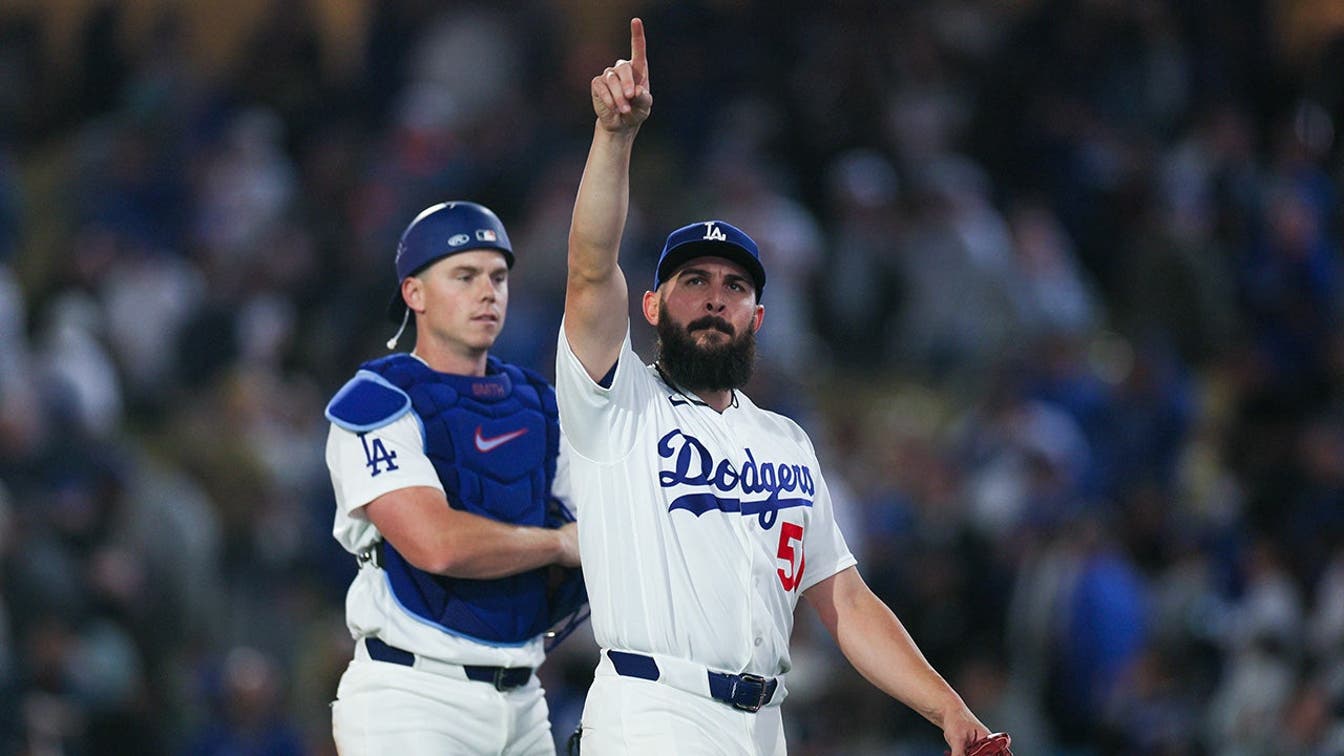
The MLBPA wants to give teams like the Los Angeles Dodgers more leeway to spend money on players while punishing teams that don’t spend enough. (Ronaldo Bolanos/Los Angeles Times)
Both parties have been here before.
The 2021-22 lockout didn’t cost the sport any regular-season games, but it delayed the deal until March and jeopardized spring training. It was MLB’s first work stoppage since the 1994-95 players’ strike.
Baseball is now heading toward another high-stakes collective bargaining event, with the sport enjoying strong momentum on the field, but with the same fundamental financial struggle bubbling beneath the surface.
The players have now made their first move.
And if Wednesday’s proposal is any indication, they’re not just preparing to take on the league’s richest owners.
They also go after the cheapest ones.