NEWYou can now listen to PK Press Club articles!
If you’re looking for a comeback story to watch in 2026, you may want to pay close attention to the re-emergence of Deshaun Watson as the starting quarterback with the Cleveland Browns under new coach Todd Monken. Early reports out of Cleveland claim Watson has impressed in organized team activities and has overtaken Shedeur Sanders as the club’s QB1.
Although it’s far too late for Watson to live up to his historic contract — $230 million fully guaranteed over five years after the Browns traded six draft picks just to acquire him — he could line up for another starting job, or perhaps extend his stay in Cleveland, with a bounce-back campaign that reminds the football world of his spectacular skills as a pocket-game wizard.
Now I certainly understand why skeptics roll their eyes at this statement. It’s been a while since we’ve seen the best of Watson, who is now 30 years old. But the recent claims of Sam Darnold, Baker Mayfield and Geno Smith should create some optimism that Watson can turn things around under a head coach who believes in his game and brings a system that will showcase his talent.
Deshaun Watson #4 of the Cleveland Browns throws a pass during a volunteer veteran minicamp at the CrossCountry Mortgage Campus on April 21, 2026 in Berea, Ohio. (Photo by Nick Cammett/Diamond Images via Getty Images)
Monken is coming off a three-year tenure in which he helped Lamar Jackson win his second MVP award (and nearly a third), while completing 66 percent of his passes for 10,399 yards with 86 touchdowns and just 18 interceptions in 46 games. Jackson finished with a passer rating of at least 102.7 in each of those seasons and averaged a sparkling 8.4 yards per pass attempt during that span.
These numbers are especially noteworthy because Jackson has transitioned from a run-heavy offense to a spread scheme featuring more downfield throws and a renewed commitment to a fast-paced passing game. With Monken leveraging his experience as a player at the college level, the Baltimore Ravens used more spread formations and air raid concepts to make the game easy for their electric QB.
Watson previously experienced similar success during his time with the Houston Texans, running a wide-open offense under Bill O’Brien. The former first-rounder completed 67.8 percent of his passes for 14,539 passing yards with 104 touchdowns and 36 interceptions for a passer rating of 104.5 over his first four seasons. Averaging 8.3 yards per attempt during his 54-game stint in Houston, Watson clearly excelled in the spread and shred system, much like the offense he thrived in while leading Clemson to a national title in 2016.
Skeptics will point out that Watson’s recent struggles and injuries should not be ignored, as we haven’t seen the former Pro Bowler at his peak since 2020. He seemingly lost his mojo after sitting out all of 2021, serving an 11-game suspension in 2022 for violating the NFL’s personal conduct policy following more than two dozen sexual assault allegations, and suffering injuries to his shoulder from starting and in Achilles between 2023 and 25. Watson has only appeared in 19 games out of a possible 85 over the last five seasons and his last NFL action came in October 2024.
However, the Browns’ ill-fitting scheme also contributed greatly to Watson’s struggles.
Although Kevin Stefanski’s play-action, center-play system worked well for some passers, Watson never found his rhythm in the scheme, as evidenced by his dismal numbers (61.2% completion rate, 3,365 passing yards, 19 touchdowns, 12 interceptions, 80.7 passer rating) in those 19 games. Whether it’s rust, resistance, or a complete regression, Watson’s mediocre play is one of the more puzzling developments we’ve seen in recent years.
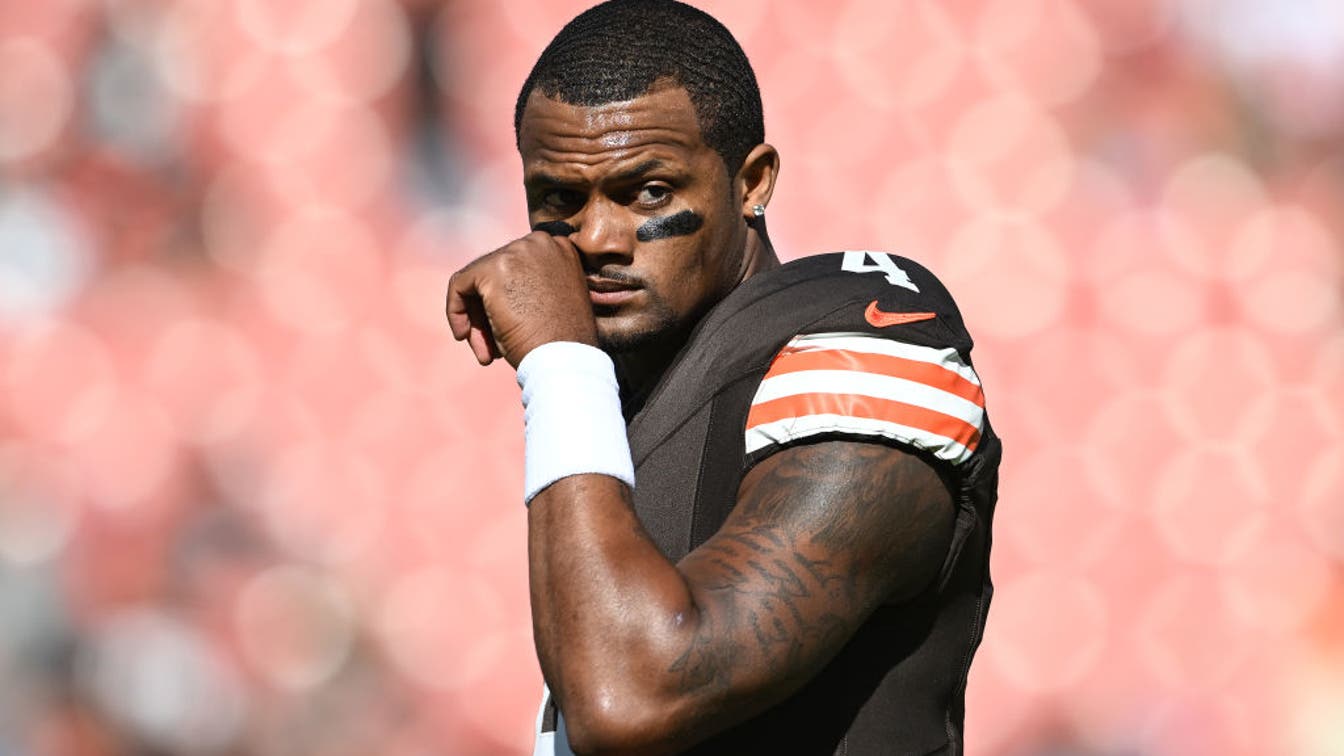
Deshaun Watson #4 of the Cleveland Browns looks on during warmups before a game against the Cincinnati Bengals at Huntington Bank Field on October 20, 2024 in Cleveland, Ohio. (Photo by Nick Cammett/Getty Images)
That said, I’m reminded of what Hall of Fame executive Ron Wolf once told me he learned from the late Al Davis: Don’t give up on a blue-chip talent because a new voice or environment might unlock his potential. While this discussion is part of a conversation about first-round picks getting multiple chances around the league, the point resonates in this scenario, given Monken’s arrival as the Browns’ new head coach and play-caller and Watson’s early-career pedigree.
Although Watson has struggled since arriving in Cleveland four years ago, he was a three-time Pro Bowler in Houston and widely considered a top-five QB.
“Any time you have a player that at one point showed skill at an elite level,” Monken reportedly said at the NFL Scouting Combine in February, “I think you’re always going to give them the benefit of the doubt that in some way or another maybe we can take that away from him again, and I think that’s how you should look at every player.”
By giving Watson a clean slate and implementing a system more suited to his skills, the Browns are giving hope to the man who once led the league in passing (4,823 yards in 2020) and set a Texans franchise record with 33 touchdowns in the same season. The team hopes a new scheme and improved supporting cast will help Watson return to the pinpoint passing that made him one of the most feared young quarterbacks in the game.
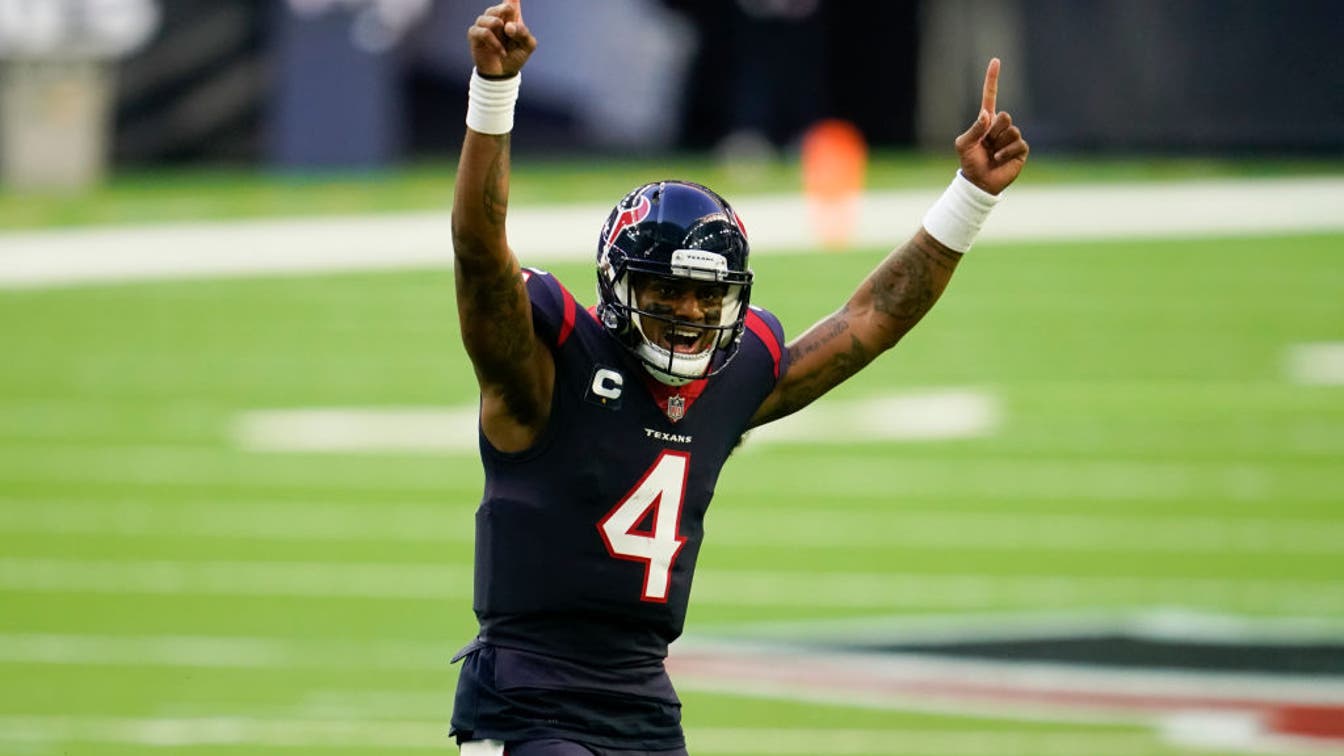
Deshaun Watson #4 of the Houston Texans celebrates during an NFL game against the Tennessee Titans on January 3, 2021 in Houston, Texas. (Photo by Cooper Neill/Getty Images)
From a schematic standpoint, Monken’s emphasis on the deep ball and fast-paced play of shotgun formations should exploit Watson’s skills as a pacey passer. The 6-foot-3, 223-pound Watson excelled at “catch it and rip it” concepts early in his career, thanks to his extensive experience throwing fasts, screens and RPOs at Clemson. Additionally, he is an accurate passer on deep balls with his rainbow throws regularly flying over the top of the defense.
The Texans took advantage of his skills by surrounding him with speedsters and catch-and-run specialists (Will Fuller, Brandin Cooks, Kenny Stills and Randall Cobb) who could track down his deep throws or turn his quick passes into big gains on the perimeter. With perennial Pro Bowler DeAndre Hopkins dominating as the WR1, the team has put enough playmakers around Watson to allow him to target the entire field.
Cleveland can emulate this model after drafting KC Concepcion, Denzel Boston and Joe Royer last April to play alongside Jerry Jeudy, Isaiah Bond and Harold Fannin Jr. While the offseason moves weren’t made with Watson in mind, he should benefit from a more diverse and explosive receiving corps around him.
With a rebuilt offensive line featuring a mix of veteran free agents and trade acquisitions (Zion Johnson, Elgton Jenkins and Tytus Howard) and a top-10 draft pick (Spencer Fano), the Browns have a set of “trench warriors” in front of Watson who should keep him upright and protected in the pocket. Additionally, the unit should keep defenders off the ball to give the Browns a credible running game, taking some of the pressure off the quarterback to carry the offense.
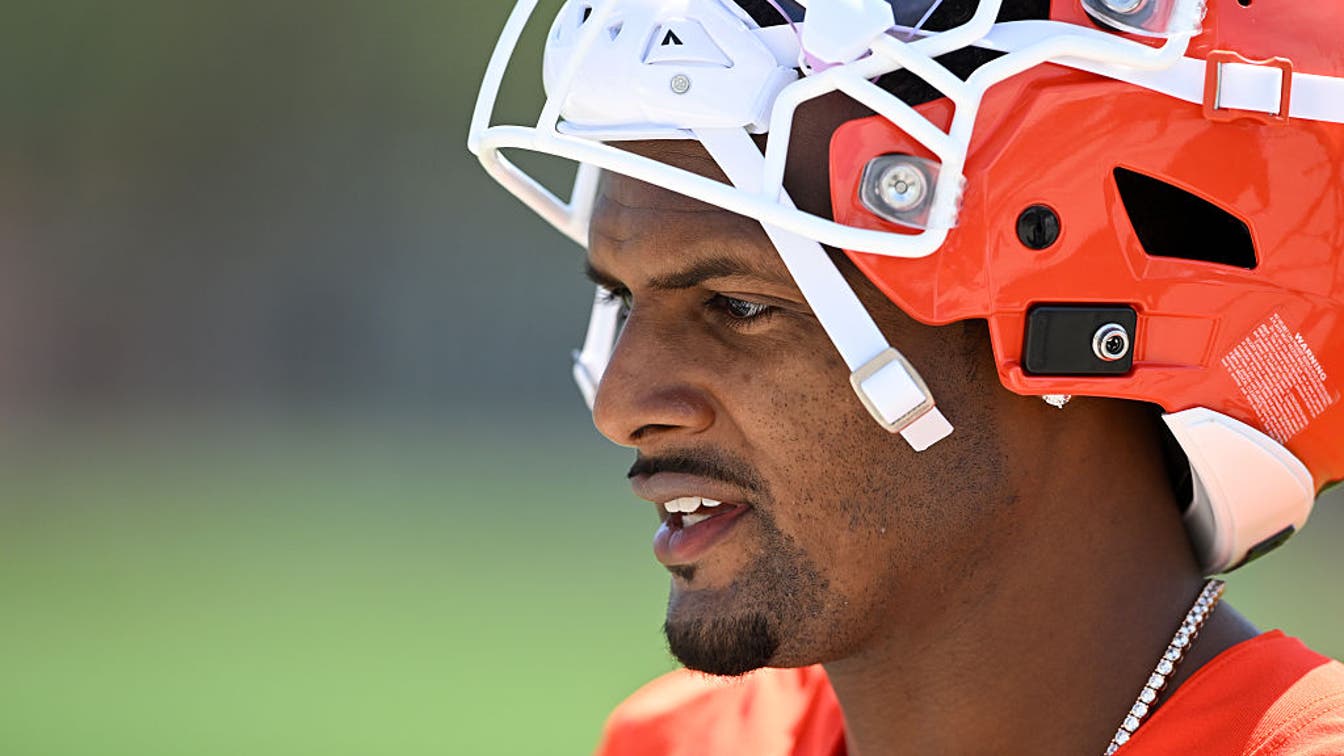
Deshaun Watson #4 of the Cleveland Browns attends a volunteer veteran minicamp at the CrossCountry Mortgage Campus on April 21, 2026 in Berea, Ohio. (Photo by Nick Cammett/Diamond Images via Getty Images)
While it’s hard to imagine a player bouncing back after five years of mediocre play and injuries, Darnold is coming off a Super Bowl with the Seahawks after failing with the Jets and Panthers for five seasons before mastering his trade as a backup with the 49ers and delivering a spectacular campaign with the Vikings in 2024.
Mayfield also endured a roller coaster ride as a former No. 1 overall pick who was fired from his original team (the Browns) and kicked out of his second team (the Panthers) before turning the corner with the Rams and Buccaneers.
Smith is probably the best example of an improbable comeback after earning back-to-back Pro Bowl berths in Seattle (2022-23) following a six-year hiatus from a starting role. He served as a backup in four different organizations before finally replacing Russell Wilson as the Seahawks’ starter after a two-year apprenticeship. The veteran’s odyssey shows the importance of finding the right program and environment to thrive as a beginner.
Plus, it’s a story that should give Browns fans hope that Watson, if he wins the starting job, can play like the franchise quarterback Dawg Pound expected him to be all along – if only for one season.