
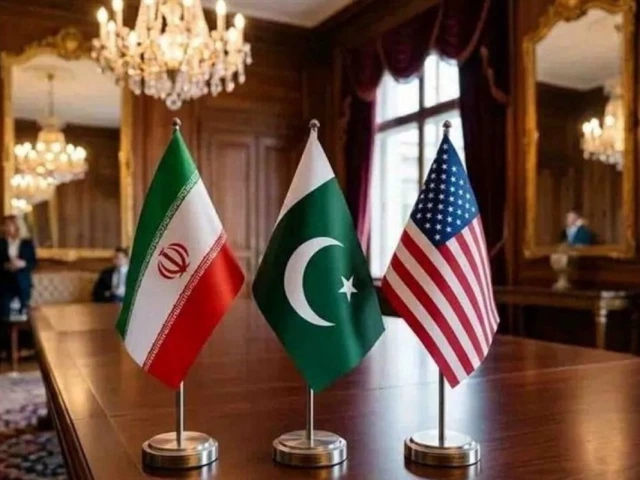
Both sides are actively engaged in channeled diplomacy through Pakistan to reach an agreement, according to Pakistani sources.
Iran’s national news agency said Iran would not participate in the second round of negotiations with the United States to be held in Islamabad. PHOTO: APA NEWS
Away from the media spotlight, Pakistan is quietly working to break the current impasse between the United States and Iran, focusing on finding a new formula for a long-awaited deal on the Strait of Hormuz and Tehran’s nuclear program, two government sources familiar with the matter said. Anadolu Wednesday.
“Both sides are actively engaged in backdoor diplomacy, passing formulas and counter-formulas through Pakistan to reach an agreement,” a source said, adding that the current negotiations were focused on the almost closed Strait of Hormuz and the nuclear issue.
The sources, however, did not provide details of the formulas from both sides, saying Pakistan was focused on finding a “middle path” on the two simmering issues.
Learn more: ‘No more nice guys’: Trump tells Iran to ‘get smart soon’ over nuclear deal
Washington and Tehran are currently deadlocked over a new Iranian peace proposal transmitted by Pakistan, following two visits to Islamabad last week by Abbas Araghchi, the Iranian foreign minister.
The proposal proposed ending the war and reopening the Strait of Hormuz in exchange for the United States lifting its blockade of Iranian ports.
Tehran also suggested that negotiations on its nuclear program be postponed until the next round of talks, an offer that President Donald Trump “has not yet expressed interest in accepting,” according to sources.
“Nothing [in the formulae] is final because discussions continue,” the source said.
“I hope both sides will reach a common ground soon,” the source added, saying that Foreign Minister Ishaq Dar and Chief of Defense Forces and Chief of Army Staff Field Marshal Asim Munir were “personally engaged” in the ongoing backdoor diplomacy to break the deadlock.
Both men actively participated in the mediation process, as CDF Munir spoke with Trump several times in recent weeks.
“Iran’s current position is that, given that the nuclear issue is complex and [it] requires long and comprehensive negotiations, the Strait of Hormuz issue should be discussed in the first phase, which is easier to resolve. The US side, however, does not agree with this proposal and wants to reach an agreement on both issues simultaneously,” the source said.
“But Trump is still discussing this proposal with his advisers,” they added.
Low chances of resumption of war
Pakistan hosted the first round of negotiations between Washington and Tehran on April 11-12, but failed to reach an agreement ending the war.
The talks follow a two-week ceasefire brokered by Pakistan on April 8, which was later extended by Trump.
Prime Minister Shehbaz Sharif said today that Islamabad’s diplomatic efforts were continuing “consistently” to achieve a negotiated settlement to the conflict, which has crippled global energy supplies and daily life across the Middle East.
Downplaying the chances of a resumption of war, Pakistani sources appear confident that the ongoing ceasefire will continue despite “hard-hitting” statements from both sides.
Read also: Israel sets two-week deadline for Lebanon negotiations, warns of further military escalation
“It is a grueling match between the two sides. Otherwise, the chances of a resumption of war by the United States are less, despite a reported military buildup in the Middle East, which Tehran considers a psychological tactic,” a source said.
“Iran feels that due to already disrupted energy supplies around the world, growing opposition to the war in the United States and from its European allies, as well as Trump’s declining popularity, pose major obstacles to resuming the war. This is why (Tehran) does not appear to be in a hurry,” the source added.
Washington believes Iran’s “increasing” economic difficulties will force the Islamic republic to reach a deal that suits the United States, the source said.
“Forget media statements. Both sides need to satisfy their domestic audiences,” another source said.
Nuclear question and regional security framework
Aragchi’s latest trips to Pakistan, Oman and Russia as well as his phone calls with his Saudi, Egyptian, French and Qatari counterparts focused on the Strait of Hormuz and the nuclear issue, according to sources.
The United States has already rejected an offer from Moscow to keep Iran’s enriched uranium, Kremlin spokesman Dmitry Peskov said. India today earlier this month.
Read: US backs $2.4 billion US investment offer to Pakistan
Another objective of the visit to Moscow was to seek guarantees for the implementation of any potential agreement “in letter and in spirit” with the United States. According to sources, Iran wants Russian President Vladimir Putin to vouch for a possible deal, particularly to ensure that there are no US and Israeli attacks in the future.
Aside from talks with the United States, the Islamic Republic is also discussing a “regional security framework” with regional countries to defend the region from any “external aggression,” a move considered premature due to several factors, including U.S. economic and military influence and security arrangements with Gulf countries, international sanctions against Tehran, and tense relations between Iran and the Arabs, particularly after Tehran attacked U.S. sites in several Gulf countries in retaliation for American and Israeli strikes.


