- Court says basins must be based on real operational and hydrological data.
- Installed capacity and planned load must be realistic and evidence-based.
- India cannot justify higher weights by assumptions.
ISLAMABAD: The government of Pakistan has welcomed a new ruling by the Court of Arbitration under the Indus Waters Treaty (IWT), saying it reinforces key limitations on India’s use of western rivers and strengthens Pakistan’s legal position in ongoing hydropower disputes.
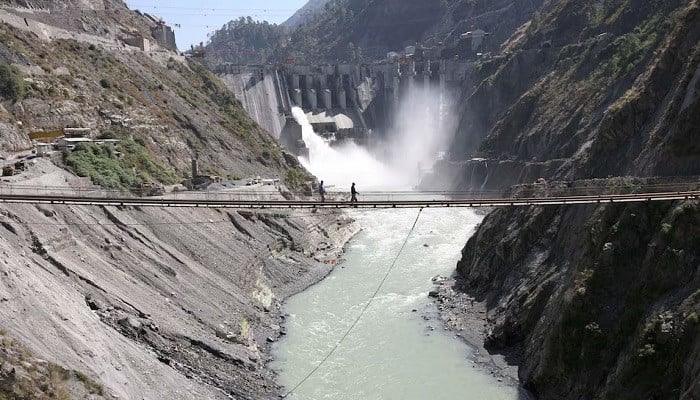
“The Government of Pakistan notes with utmost satisfaction the additional award of the Court of Arbitration regarding the maximum basin, rendered on May 15, 2026, in the IWT proceedings arising out of the disputes relating to the design of the Ratle Hydropower Plant and the Kishenganga Hydropower Project,” a statement said.
This award, he said, reflects the country’s position that the treaty imposes substantial limits on India’s water control capabilities and that these restrictions apply at the design and planning stage of hydropower projects.
“The award affirms Pakistan’s central position that the Treaty imposes substantial limits on India’s ability to control waters on the western rivers, and these limits are not formalities.
“They apply at the planning and design stage and cannot be satisfied simply by subsequent assurance of operational restraint.
“Water basins for a run-of-river power plant must be justified by the actual needs of the project, the actual planned operation, the hydrology of the site, the hydraulic conditions, the requirements of the electrical system, and the information and explanations required under the Treaty. »
Referring to previous proceedings, the statement said the decision follows an August 2025 decision and reinforces the requirement that installed capacity and projected energy demand must be based on realistic operational and technical assessments.
“Relying on the General Issues Award rendered by the Court on August 8, 2025, the Supplementary Award gives practical effect to the standard that installed capacity and forecast load must be realistic, well-founded and defensible.
“The installed capacity must correspond to the actual planned operation, hydrological and hydraulic data and the requirements of the Treaty.
“The planned load must correspond to the actual expected operation and projected needs of the electrical system that the plant is intended to serve. »
The statement further said the decision addresses concerns over what it describes as attempts to justify an increase in water storage capacity without an adequate technical basis.
“This addresses a central concern of the Treaty. India cannot justify the increase in Pondage by imaginary capacity, artificial load curves, unrealistic peak assumptions or simple assertions of compliance with paragraph 15 discharge limits.
“Paragraph 15 remains an operational constraint, but it does not replace an evidence-based justification of the water control capacity sought, while any different operational model must be supported by specific information and underlying data produced by India.”
The government said the decision also strengthened Pakistan’s right to review details of the project and demand full disclosure under treaty obligations.
“The award also strengthens Pakistan’s review rights. India must provide Pakistan with sufficient information and explanations to assess compliance with the Treaty.
“If India does not do so, it fails to establish that the proposed maximum weighting satisfies paragraph 8(c) of Annex D.”
He added that minimum environmental flow requirements must also be considered in hydropower design calculations, where applicable.
“The Court further confirmed that any applicable minimum flow obligation must be taken into account in calculating the required firm energy pool where such an obligation exists and is not otherwise satisfied.
“The release requirements of paragraph 15 do not automatically satisfy such an obligation.”
According to the press release, the Court’s decisions are binding and will be presented within the framework of other ongoing conventional mechanisms.
“Pakistan also takes note of the Court’s earlier ruling that awards of an arbitral tribunal are final and binding on the parties and otherwise have conclusive legal effect on subsequent treaty bodies on relevant questions of treaty interpretation.
“Pakistan will submit these interpretations to the neutral expert process, in accordance with Treaty procedures and applicable confidentiality agreements.”
Reaffirming its broader political position, the government said Pakistan remained committed to peacefully resolving water-related conflicts within the framework of the treaty.
“The country remains committed to the Indus Water Treaty, its dispute resolution procedures and the peaceful resolution of water-related disputes.
“Pakistan will continue to protect its rights under the IWT and use all legal and diplomatic means to ensure that hydropower projects on the western rivers are designed and operated strictly within the limits of the Treaty.”
The statement concluded that the decision “is a strategic consolidation of Pakistan’s position in the Treaty”, emphasizing that the maximum impact must be “realistic, evidence-based, hydrologically based, power system justified, Treaty compliant and incapable of being inflated by artificial assumptions”.