
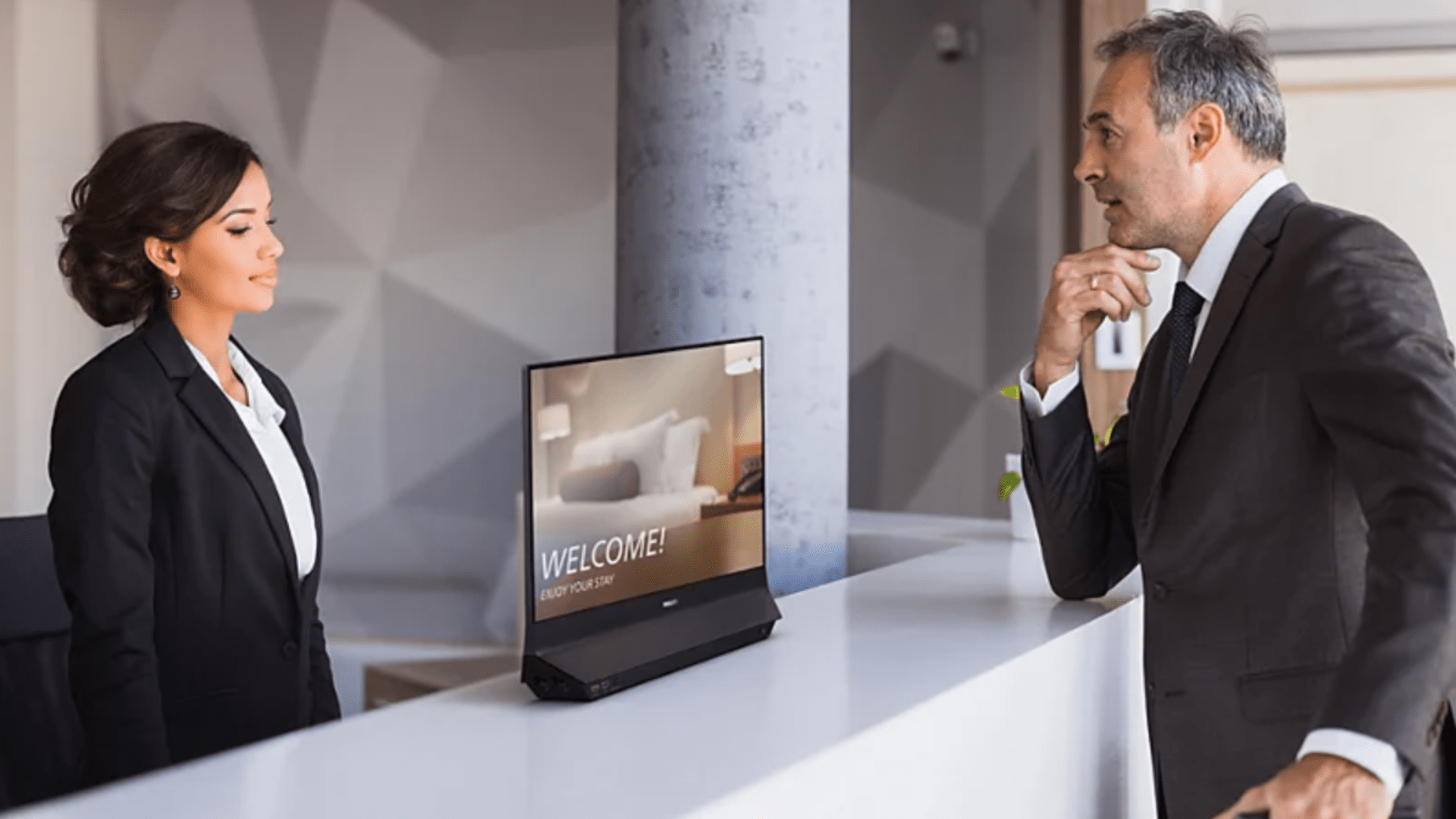
- Philips monitor allows two users to work simultaneously on opposite screens
- Double-sided design combines two Full HD displays into one unit
- Monitor swivels 180 degrees and each side supports independent HDMI and USB-C connections
Philips has introduced a dual-sided professional monitor that places two Full HD IPS displays back-to-back in a single rotating monitor structure.
The Philips 24B2D5300 uses two 23.8-inch panels running at 1920 x 1080 resolution with refresh rates reaching 120Hz.
Each display includes separate HDMI and USB-C connectivity, allowing independent use on each side without requiring additional external display hardware.

Designed for multi-user and multitasking needs
Unlike earlier, broadly designed double-sided products like digital signage, this model focuses on office productivity, collaborative workspaces, and customer-facing environments requiring split-screen access.
Philips describes the design as “two screens, one smarter interaction”, emphasizing shared access rather than conventional multi-monitor arrangements taking up larger desktop areas.
Two different users can share this single physical device without any conflict between their activities, or a single user can extend or mirror content across both displays for seamless collaboration.
The monitor supports a built-in 180-degree swivel mechanism, allowing rapid rotation of the entire monitor, without repositioning the stand or unplugging connected power cables.
A feature called DualView allows independent operation of each display from a connected computer source.
This setup works much like a daisy chain setup, but doesn’t use any additional monitor stands or desks. Users can extend their desktop across both panels for more visible screen space.
Cloning the same image on the opposite side is also an option available for presentations.
This device also features SmartView, which allows split-screen viewing on each display panel at the same time, meaning up to three different applications can be run from a single connected computing unit.
Practical advantages
Philips claims this unusual design takes up only half the space of two separate conventional monitors.
Shared workstations, reception desks, and customer-facing environments represent the use cases intended here.
Each of the two sides of the display includes both an HDMI port and a USB-C port for flexible connections.
The monitor also incorporates SoftBlue technology to significantly reduce harmful blue light emissions, and Philips notes that this feature is “TÜV Rheinland Low Blue Light (hardware solution) tested and certified for effectiveness.”
A pair of built-in stereo speakers meets basic media playback needs without requiring external audio hardware.
An average home user probably doesn’t really need a screen facing two opposite directions simultaneously.
However, for an office space or a public area where space is a problem, this device may be relevant.

Follow TechRadar on Google News And add us as your favorite source to get our news, reviews and expert opinions in your feeds.


