
The United States and Iran are close to a 60-day deal to reopen the Strait of Hormuz and negotiate Tehran’s nuclear program
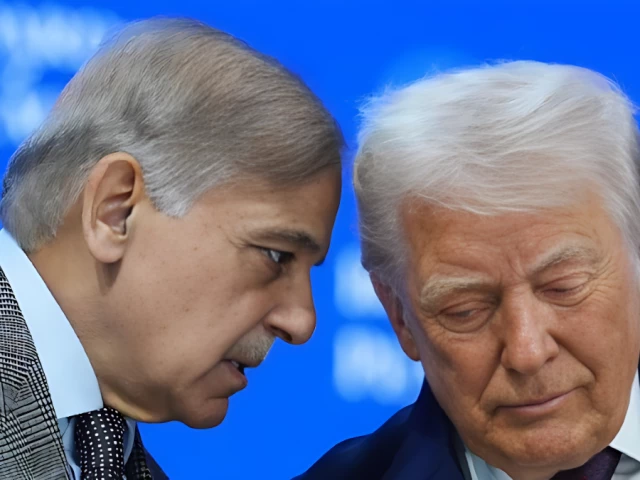
Prime Minister Shehbaz Sharif praised US President Donald Trump for his active engagement in peace prospects by having a “very useful” and “productive” phone call on Saturday with the leaders of Saudi Arabia, Qatar, Turkey, Egypt, United Arab Emirates, Jordan and Pakistan.
Prime Minister Shehbaz also appreciated the role of Chief of Defense Force Field Marshal Asim Munir in the process.
In a post
“Pakistan will continue its peace efforts with utmost sincerity and we hope to host the next round of negotiations very soon,” he added.
I commend President Donald Trump for his extraordinary efforts for peace and for holding a very useful and productive phone call earlier today with the leaders of Saudi Arabia, Qatar, Turkey, Egypt, the United Arab Emirates, Jordan and Pakistan. Marshal Syed Asim Munir…
– Shehbaz Sharif (@CMShehbaz) May 24, 2026
Foreign Minister Ishaq Dar said a phone call led by US President Donald Trump with the leaders of Pakistan, Saudi Arabia, Turkey, Qatar, Egypt, the United Arab Emirates and Jordan marked “one step closer to the common goal of regional peace, stability and an early diplomatic outcome.” Dar praised Trump’s leadership alongside his team of negotiators, while also expressing appreciation for the “constructive engagement of Iranian leaders” in advancing the peace process.
Dar singled out Field Marshal Asim Munir, who he said “played a pivotal role throughout this sensitive and consequential process” and represented Pakistan in Sunday’s discussions, and thanked Prime Minister Shehbaz Sharif for his “visionary leadership and unwavering commitment to peace.” He also thanked regional partners including Saudi Arabia, Turkey, Egypt and Qatar, saying their support had “contributed significantly to this end result”.
Reaffirming Pakistan’s position, Dar said the country “remains firmly committed to supporting all sincere efforts aimed at lasting peace, mutual respect and regional stability”, adding that “dialogue and diplomacy must prevail over conflict and confrontation for the collective prosperity and security of our region and beyond.”
Today’s important phone call led by President Donald J. Trump @realDonaldTrump with the leaders of Pakistan, Saudi Arabia, Turkey, Qatar, Egypt, the United Arab Emirates and Jordan, marks another step towards the common goal of regional peace, stability and a beginning…
-Ishaq Dar (@MIshaqDar50) May 24, 2026
Meanwhile, Trump posted on social media that the nascent deal would reopen the strait, the vital shipping passage, the closure of which has upended global energy markets since the United States and Israel launched war against Iran in February.
He did not specify what would be included in a deal.
“The final aspects and details of the agreement are currently being discussed and will be announced shortly,” Trump wrote on Truth Social.
Photo: realDonaldTrump/SOCIAL TRUTH
However, the Iranian news agency Fars reported Sunday that the deal would allow Iran to manage the strait and that Trump’s claim about the strait was “inconsistent with reality.”
Ceasefire agreement
The United States and Iran are close to signing a 60-day ceasefire extension that would reopen the Strait of Hormuz, allowing Iran to resume oil sales and creating a window for negotiations over Tehran’s nuclear program, according to a U.S. official familiar with the proposed deal. Axios reported.
The proposed deal, which has not been finalized, could be announced as early as Sunday.
Officials warned, however, that the deal could still fall through before it is signed.
Read: Iran deal ‘extensively negotiated,’ says Trump
Under the draft memorandum of understanding, Iran would demine the Strait of Hormuz and allow ships to pass without tolls, according to Axios.
In exchange, Washington would lift its blockade on Iranian ports and grant limited sanctions waivers allowing Tehran to freely sell its oil for a period of 60 days.
A U.S. official described the deal as “performance-based aid,” saying economic aid would follow concrete Iranian steps rather than being given outright.
The plan also includes Iranian commitments not to pursue nuclear weapons and to negotiate the suspension of uranium enrichment and the withdrawal of its stockpiles of highly enriched uranium.
Any broader sanctions relief or unfreezing of Iranian funds would be discussed during the ceasefire period, but would only be implemented as part of a final verified agreement.
Additionally, U.S. forces deployed to the region would remain in place for the 60-day period and would only withdraw if a final agreement was reached.
Learn more: Iran says US ‘betrayals, contradictions and excessive demands’ disrupt negotiations
The deal also appears linked to efforts to end the war between Israel and Hezbollah in Lebanon.
Israeli Prime Minister Benjamin Netanyahu reportedly raised concerns about the situation during a Saturday call with Trump.
A U.S. official said Israel would still be allowed to act if Hezbollah tried to rearm or resume attacks.
Several Arab and Muslim leaders, including officials from Saudi Arabia, Qatar, Egypt, Turkey, Pakistan and the United Arab Emirates, have supported the diplomatic effort.
Pakistan played a central mediating role, with Field Marshal Asim Munir traveling to Tehran to try to finalize the deal.
White House hopes remaining issues can be resolved within hours
But U.S. officials have said the ceasefire could end sooner if Washington concludes that Iran is not taking nuclear negotiations seriously.


