
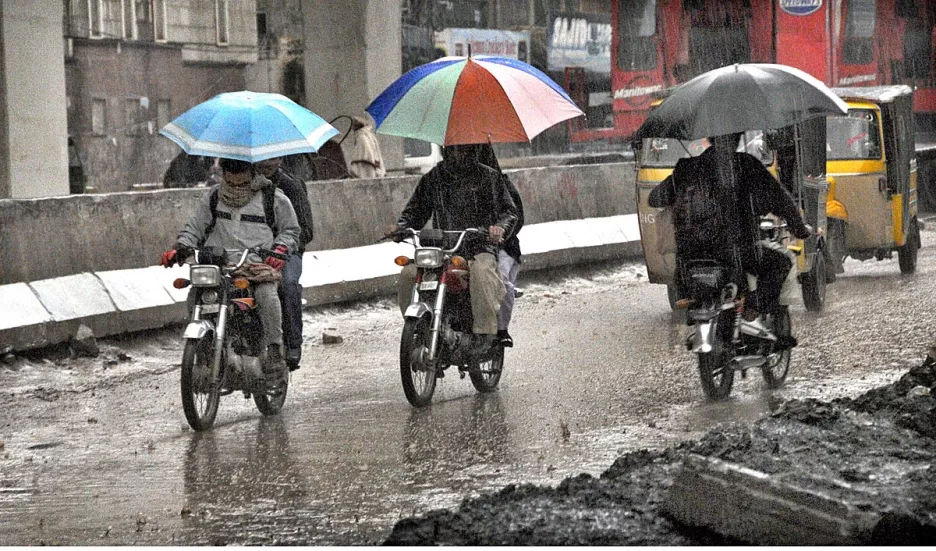
Warns of intensifying heatwaves, water shortages and agricultural challenges likely over three-month period
LAHORE:
Below-normal rainfall and above-normal temperatures are forecast in most parts of the country in June and the next three months, according to the Pakistan Meteorological Department (PMD).
According to the meteorological department, the El Nino phase has re-emerged in the Pacific Ocean and is expected to persist in the coming months while the Indian Ocean Dipole remains neutral. These climatic conditions could result in uneven spatial distribution of rainfall across Pakistan.
According to outlook reports and Director Meteorology Lahore Aleemul Hassan, intensified heatwaves, water shortages and increased challenges for agriculture may occur during the three-month period.
The country received an average of 22.4 millimeters of precipitation in May 2026, about 10% below normal levels. Meanwhile, the average temperature for the month stood at 29.2 degrees Celsius, 0.8 degrees above the long-term average.
In Punjab, 29.7 millimeters of rainfall was recorded in May, 19 percent above normal, while Sindh recorded only 0.3 millimeters, a deficit of 91 percent. Balochistan remained 71% below normal while Gilgit-Baltistan (GB) recorded 33% above normal rainfall.
In its monthly outlook for June 2026, the PMD said rainfall is likely to remain near normal to slightly below normal in most parts of the country. The largest rainfall deficits were expected in northeastern Punjab, Kashmir and neighboring Khyber-Pakhtunkhwa (KP).
In contrast, Britain and upper KP are expected to receive slightly above normal rainfall in June, in line with the monthly outlook.
Read: Weather in Lahore turns pleasant after rain, hailstorms in several areas
Temperatures, meanwhile, are expected to remain above normal across the country during June, with the warming trend likely to be more pronounced in GB, Kashmir and northern KP. Heatwave conditions may also intensify in the southern plains of Punjab, Sindh and Balochistan.
According to the PMD’s seasonal assessment, Pakistan received 148 millimeters of rainfall between March and May 2026, which is 26% above normal. The average temperature, meanwhile, remained 1 degree Celsius above the long-term average.
During this period, Punjab recorded rainfall 31% above normal, while in Sindh it was 106% above normal.
However, between June and August, the weather conditions are expected to change. According to the Met department, below normal rainfall is likely to persist in most parts of Punjab, Sindh, lower KP and Balochistan.
Northern areas, on the other hand, especially GB, northern KP and Kashmir, may receive normal to above normal rainfall. Northeast Punjab is expected to witness the largest rainfall deficit during this period.
Learn more: El Nino global warming expected to return in mid-2026, UN says
On the impact that the expected weather conditions could have on the agricultural sector, the PMD warned that reduced rainfall could harm sowing of Kharif crops as well as early crop development. However, irrigation needs could increase.
At the same time, higher precipitation in northern regions, combined with accelerated snowmelt, may increase the risk of glacier-induced floods (GLOF), flash floods and landslides.
The outlook report for the three-month period also notes that prolonged heat, intermittent rainfall and increased humidity levels may also increase the risk of vector-borne diseases, including dengue. Strong temperature gradients can also trigger dust storms, strong winds and hailstorms, potentially damaging crops, orchards and infrastructure.
The Met department has advised farmers to consult weather advisories before taking decisions regarding irrigation and harvesting. He also urged the public to exercise caution during periods of extreme heat, spells of rain and travel to mountainous regions.


