
- PopSockets unveils its thinnest iPhone MagSafe grip yet
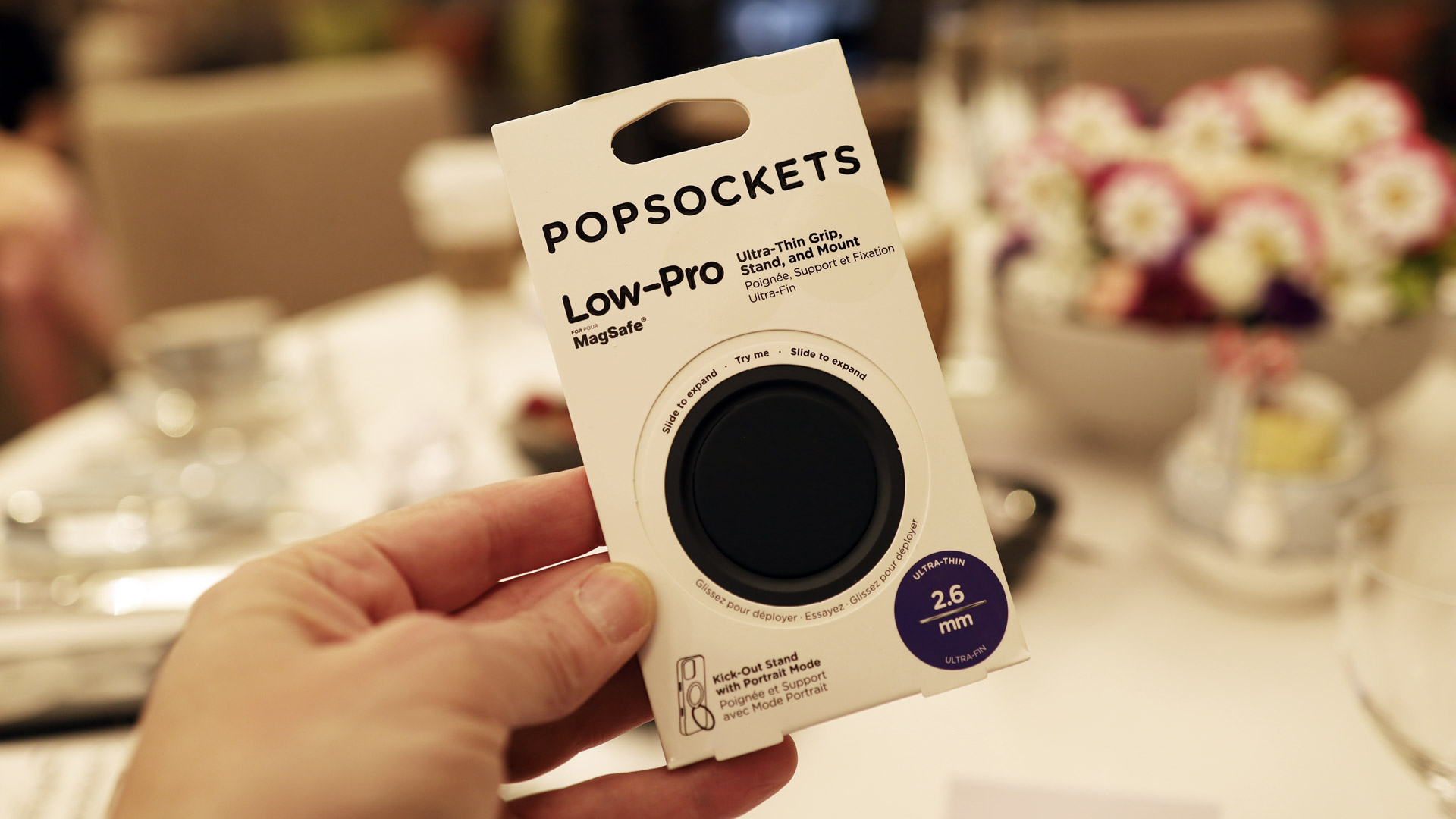
- It is 2.6mm thick
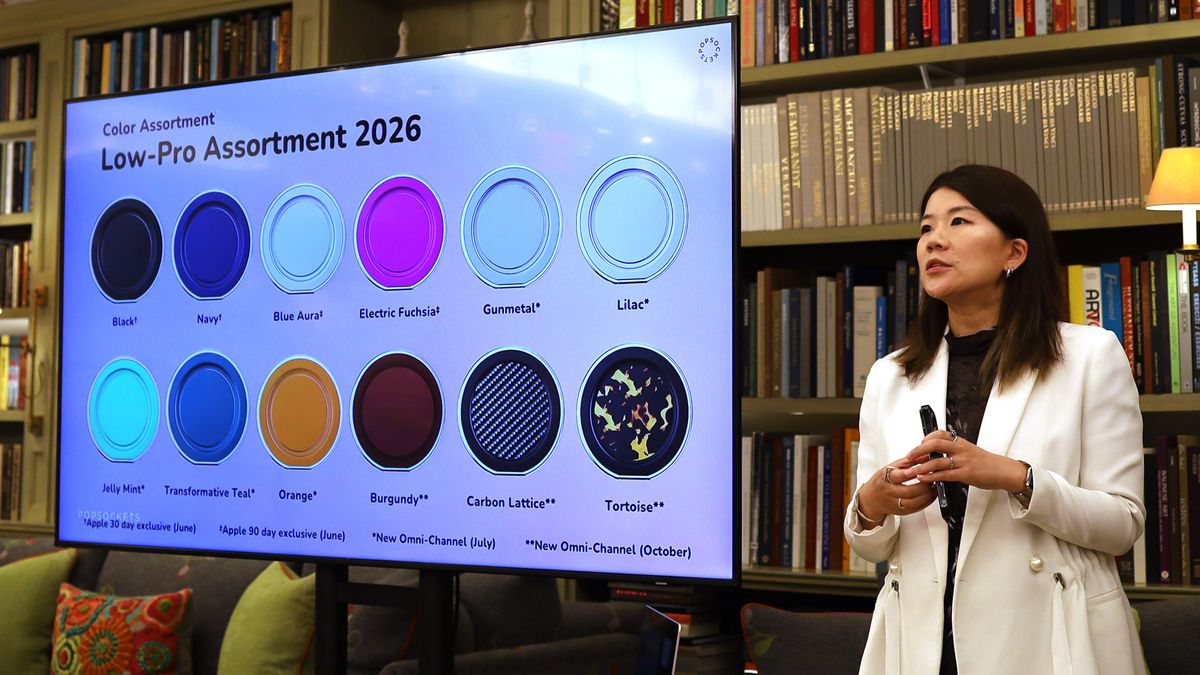
- Available in 12 colors and available exclusively on the Apple Store – for now
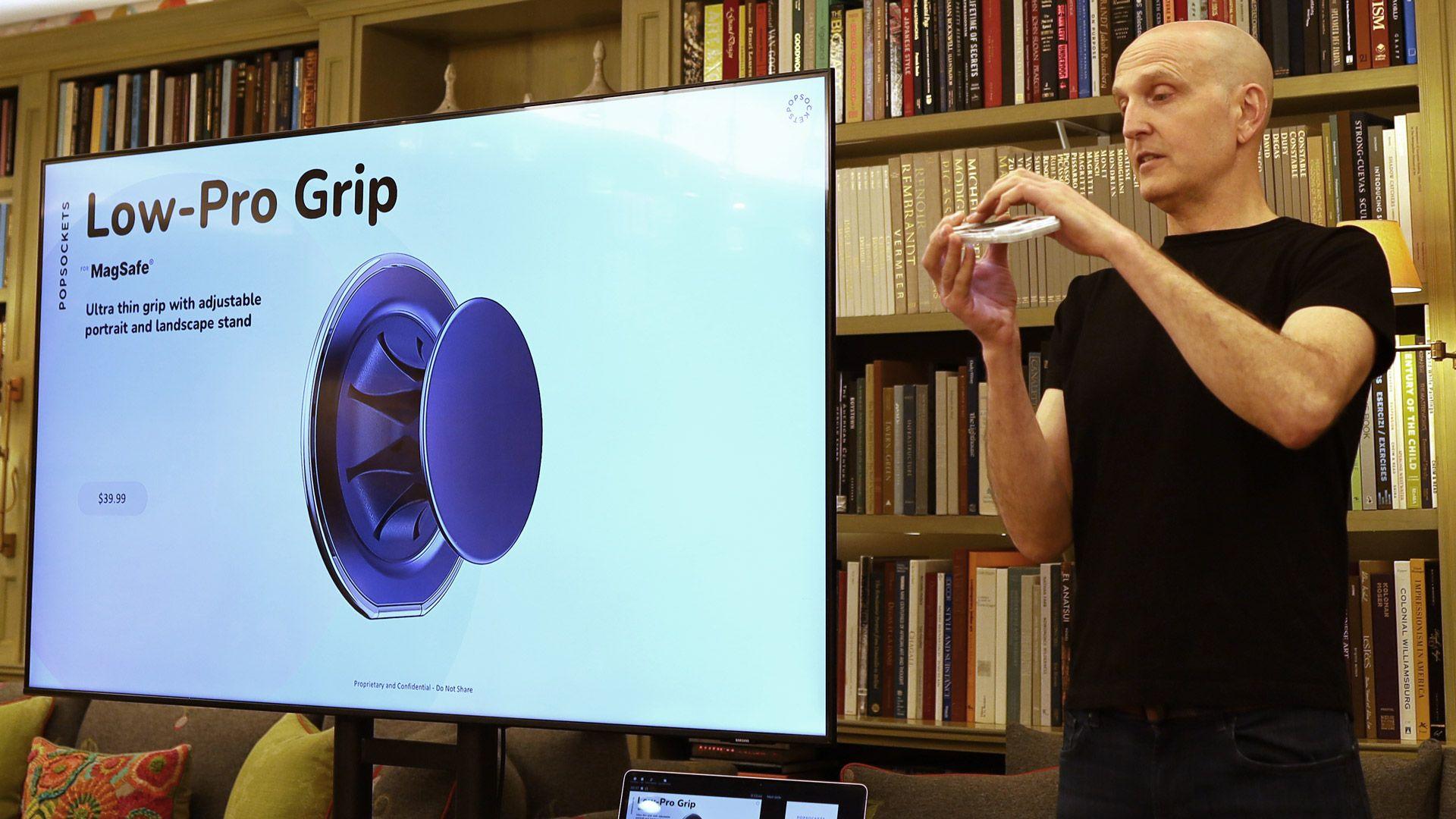
Every gadget has an origin story, but PopSocket’s iPhone Low-Pro Grip might be special. Unveiled today in the Apple Store, it’s an idea as old as the PopSockets brand, but one that waited nearly a decade until the original grip became an icon of the smartphone industry, gracing the backs of hundreds of millions of phones.
PopSockets offers a wide range of grip styles, and some, like the Kick-Out & Grip, are quite low-profile, but nothing compares to the 2.6mm-thick Low-Pro, which Lisa Li, PopSockets’ vice president of marketing, calls “a labor of love.”
The idea for the Low Pro dates back to PopSockets’ early months, when founder and CEO David Barnett already had ideas for an ultra-thin handle. But to understand this notion, you need to know why and how Barnett developed the PopSocket handle in the first place.

Blame it on wired headphones
Picture 1 of 3



A former philosophy professor at the University of Colorado, Barnett had headphones he frequently used with his iPhone that became tangled in his pocket. As a solution, he bought a pair of large coat buttons and glued them to the back of his iPhone 3G (I saw it, it’s real). Then he wrapped the headphone cord around them.
Problem solved. That spark of ingenuity ignited a small flame of innovation: Barnett realized he could do more with his telephone cable holder and came up with a pair of removable, collapsible handles. He even taught himself CAD and created a 3D print of a 2.1mm thick disc. The imprint was a bit of a failure in that it didn’t expand and was essentially a hard disk that he sometimes carried with him.
Even as Barnett began distributing the first prototype grips to his students and they began using them as grips, Barnett couldn’t help but think it could be thinner. He told a friend about his idea:
“He was visibly upset and he scolded me. I still remember him yelling at me in that cafe. He said, ‘You’d be a complete idiot to turn your attention and start developing a new product when you’re sitting on something that could be a big hit here.'”
Barnet took his advice to heart, cast aside the ultra-thin idea, and made PopSockets a popular brand and, for some, a must-have smartphone accessory.
Those damn skinny jeans
Picture 1 of 4
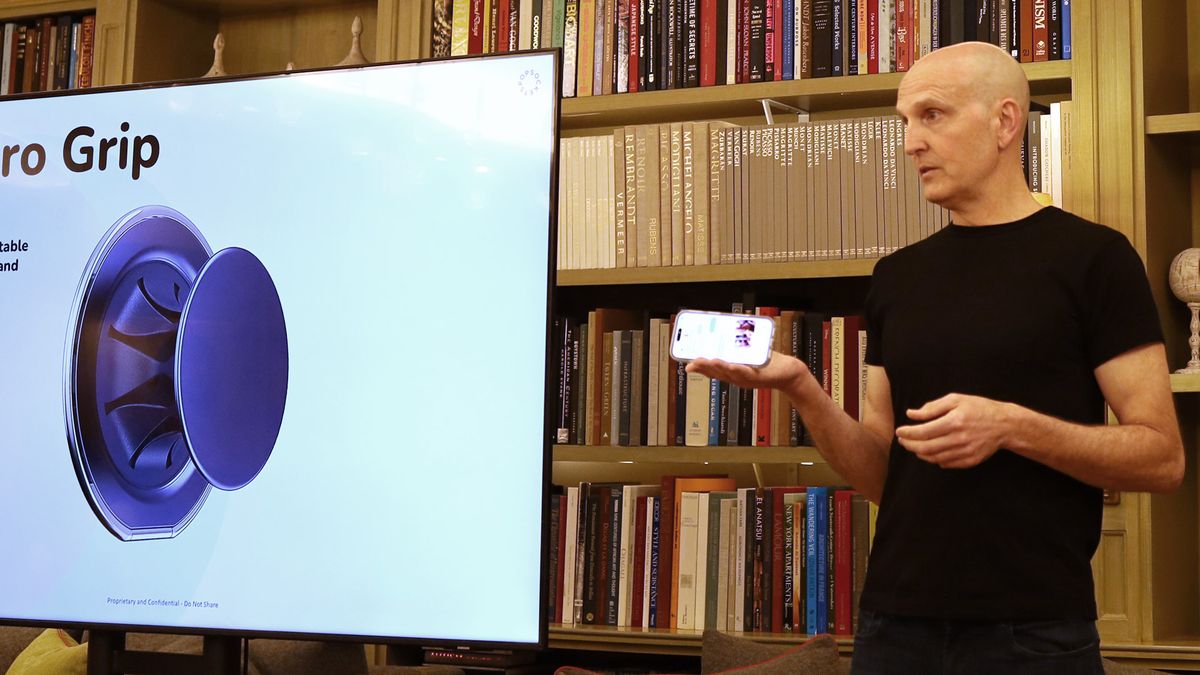
He also never gave up on the idea, and over the years, in talking to his customers, he noticed a strange trend among potential male users who said that even if the product looked cool, they wouldn’t use it because it would get stuck in their pockets.
“It’s funny…what are they talking about? I slip it in my pocket. I just put my hand on it like this [and] I slip it in my pocket,” said Barnett, who added that he’s never stuck one of his PopSocket handles in his pockets.
Yet Barnett and company soon realized there might be a market opportunity if they returned to this ultra-thin idea, a handle so low-profile that it has virtually no edges — and would never get stuck in a pocket.
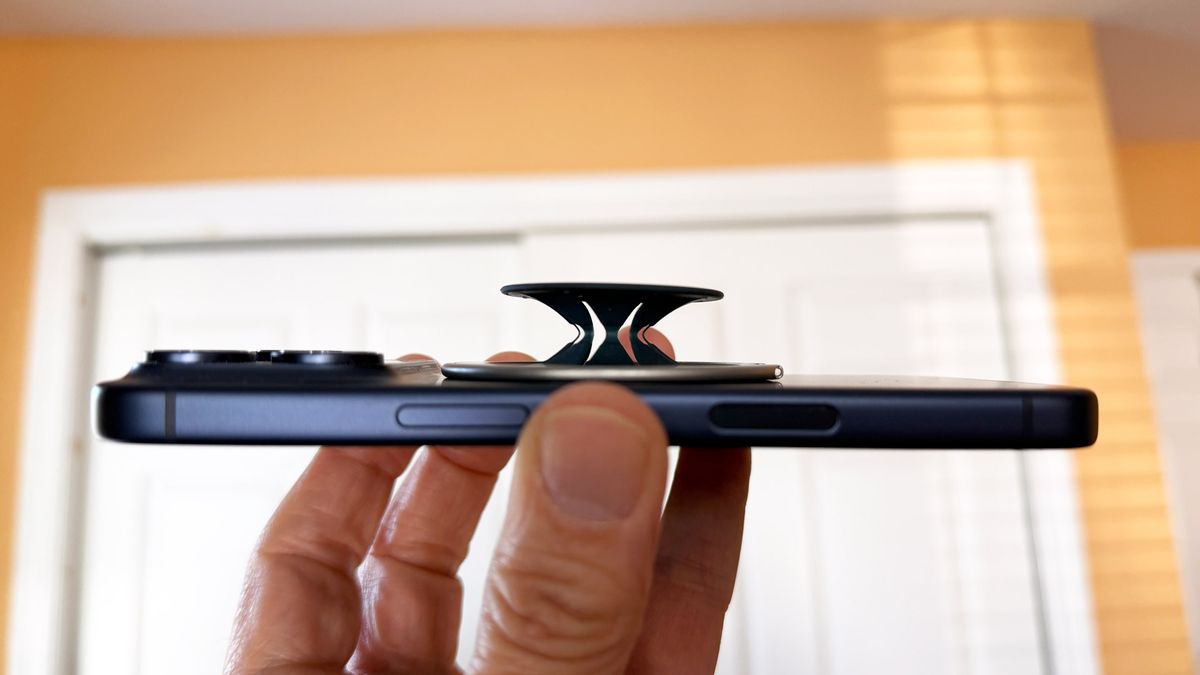
But achieving this would not be easy. Removing a few millimeters from their current thinnest design, arguably the PopSockets Kick-Out & Grip (6mm), would require redesigning an OG component: the two-step expansion accordion section between the base on the button: that’s where you slide your fingers to grip the… er… grip.
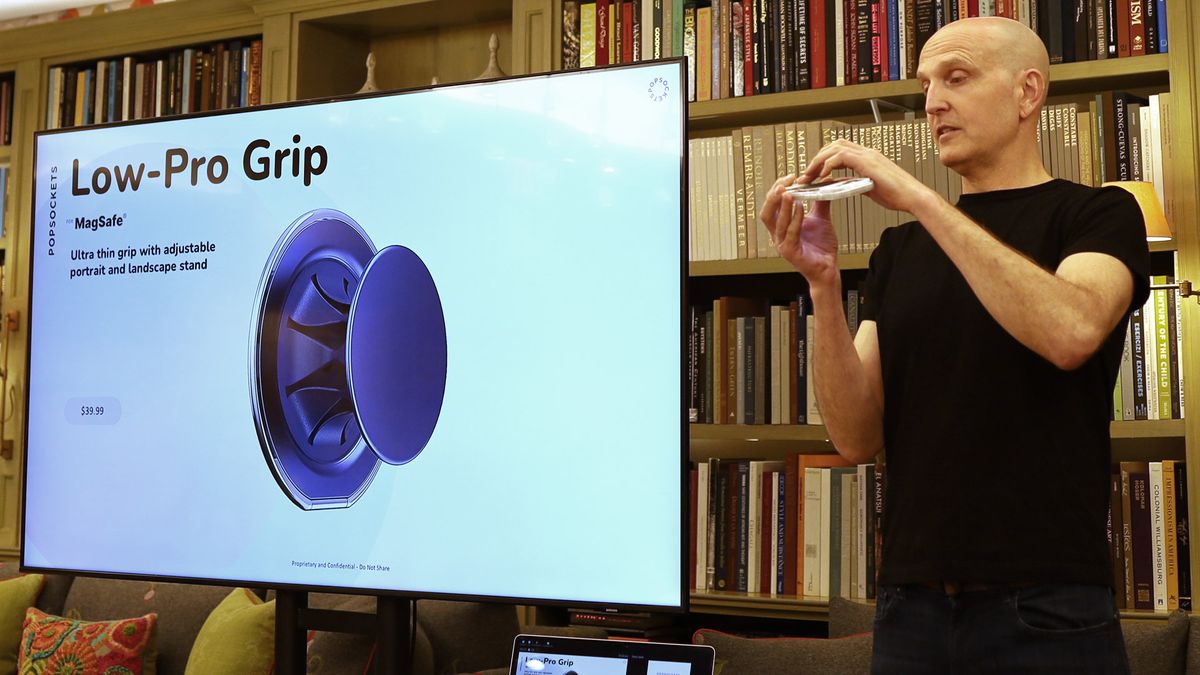
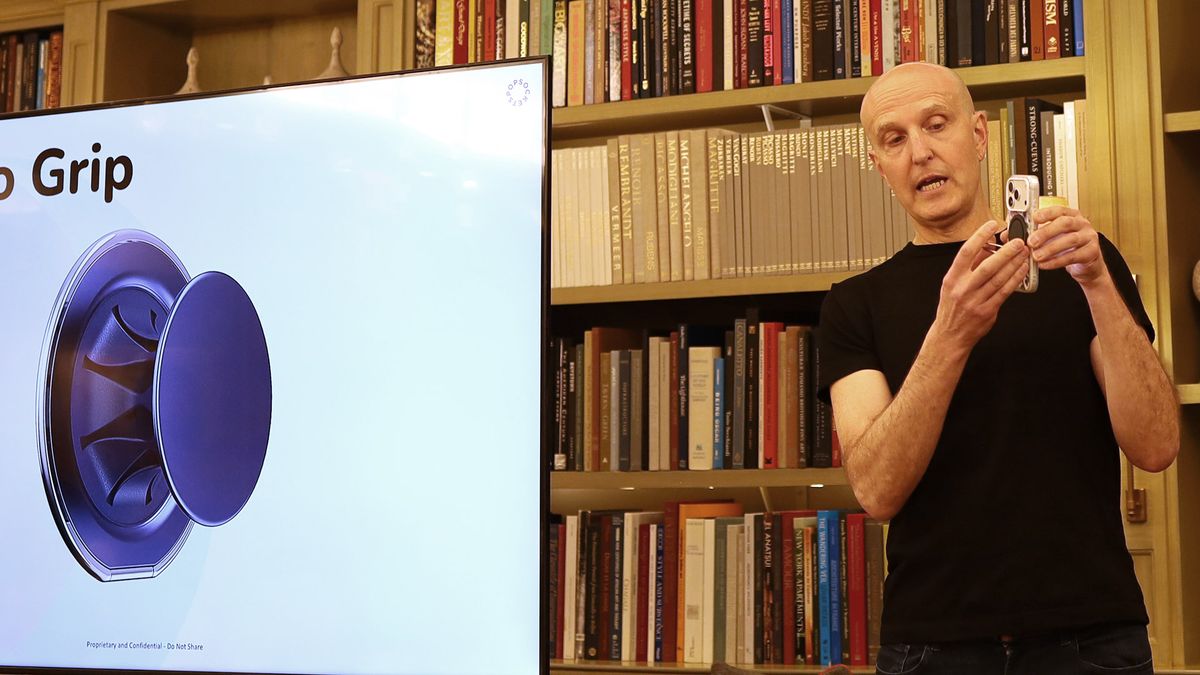
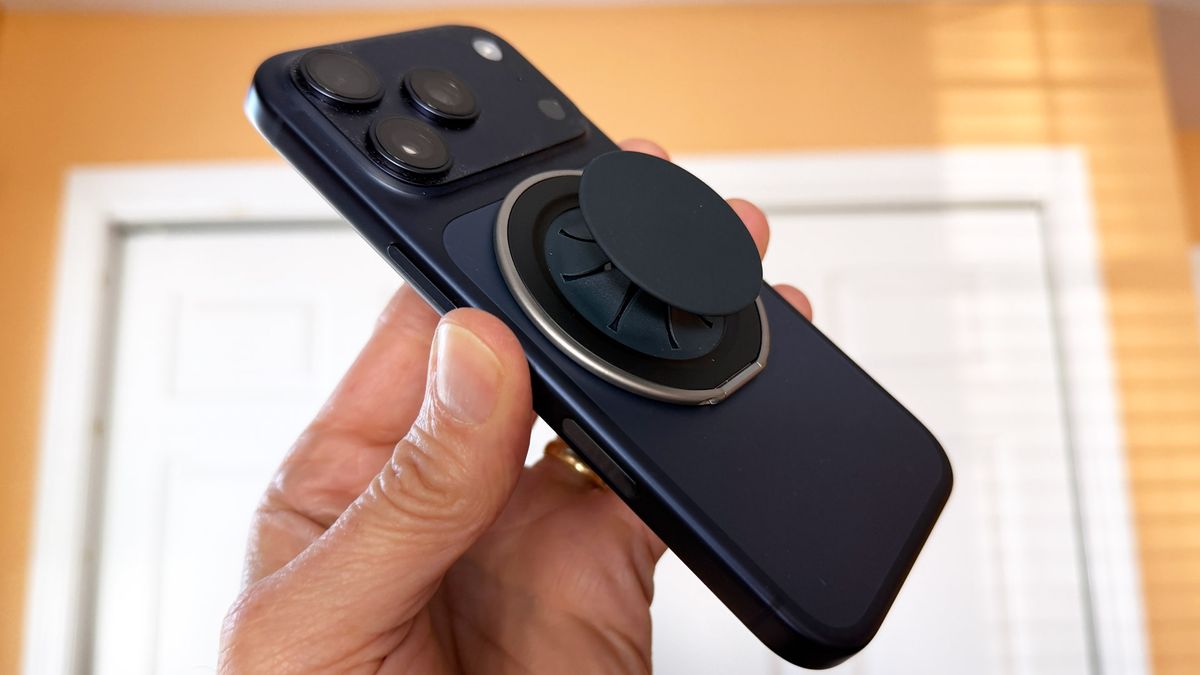
The result is a PopSocket grip unlike any that came before it. Instead of a satisfying two-step pop-up to put into place, the Low-Pro grip has a single action, and when opened, the knob hovers or wiggles atop what honestly feels like a very flimsy rubber platform. It’s not even a single piece of material attached to the thin base that sits inside an equally thin steel ring. Like the PopSocket grips before it, the ring and base are attached by a hinge. Instead of the button swinging like a crutch, it’s the metal ring that does that job, opening to virtually any degree.
Barnett assured me that the $39.99 PopSocket Low-Pro is more durable than it looks.
To perform a pull test, the PopSockets team glued the base to a phone and then pulled on the button. It supported up to 30 pounds of pressure. In the real world, the magnet would give way on a MagSafe iPhone before the Low-Pro would tear in half.
They also opened and closed the Low-Pro 100,000 times without issue.
The new handle is so thin that MagSafe charges can still work, even though charging speeds may be decreased. The magnetic side is strong enough to hold securely to other magnetic surfaces, meaning you can mount your iPhone to a metal cabinet or your metal refrigerator.
Everything about the iPhone – for now
Picture 1 of 2
Unlike regular PopSockets, which are platform-agnostic and used to attach to phones and phone cases with a sticky base, the Low-Pro is designed for MagSafe and, therefore, the iPhone. In fact, the PopSockets Low-Pro Grip launches today exclusively at the Apple Store with six colors, arriving at Best Buy and Target on July 12 and at all other retailers on July 29. By then, it should be available in 12 colors.
It’s a relatively big turnaround for PopSockets to take a familiar and beloved design and throw it away (at least for the Low-Pro) to attract new customers who demand thinness at all costs, but Barnett has faced harsh criticism before, and it appears he’s finally won them over.
When Barnett shared the prototype for his very first take with his wife, she told him, “It was the stupidest thing she had ever seen and no one would ever buy one,” he recalled.
A decade later, he gave him a taste of Low-Pro. “Her reaction,” Barnett said, “was that it was the best invention since the credit card. She said everyone was going to buy this thing.”

Follow TechRadar on Google News And add us as your favorite source to get our news, reviews and expert opinions in your feeds.


