- NA adopted the amendments proposed by FinMin in clauses 5, 6, 6A.
- The 60 amendments from opposition MPs were rejected by a majority.
- The budget projects an economic growth rate of 4.0% for the financial year 2026-2027.
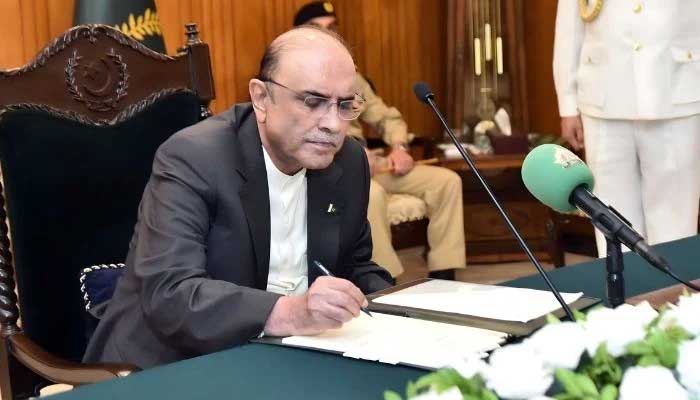
President Asif Ali Zardari on Friday approved the Finance Bill 2026, days after the federal budget for the next financial year was passed by the National Assembly.
The 2026 Finance Bill was adopted by the National Assembly on Tuesday, giving effect to the federal government’s financial proposals for the financial year beginning July 1, 2026.
The House had adopted the amendments proposed by the Minister of Finance to Articles 5, 6 and 6A, while rejecting the Senate’s recommendations to Article 6.
Opposition members PTI and JUIF proposed more than 60 amendments to Articles 2, 3, 4, 5, 6 and 8, all of which were rejected by a majority vote.
The budget projects an economic growth rate of 4.0% for the financial year 2026-2027, with inflation expected to remain at 8.2%. The budget deficit has been estimated at 3.6% of GDP, while the primary surplus is projected at 2.0% of GDP.
The Federal Board of Revenue’s collection target was set at Rs 15,264 trillion, reflecting an increase from the previous year. Net federal revenue is estimated at Rs 11,752 billion, while total expenditure is projected at Rs 18,770 billion. Of this, around Rs 8.05 trillion will be allocated for debt servicing and mark-up payments.
An amount of Rs 1,000 billion has been earmarked for the federal public sector development programme, with the overall national development program estimated at around Rs 3,675 billion.
The House approved allocations of Rs 3 trillion for defense services. Significant funds were also set aside for pensions, civil administration, subsidies and social welfare programs. The Benazir Income Support Program received 838 billion rupees, marking a significant increase from the previous year to expand social protection coverage and improve assistance to vulnerable households.
The budget proposes a 7% increase in civil servant salaries and a similar increase in pensions. Additional relief measures were also announced for public sector employees and armed forces personnel. The government has decided to provide relief to employees in four income brackets.
From July 1, 2026, imported vehicles with an engine capacity between 2,000 cc and 3,000 cc will be subject to 86% customs duty, while vehicles above 3,001 cc will be subject to 92% duty. Imported electric vehicles worth between $75,000 and $110,000 will be subject to a 30 percent tariff, while those worth more than $110,000 will be subject to a 40 percent tariff. Electric vehicles worth $75,000 or less will be exempt from customs duties.
A favorable 10% sales tax will be imposed on children’s pencils, pens and pencil sharpeners. A one-time fixed tax of Rs 10,000 will be levied in the federal jurisdiction on vehicles up to 1,000 cc. Pre-2010 vehicle models up to 1,000 cc will be subject to a token tax of Rs 20,000.