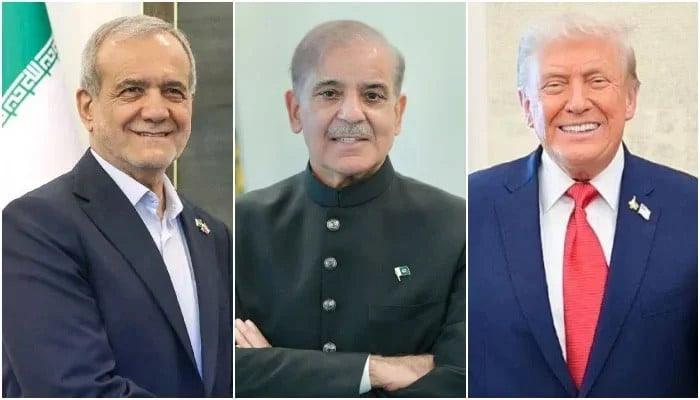
- Trump says US-Iran deal is “now done” and lifts naval blockade.
- Memorandum of Understanding signing ceremony scheduled for June 19 in Switzerland.
- Qatar welcomes the agreement and thanks Pakistan for its mediation role.
Prime Minister Shehbaz Sharif announced on Monday that following intensive negotiations, a peace agreement between the United States and Iran had been reached following sustained diplomatic engagement.
The deal was sealed following an Israeli strike on Lebanon on Sunday that drew criticism from Iran and Trump.
In a message on
The prime minister expressed appreciation to Qatari leaders, recognizing their role in mediation efforts that helped facilitate the U.S.-Iran deal.
He also thanked Saudi Arabia and Turkey, calling their leadership visionary and highlighting their “immense contributions” to reaching the deal.
He added that with the agreement now in place, mediators will facilitate a series of meetings this week, with pre-implementation discussions expected to lay the groundwork for technical talks and the formal signing ceremony.
US-Iran deal ‘now concluded’: Trump
“The deal with the Islamic Republic of Iran is now done,” US President Donald Trump wrote on his Truth Social platform on Sunday around 5:30 p.m. ET local time in Washington (9:30 p.m. GMT).
His message came shortly after Prime Minister Shehbaz, whose country mediated, announced that a deal had been reached early Monday local time.
Lebanon has been a sticking point in the negotiations, with Israel and Hezbollah ignoring calls from Trump and others to cease their attacks on each other in recent weeks.
Trump said the Strait of Hormuz, a major shipping route for global energy supplies that Iran has effectively closed for months, would be open Friday and that he ordered an end to the U.S. blockade of Iranian ports.
“Ships of the World, start your engines. Let the oil flow!” Trump wrote.
In another article on Truth Social, Trump wrote that the “grand deal” with Iran would bring peace and security to the entire region.
He said many previous presidents had tried to achieve peace with Iran but failed, adding that the region’s leaders had now, for the first time, found a US president “who can help them achieve real peace.”
Trump also said that with the Strait of Hormuz opened when the deal was signed Friday and mine clearance agreements in place, oil would once again flow freely in the region and around the world.
Iranian Deputy Foreign Minister Kazem Gharibabadi said a broader deal would be negotiated during a 60-day ceasefire period, including sanctions relief.
The fate of Iran’s nuclear program will also be discussed in these subsequent negotiations, sources told Reuters.
Qatar welcomes breakthrough
Qatari Prime Minister Sheikh Mohammed bin Abdulrahman bin Jassim Al Thani has welcomed the agreement reached on the Memorandum of Understanding (MoU) between the United States and Iran.
In an article on
He added that Qatar hopes that all parties will engage in the upcoming negotiations in a “positive and constructive spirit”, and reaffirmed that Doha will remain steadfast in support of efforts to strengthen regional and international security and stability through dialogue and peaceful means.
British Prime Minister Keir Starmer on Sunday welcomed the agreement reached between the United States and Iran to end their war.
“We are clear that freedom of navigation without toll must now be restored in the Strait of Hormuz,” he said, adding that “Iran must never have nuclear weapons.”
Thousands of people have been killed, mainly in Iran and Lebanon, since the first attack by US and Israeli forces on Iran on February 28.
Iran has struck Israel and Gulf states hosting U.S. bases and effectively blockaded the Strait of Hormuz, driving up global energy prices. In response, American forces blocked Iranian ports.
Israel has said it is not a party to the planned US-Iran deal.
The war in Iran has become a political liability for Trump and his fellow Republicans in Congress, with opinion polls showing Americans are deeply frustrated by rising gasoline prices ahead of November’s midterm elections in which control of Congress will be decided.
— Additional contribution from Reuters