
Uzma Bukhari calls early marriages harmful, stressing that young girls should be allowed to complete their education
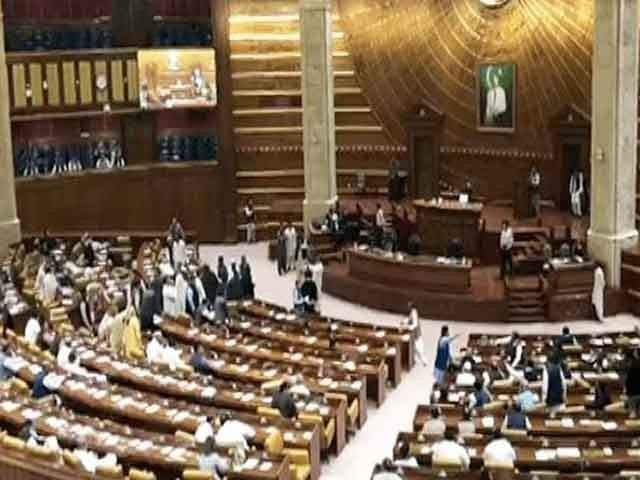
Punjab Assembly. PHOTO: FILE
The Punjab Assembly on Monday passed the Child Marriage Restraint Bill 2026 by a majority, following a detailed and heated debate between Treasury and Opposition members, alongside key legislative issues and a question hour session.
The session, chaired by President Malik Muhammad Ahmad Khan, began 53 minutes late. Punjab Information Minister Uzma Bukhari has called early marriages harmful to girls’ health and education, stressing that young girls should be allowed to complete their education rather than being married off prematurely.
During the debates, Uzma expressed serious concerns, saying that for the first time, MPs had not received a copy of the bill. She stressed that it was essential that all lawmakers have access to the bill before it passes.
Following her complaint, the speaker ordered that copies of the bill be immediately distributed among MPs.
Learn more: Punjab amends child marriage law
Speaking on the bill, Uzma stressed that early marriages were detrimental to young girls, arguing that proper documents, such as national identity cards or birth certificates, should be mandatory for marriage.
She noted that the legal age of marriage, previously set at 16, had now been raised to 18.
The debate intensified when Zulfiqar Ali Shah, a member of the Treasury, proposed that people under 18 wishing to marry should be allowed to do so with court permission, warning against putting legislation above societal values.
His remarks sparked a strong reaction from Uzma, who argued that young girls often lacked the awareness and maturity required for marriage and should not be subjected to such practices.
Uzma further said that mental and physical maturity must be ensured before marriage and criticized practices where young girls were forced into marriage under social or cultural pressures.
She also referred to the Federal Sharia Court’s support for similar legislation passed by the Sindh Assembly.
After a long debate, the bill was approved by a majority. The session ended after the bill passed, reflecting deep divisions but eventual consensus on legislative action against child marriage.
During the proceedings, Provincial Minister for Minerals Sher Ali Gorchani alleged that during the tenure of Pakistan Tehreek-e-Insaf, large tracts of pink salt land were allocated to favored individuals through changes in rules, saying up to 100,000 acres were distributed.
Read also: Child rights: Sindh makes marriage under 18 punishable by law
Opposition MP Iqbal Khattak raised concerns over checkpoints in his constituency, saying citizens were being harassed in the name of control.
On April 14, the Standing Committee on Local Government and Community Development of the Punjab Assembly set the minimum legal age of marriage for boys and girls across the province at 18, abolishing the earlier provision that allowed girls to marry at the age of 16.
The committee unanimously approved a bill aimed at curbing child marriages and strengthening child protection laws in the province.
It further declared child marriage as a cognizable, non-bailable and non-cumulative offence, allowing immediate police action and preventing any private settlement of such cases.
Under the proposed law, anyone involved in facilitating child marriage, including the adult spouse, parents or guardians, Nikah clerks or any other facilitator, faces imprisonment of up to seven years and a fine of up to Rs 1 million.
The law also classifies cohabitation after such a marriage as child abuse, punishable by harsher penalties, and mandates that all such cases be decided by the courts within 90 days.


