Damien Mama, acting humanitarian coordinator in the DRC, arrived in Bunia, the provincial capital, on Sunday, where he will assess response efforts and strengthen coordination in support of the government-led campaign to end the latest deadly outbreak.
An increasing workload
The fast-moving outbreak – which has also spread to neighboring Uganda – is caused by the rare Bundibugyo strain of the Ebola virus. which has no approved treatments or vaccines, although three vaccine candidates are in development.
On Saturday, Congolese health authorities reported 27 new confirmed casesbringing the total to 515 in the provinces of Ituri, North Kivu and South Kivu, with 91 deaths.
About 95 percent of all cases are in Ituri and 12 people have recovered to date.
In the meantime, Uganda reported 19 confirmed casesincluding two deaths, as well as one probable deceased case.
Significant challenges
In New York, U.N. deputy spokesperson Farhan Haq said the DRC’s Ebola response focuses on case management, the operation of treatment centers and the delivery of essential medicines and supplies, as well as community engagement, risk communication and enhanced surveillance.
However, he emphasized that “Response efforts continue to face significant challenges, including gaps in contact tracing, limited treatment capacity, and shortages of essential medicines.“, while “strengthening laboratory capacity is also essential to ensure timely detection and confirmation of cases. ”
The health crisis is developing amid an already serious humanitarian situation in the DRC, where nearly 15 million people across the country are in need of humanitarian assistance.
Additionally, more than half of all displaced people, 3.4 million, live in areas affected by the outbreak, complicating the response.
Continental Response Plan
The outbreak was officially declared on May 15 by Congolese authorities, then classified by the United Nations’ World Health Organization (WHO) as a public health emergency of international concern – but not as a pandemic threat.
Symptoms include sudden onset of high fever, headache, weakness, vomiting and diarrhea.
This is the 17th time the DRC has fought Ebola and the crisis has triggered a coordinated continental response.
Last week, WHO, alongside the Africa Centers for Disease Control and Prevention (Africa CDC) and partners, launched a plan to raise $518 million to help African countries prepare for, rapidly detect and respond to the outbreak.
Aid to Zambia
WHO also handed over to Zambian authorities essential equipment and supplies for Ebola preparedness, including personal protective equipment (PPE), laboratory reagents, infection prevention and control equipment, and sample transport supplies.
“Although Zambia has not recorded any cases of Ebola, its proximity to affected countries and high level of cross-border movements puts it at potential risk,” the agency said.
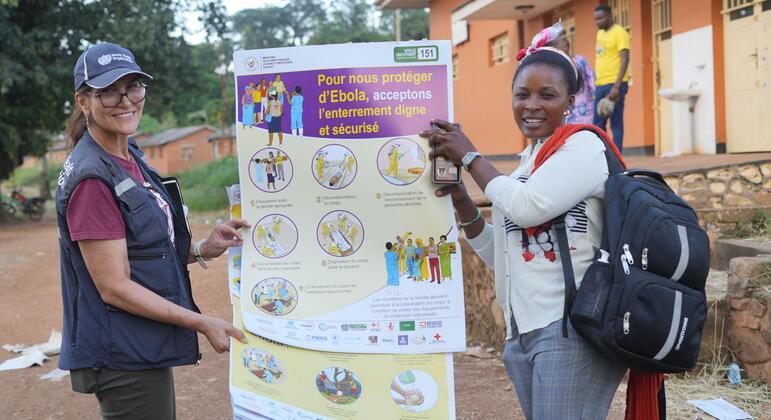
WHO continues to emphasize the importance of preparedness as the first line of defense against Ebola, while emphasizing the critical role of community engagement and rapid reporting of symptoms in saving lives.