NEWYou can now listen to PK Press Club articles!
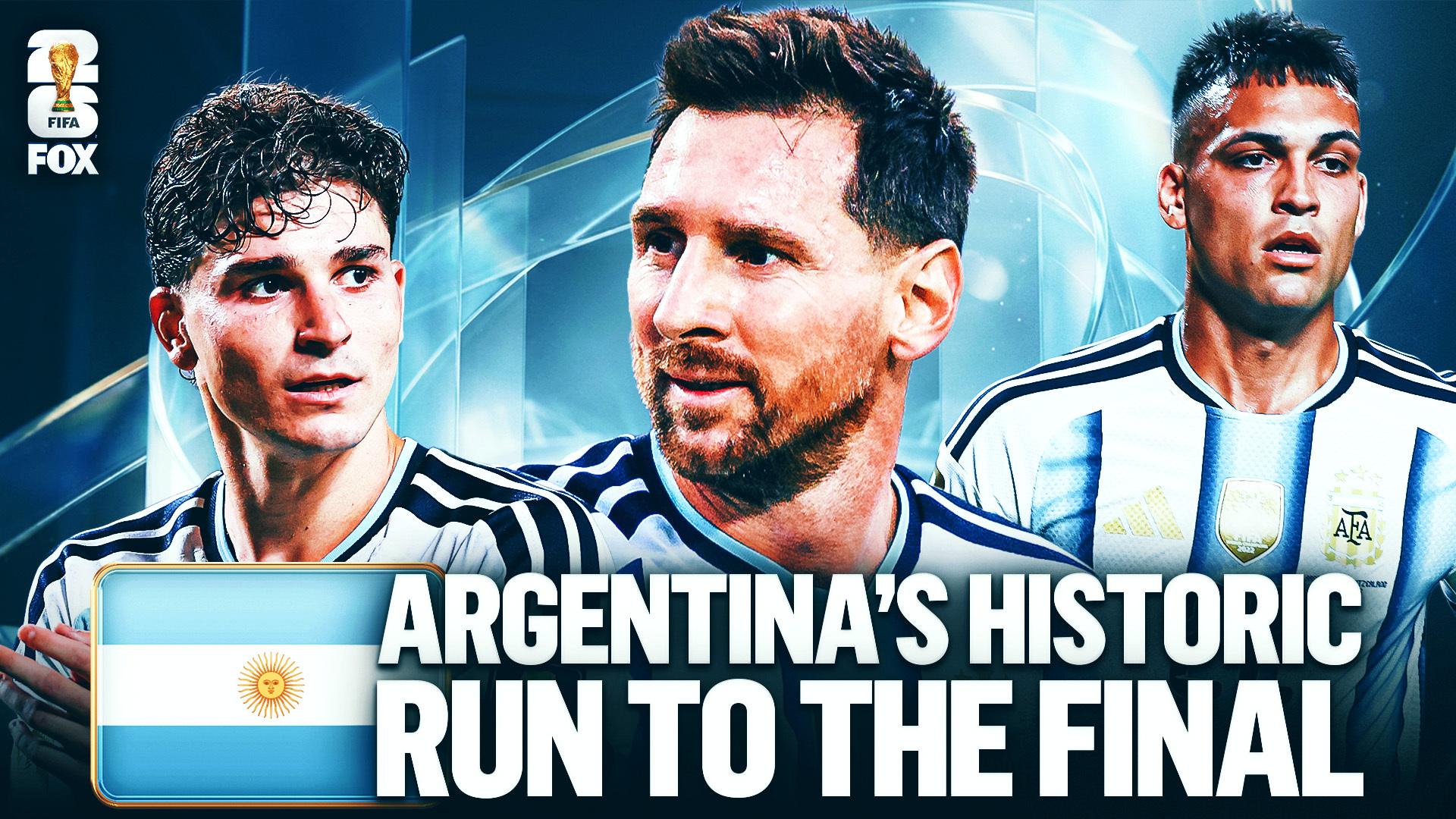
If Argentina’s journey to the final can be described by one fact, it is this: the Albiceleste only led until the 90th minute in any of their knockout matches.
With two comeback victories and two overtime wins, Argentina’s run to the World Cup final is unlike anything seen before. Four of their last seven World Cup knockout matches have gone to overtime, including two at this tournament.
Lionel Messi & Co. face Spain on Sunday at 3 p.m. EST at New York New Jersey Stadium on FOX.
This match will be the first time that the teams ranked No. 1 and No. 2 in the FIFA rankings have met in the final (since the rankings were introduced in 1992).
It will also be the first ever World Cup final between the reigning European champions and the reigning Copa América champions.
So how did Argentina get here? How improbable was his World Cup run? Let’s go.
This page may contain affiliate links to legal sports betting partners. If you register or place a bet, FOX Sports may be compensated. Learn more about Sports betting on FOX Sports.
Behind Lionel Messi’s first career World Cup hat trick, Argentina cruised to a 3-0 win over Algeria in their opening match.
- Messi recorded his first hat trick at a World Cup and the fifth hat trick for Argentina at a World Cup.
- Messi became the oldest player to score a hat trick in a World Cup match at 38 years and 357 days; he surpassed record-holder Cristiano Ronaldo, who scored a hat-trick against Spain in 2018 at age 33.
- Messi became the second man to score in five different World Cups, joining Cristiano Ronaldo.
- Messi now holds the records for the youngest and oldest Argentine goalscorer at a World Cup (he scored at 18 in 2006 and at 38 against Algeria).
After missing an early penalty, Messi redeemed himself with two more goals in Argentina’s 2-0 win over Austria to win Group J.
- Lionel Messi scored twice to become the first man or woman to reach 18 career goals at the World Cup.
- After this match, Messi became the second player to score four or more goals in three different Men’s World Cups (Miroslav Klose).
Having already won Group J, Argentina shuffled the lineup with several new starters in the group final against Jordan. Giovani Lo Celso scored the first non-Messi goal for Argentina this summer, while Lautaro Martínez added another. Then, after coming on as a substitute, Messi’s brilliance was on full display again as he scored a magnificent free-kick goal for his sixth goal of the group stage.
- Argentina scored two free kicks in this match, bringing their tally to five since 1966; which is tied for second with South Korea at five, and behind Brazil (12).
- Messi scored his only free kick goal, giving him two direct free kick goals in his World Cup career, the sixth player to reach this mark since 1966 (Pelé, Rivellino, Téofilo Cubillas, Bernard Genghini, David Beckham).
- Lionel Messi extended his record for the most goals scored by a man or woman in the World Cup (19).
- Messi set the record for most consecutive World Cup matches with a goal at seven.
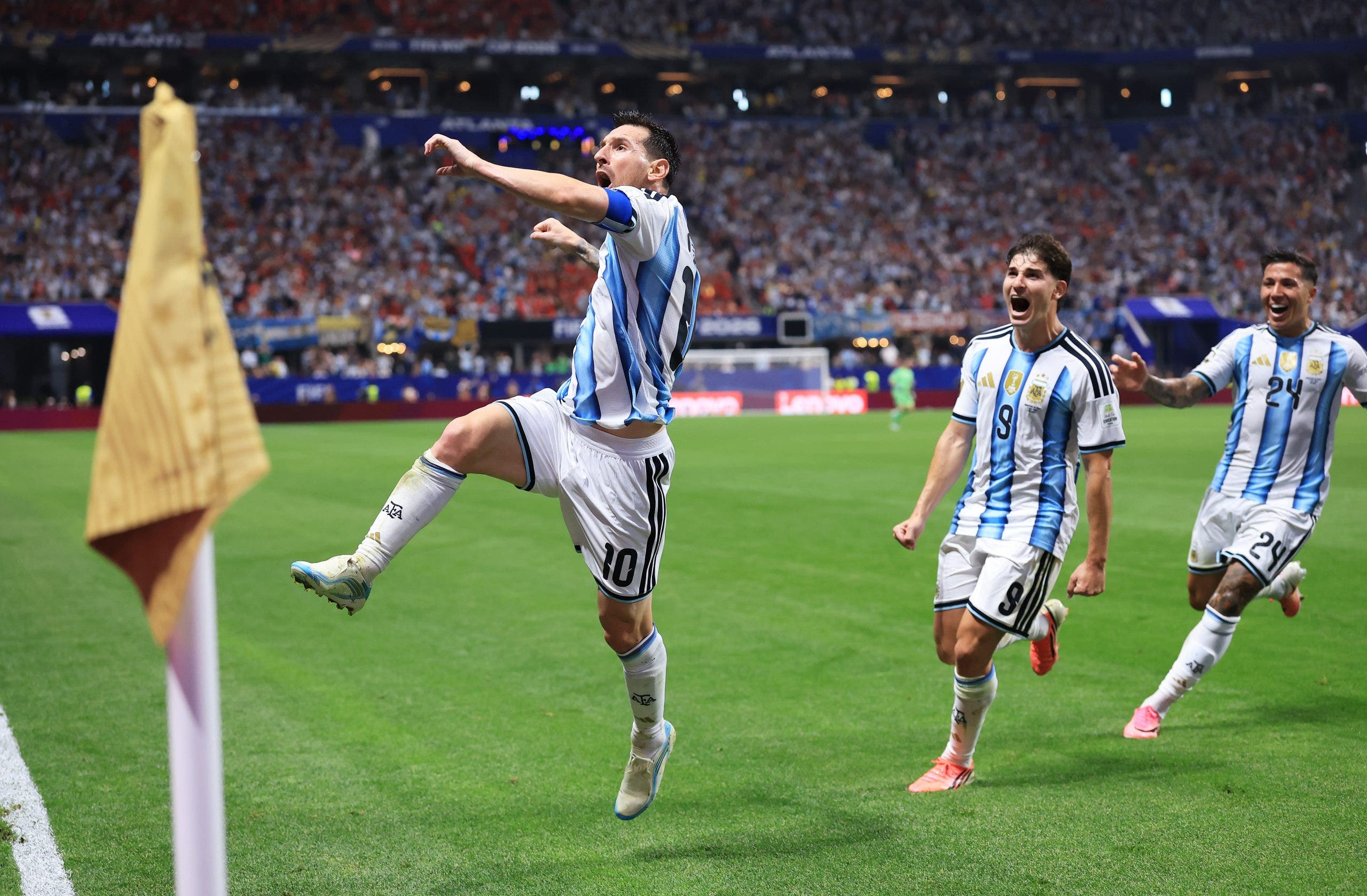
Argentina staged one of the greatest comebacks in World Cup history against Egypt in the round of 16 (Photo by Elsa/Getty Images).
In the round of 16, Argentina narrowly survived what would have been one of the biggest upsets in World Cup history. Cape Verde, a country of about 529,000, took the defending World Cup champions to overtime.
After Messi’s 29th-minute goal gave Argentina the lead, Cape Verde responded in the 59th minute to force extras. Then, after Argentina regained the lead in the 92nd minute, Sidny Lopes Cabral scored the goal of the tournament to level the score for the Blue Sharks again. As penalties loomed, a Cape Verde own goal saw Argentina through.
If Cape Verde had advanced, this would have been the biggest upset in a knockout match according to FIFA rankings in World Cup history; Cape Verde was ranked 67th, while Argentina was ranked first (difference of 66 places).
- Argentina has scored two or more goals in 10 consecutive World Cup matches, the longest such streak since West Germany scored nine times in a row between 1966 and 1970.
- Lionel Messi became the first man or woman to score 20 career goals at the World Cup
- Vozinha finished the World Cup with two clean sheets, becoming the third goalkeeper in World Cup history to record two clean sheets at age 40 or over (Peter Shilton, Dino Zoff).
For almost 80 minutes, the defending champions seemed to be heading home.
Argentina trailed Egypt 2-0 in the 79th minute of their last-16 tie before scoring three goals in 13 minutes to complete one of the greatest comebacks in World Cup history.
Egypt took the lead in the 15th minute, marking the first time Argentina had trailed in a World Cup match since their 2022 tournament opener against Saudi Arabia. The Pharaohs then doubled the lead in the 67th minute, leaving Argentina on the verge of elimination.
Then everything changed. Cristian Romero sparked the comeback in the 79th minute, converting an assist from Messi to reduce the deficit to 2-1. Four minutes later, Messi equalized himself. Then, in stoppage time, Enzo Fernández performed the miracle by scoring in the 92nd minute to seal an improbable 3-2 victory.
- According to Opta’s win probability model, Argentina’s chances of winning the match in regulation were 0.6% in the 78th minute.– moments before Romero made it 2-1.
- It was the first time Argentina had come back from a two-goal deficit to win a World Cup match.
- Argentina became the first team to win a World Cup match in regulation time after trailing by two goals in the 78th minute, and only the second overall after Belgium against Senegal earlier in this tournament.
- Messi scored and assisted in this match, the fifth time he has done so in a World Cup match; no other player has played more than three such matches since assists were first recorded in 1966.
- Messi became the first player in World Cup history to score in six consecutive knockout matches.
- Messi became the first and only player to record an assist in six different World Cups.
In the quarter-finals, after an early goal from Alexis Mac Allister in the 10th minute, the Albiceleste looked set to claim an easy victory. Then, Switzerland’s Dan Ndoye equalized in the 67th minute. However, just when all the momentum was turning towards Switzerland, Breel Embolo was sent off moments later after picking up his second yellow card.
The match was tied 1-1 after 111 minutesuntil Julián Alvarez scored one of the best goals of the tournament to give Argentina the lead. Lautaro Martínez would score a third in the 120th (+1), putting the nail in the coffin.
- Argentina reached back-to-back World Cup semi-finals for the second time in their history, most recently in 1986 and 1990.
- Four of Julián Alvarez’s five career World Cup goals have come in the round of 16, tied with Diego Maradona for second most by an Argentine player behind Lionel Messi (seven).
- Embolo became the fourth player since 1966 to receive a yellow card for simulation (Francesco Totti in 2002, Luis Pérez in 2006, Asamoah Gyan in 2006).
After conceding a goal in the 55th minute, Argentina found themselves behind once again. But five minutes from the end of normal time, Messi once again saved the day by finding Enzo Fernández for the equalizing goal. Seven minutes later, he found Martínez for the winning goal.
- According to Opta’s win probability model, Argentina had only a 1.3% chance of winning the match within 90 minutes in the 84th minute, just before Fernández scored.
- With goals in the 85th and 90th (+2) minutes in this match, Argentina have now scored eight goals after the 85th minute (including extra time) in this World Cup – a record for a national team in a single edition in the history of the tournament.
- Argentina reached its seventh World Cup final, which ranks Brazil second all-time (Germany has made eight).
- Argentina became the first team since Brazil in 1998 to enter the World Cup ranked first in the FIFA rankings and then qualify for the final.
- Argentina has won a team-record 14 consecutive matches, is undefeated in a team-record 13 consecutive World Cup matches (11 wins), and has won seven consecutive World Cup matches for the first time.
- Argentina have now scored multiple goals in 13 consecutive World Cup matches, extending their own record; The Albiceleste also became the only team to score at least two goals in all seven matches of this World Cup.
- Lionel Messi made two assists in this match; he has now scored or assisted in 11 consecutive World Cup matches, the longest streak on record (since 1966).