
ISLAMABAD:
The government on Friday increased prices of petrol and high-speed diesel (HSD) by Rs 15 amid fluctuation in global oil prices due to the closure of the Strait of Hormuz from May 9 (today).
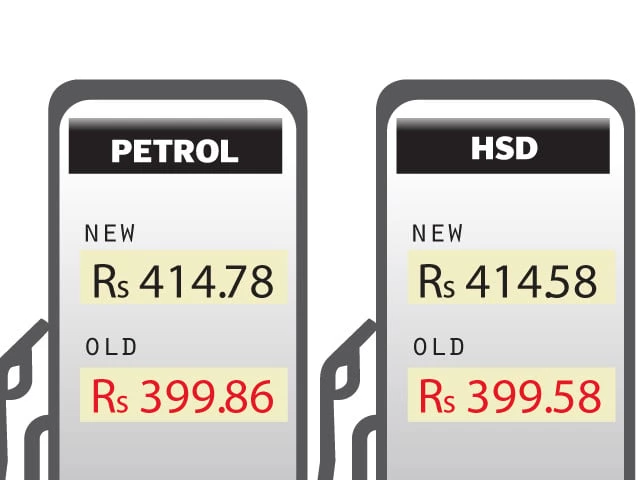
According to a press release issued by the Ministry of Power (Petroleum Division), the price of HSD has been increased by Rs 15 per liter from the existing Rs 399.58 to the new rate of Rs 414.58 per litre.
It also increased the price of petrol by Rs 14.92, taking the new price to Rs 414.78 per liter against the previous rate of Rs 399.86.
This is the second increase in fuel prices in May.
The government had increased the price of HSD up to Rs 19.39 per liter last week. He had also imposed an oil tax of Rs 28 per liter on HSD, which was earlier zero.
Pakistan State Oil (PSO) had imported diesel at a high premium of $34 per barrel, which led to an increase in the price of diesel by Rs 120 per litre.
The government now recovered this amount through levies and transportation charges. There has also been pressure from the International Monetary Fund (IMF) to increase the levy rate on oil.
Even the Oil Minister had earlier told the media that the government may increase the oil tax up to Rs 55 per liter due to pressure from the IMF.
Last week, the government had also increased the price of petrol by Rs 6.51 per litre.
HSD is widely used in the transportation and agriculture sectors. The sowing season is underway; therefore, the increase in its prices will have a negative impact on the agricultural sector where input costs are already high.
The price of fertilizers has already increased due to rising transportation costs.
Gasoline is used in motorcycles and cars. However, the Prime Minister had earlier announced continuation of a subsidy of Rs 100 per liter for motorists.
CNG is an alternative to gasoline, but Punjab lacks local gas for CNG outlets and hence the demand for gasoline is even greater in the country’s most populous province.
During the Gulf War, Iran and the United States maintained the blockade of the Strait of Hormuz, which supplies 20% of the world’s oil.
The whole world is facing a crisis situation as oil prices have soared due to lack of supply. Middle Eastern countries like Saudi Arabia, the United Arab Emirates and Kuwait are also facing supply problems as their oil facilities have been hit. Iran is also a major oil supplier to China.


