
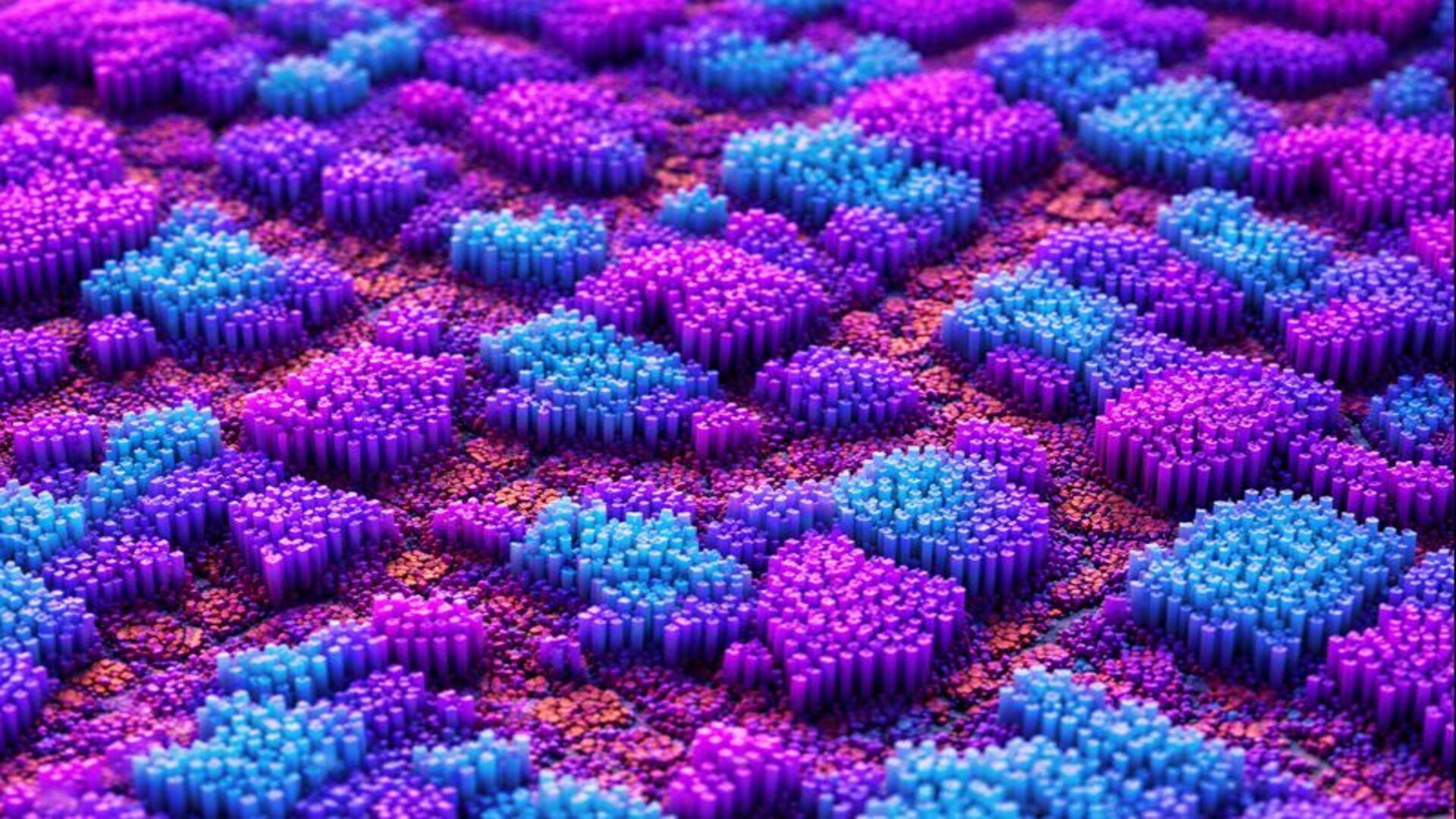
- Controlled disorder enables multiple optical functions in a single compact device
- Tiled metasurfaces reduce space requirements for complex light manipulation tasks
- Eleven optical functions operate simultaneously on a technical surface
Monash University researchers have overturned a long-held hypothesis in optics by showing how controlled disorder can make optical devices more powerful.
The team developed a new class of “disordered tiled metasurfaces” capable of performing multiple optical functions simultaneously within a single device.
Instead of carefully arranging the structures in perfect order, the researchers scattered them in a mosaic pattern.
Article continues below
How a tiled design packs more functions into the same space
“Clutter is usually something that engineers try to eliminate,” said Dr. Haoran Ren. “But we found that if you design it carefully, clutter can actually improve the capabilities of these devices.”
Traditional metasurfaces face a major limitation: each device typically performs only one function.
This new approach uses a disordered “tile” arrangement of tiny light-controlling elements called metapixels.
Researchers have shown that this can significantly reduce the area needed for a given function, freeing up space for additional capabilities.
“Think of it like a city,” said Dr. Chi Li. “Traditional designs give a single function to the entire space. What we did was rethink ‘urban planning’ so that multiple functions can coexist effectively.”
As a proof of concept, the team built a new type of optical lens that operates over a wide range of wavelengths from 1,200 to 1,400 nm.
Its device integrates 11 distinct optical functions onto a single surface, allowing it to focus light coherently onto different colors without the usual distortion.
The team also demonstrated the ability to capture detailed information about the polarization of light in a single measurement.
Previously, this type of analysis required multiple measurements or specialized equipment: compact, multifunctional optical devices could transform telecommunications infrastructure, making it faster and more efficient.
Biomedical diagnostics, environmental sensing and spatial imaging would also benefit from smaller, more efficient optical systems.
The platform provides researchers with a scalable way to integrate numerous optical functions into a single compact device.
By showing that disorder can overcome order, the research challenges a fundamental assumption in the field of photonics.
“Sometimes the most powerful innovations come from questioning what we think we know,” Dr. Ren said.
The study was carried out at the Monash Nanophotonics Laboratory, with additional contributions from the University of Exeter and the University of the Witwatersrand.
Whether this laboratory advancement can extend to commercial manufacturing remains an open question.
Yet the conceptual shift from perfect order to technical disorder opens a new avenue for photonics that could eventually deliver faster and better broadband.
ViaNature
Follow TechRadar on Google News And add us as your favorite source to get our news, reviews and expert opinions in your feeds.


