
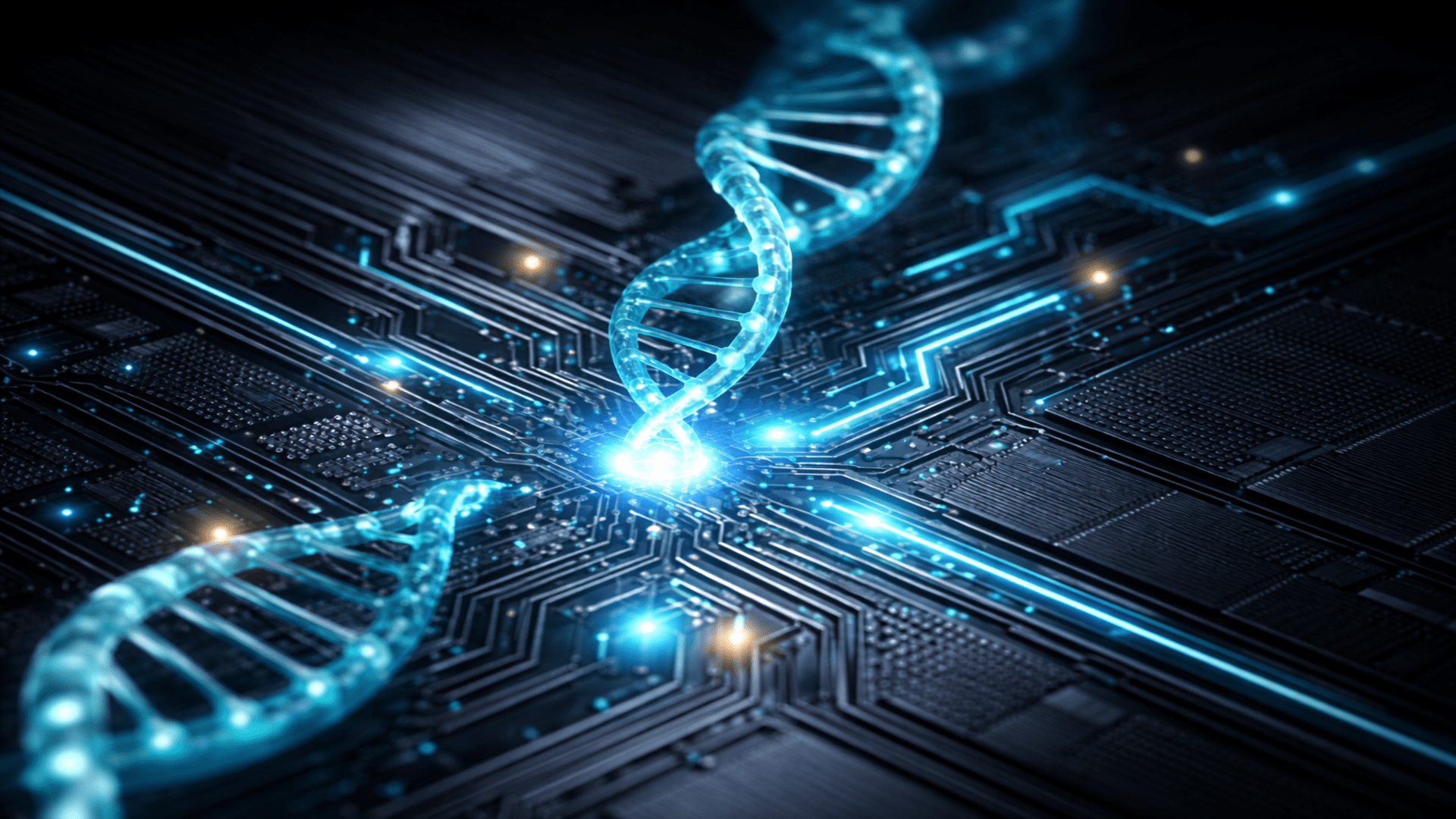
- Synthetic DNA Enables Precise Nanoscale Architecture for Advanced Memory Devices
- Device operates using less than one-tenth of standard voltage levels
- Combining DNA and perovskite creates highly efficient conductive channels
A Penn State research team has developed a new type of memory device combining synthetic DNA with perovskite semiconductors to achieve high storage density using very little energy.
The device, known as a memristor, can remember the direction of previous current flow even after its power source is turned off.
This ability to store and process data in one place mimics the way neurons work in the brain, potentially allowing for more efficient data processing.
Article continues below
How DNA and perovskite work together in the device
The team applied silver nanoparticles to custom synthetic DNA sequences and embedded them into thin crystalline perovskite films.
This process, called doping, made DNA capable of conducting electricity while orienting its units in a more streamlined manner.
Unlike natural DNA, which behaves like long, tangled strands of wet spaghetti, short, rigid synthetic DNA fragments enable true architectural precision at the nanoscale.
“We can computationally determine exactly which sequences we need and how long they should last, and then we can rationally design them with synthetic DNA,” said co-author Neela H. Yennawar.
The DNA and perovskite together developed bio-hybrid channels that channel current through the device.
When the team applied less than 0.1 volts, compared to 120 volts from a standard U.S. outlet, electrons moved reliably through the system.
The device performed the same memory functions as existing technologies, but used only a tenth of the power, making it much more suitable for energy-efficient electronics.
It also performed consistently at temperatures up to nearly 250 degrees Fahrenheit and remained stable at room temperature for more than six weeks.
With these results, it far exceeds the performance standards of current perovskite-based memory storage devices.
“Using just DNA or perovskite alone did not produce as robust a result as the combination,” said Kavya Keremane.
“It is this combination that allows for very high memory storage density that requires very little power.”
DNA is the most efficient natural storage mechanism, capable of storing approximately 215 million GB of data per gram.
“Nature has the solution, you just have to find it and apply it,” said researcher Bed Poudel.
“This work integrating DNA into electronics to achieve amazing things provides a glimpse of what is possible.”
Applying this capability to electronics could enable more efficient data centers, faster data processing, and the ability to process much more complex data.
The researchers have filed a patent application and plan to refine their approach while investigating other bio-inspired electronic applications.
Via Storage bulletin
Follow TechRadar on Google News And add us as your favorite source to get our news, reviews and expert opinions in your feeds.


