
A Senate committee examining potential abuse of a lucrative Puerto Rico tax break by wealthy Americans is asking the Internal Revenue Service to investigate the role played by two prominent attorneys who advised on several of the deals, according to a letter reviewed by The New York Times.
The request is part of an investigation by the Senate Finance Committee into whether wealthy Americans who moved to Puerto Rico to take advantage of a special tax break, known as Act 60, used it improperly to avoid taxes on income earned in all 50 U.S. states. The IRS has identified approximately 100 people who may have improperly avoided federal income taxes after moving to Puerto Rico.
Senator Ron Wyden, Democrat of Oregon, sent a letter on April 29 to Jarod Koopman, the IRS tax compliance officer, asking the agency to review the legal advice given to some of these individuals by Jeffrey Rubinger and Summer LePree, two former partners at the international law firm Baker McKenzie.
“I am concerned that many investors have used these legal opinions from Rubinger and LePree to avoid federal income tax on large capital gains accumulated before moving to Puerto Rico,” Mr. Wyden wrote.
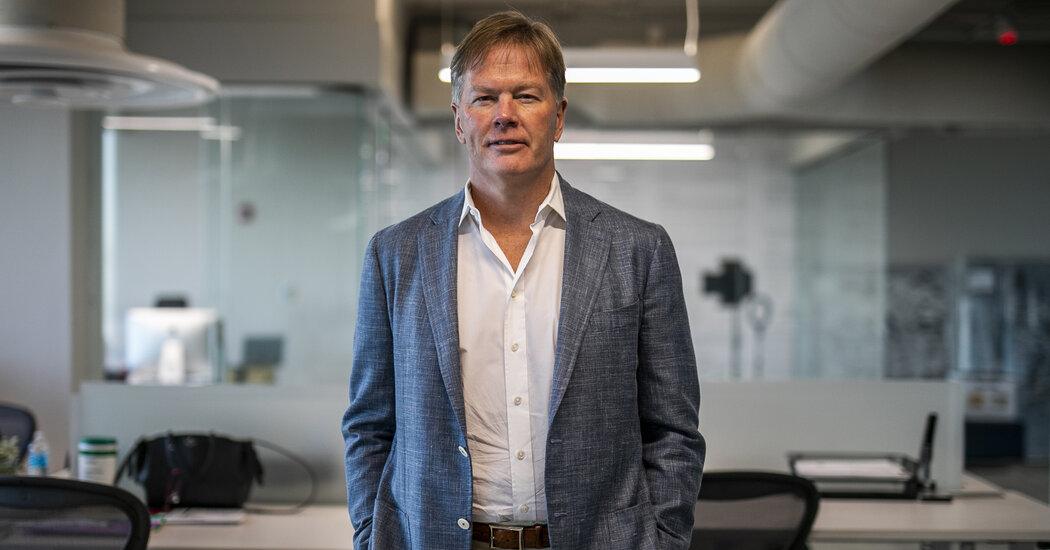
Many wealthy Americans have moved to Puerto Rico to take advantage of the tax break, which treats capital gains generated there as exempt from federal income tax. Last year, the Senate committee wrote to Dan Morehead, founder of Pantera Capital, one of the largest cryptocurrency investment firms, as part of its investigation into whether he abused the tax law.
The Justice Department and the IRS Criminal Investigation Division are investigating the two former partners, Bloomberg previously reported, and Baker McKenzie received a grand jury subpoena from the U.S. Attorney’s Office in Miami requesting records on the attorneys’ work on “Puerto Rico tax planning” structures.
“Rubinger and LePree’s clients admitted their participation in schemes involving the abuse of Puerto Rico’s Act 60 tax incentives,” Mr. Wyden wrote.
According to Senator Wyden’s letters, shortly after Mr. Morehead moved to Puerto Rico in 2021, his company sold a large position, generating capital gains of more than $1 billion. The committee received information from a whistleblower who claims Mr. Morehead accumulated most of his share while living in California and improperly avoided more than $100 million in federal taxes.
In a statement, Mr Morehead said: “I have always acted appropriately with respect to my taxes. I have consulted professional tax advisors and relied on their advice. Any assertion to the contrary is simply incorrect.”
The committee says Mr. Morehead obtained legal advice from Mr. Rubinger and Ms. LePree, who informed him that he was allowed to treat the entire gain tax-free, according to the letter.
“My team’s investigators have already established that Rubinger provided inaccurate legal advice to other clients involving abuse of Puerto Rico’s Act 60 incentives,” Mr. Wyden said.
Mr. Rubinger, now with Winston & Strawn, maintains his legal counsel. “Wyden doesn’t seem to read the rule,” Mr. Rubinger said in an interview. He said sales of investment assets that have historically been owned by partnerships are not subject to the rules cited by Mr. Wyden and are exempt from federal tax for Puerto Rico residents.
Last year, Suresh Gajwani, an investor, pleaded guilty in Florida federal court to making a false statement to the IRS using Puerto Rico’s tax break to shield $30 million in capital gains. Mr. Wyden’s letter said Mr. Gajwani relied on the advice of Mr. Rubinger, identified in court documents as “Attorney No. 1.”
“I had nothing to do with the trouble that this guy from Miami got in trouble for,” Mr. Rubinger said.
He said he was hired after Mr. Gajwani made the transaction that got him into trouble and that the legal opinion he wrote on his client’s behalf “was 100 percent accurate.”
The Senate committee’s letter asks the IRS to review legal opinions that Mr. Rubinger and Ms. LePree provided to Mr. Morehead and others, particularly about whether the lawyers “inaccurately represented” that capital gains made before moving to Puerto Rico qualified for the exemption.
Ms. LePree, who also works at Winston & Strawn, did nothing wrong, said David Oscar Markus, a lawyer who represents her. “She is ethical and has always done the right thing,” he added.
Senator Wyden also asked the IRS to review tax returns filed by Mr. Morehead and other Pantera Capital associates to determine whether wealthy investors are “misreporting their U.S. source income as Puerto Rican source income in an attempt to avoid or evade taxes.”


