
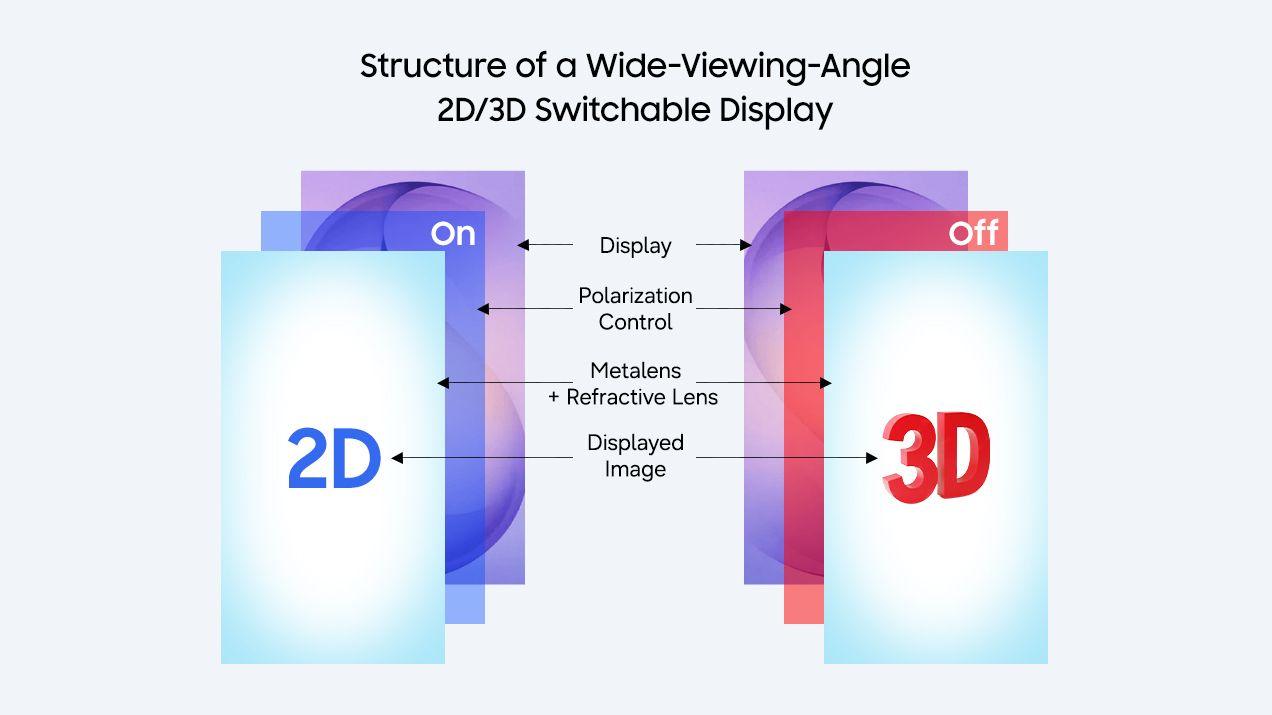
- Samsung jointly developed a nanomaterial to create a 3D/2D switching light field display
- Glasses-free 3D with wide viewing angles and very high resolution
- Likely to appear first on phones, tablets and commercial displays
Are 3D TVs coming back? Not anytime soon, but a new type of 3D display technology is still very exciting, and Samsung has teamed up with Korean private research university POSTECH to achieve a breakthrough. He developed a way to switch between very high-resolution 2D and realistic, glasses-free 3D.
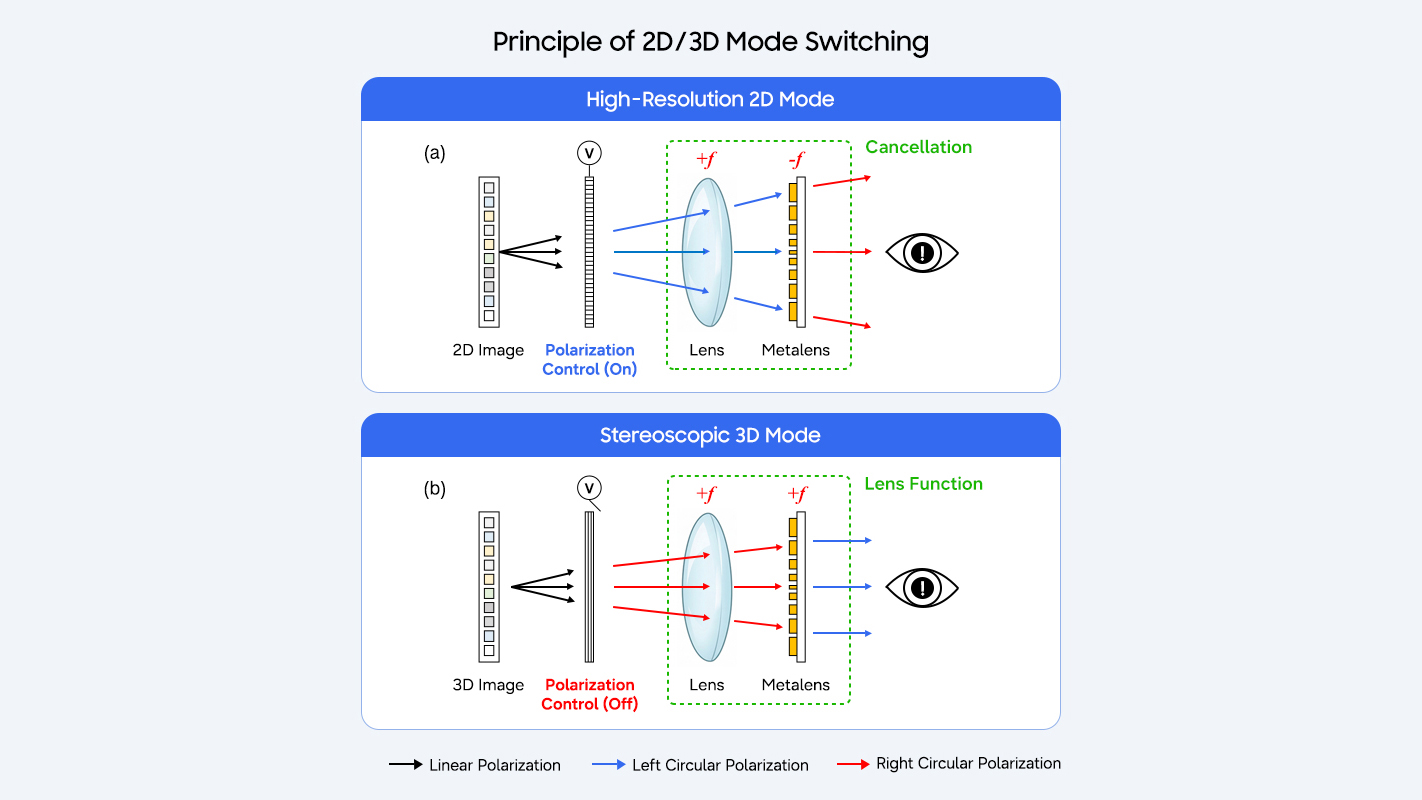
We’ve recently seen glasses-free 3D from TCL and Visual Semiconductor, and they both use plenoptic displays, that is, light field displays. Samsung’s version of a light field display uses what is described as a “metasurface lenticular lens” layer of “nanoscale structures” to “transition seamlessly between flat (2D) and stereoscopic (3D) images.”
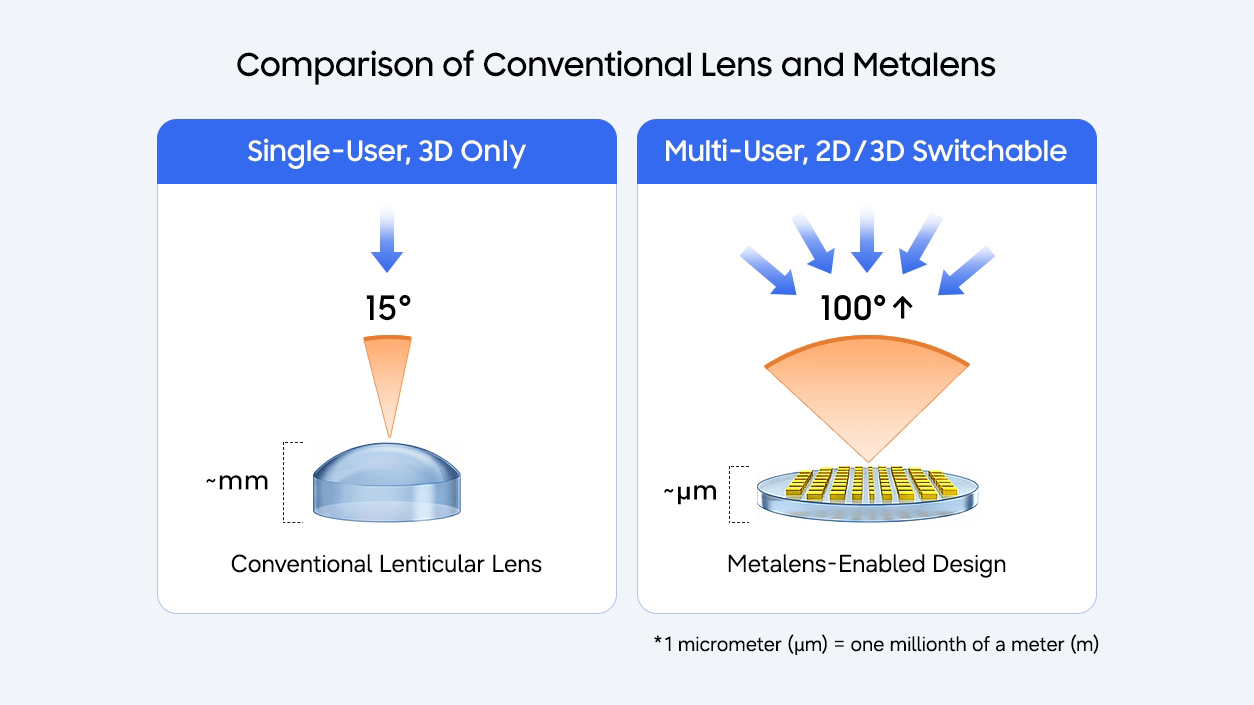
This is an important development because, as trade site The Elec explains, conventional light-field displays tend to use bulky lenses, offer narrow viewing angles, have relatively low resolution, and may require real-time eye tracking to provide 3D. Samsung’s design solves these problems.
Article continues below
What’s so special about Samsung’s 3D screen technology?
Like other light-field displays, Samsung’s system transmits light from multiple directions simultaneously to mimic the way light hits the eye from real objects, helping trick the brain into delivering glasses-free 3D. This means there is no limited “sweet spot” you need to be in to see the 3D effect. But without decent viewing angles for general use, most displays will remain of limited use. Enter Samsung and its metasurfaces.
Samsung’s apparently metasurfaces offer complex optical functions without the bulk of existing lenses, and Samsung’s lens can change its focal properties to offer either 2D or 3D with a simple voltage change. According to The Elec, the lens currently offers viewing angles of up to 100 degrees while being only 1.2mm thick.
That’s the good news. The bad news is that you shouldn’t expect to have this technology in your home anytime soon. Samsung’s lens measured 25 square centimeters, only about a quarter the size of a smartphone screen, let alone a TV.
The first commercial applications of the technology will likely be modest, but it could be fun. Imagine if your iPhone could reproduce your photos in 3D, thanks to the depth maps it already captures in photos? Or what if the Nintendo Switch 3 turned out to be the Switch 3DS, with a return to glasses-free 3D gaming?
It’s very possible that the first applications will be aimed at big spenders, like retail displays and other businesses.
Will the technology be integrated into televisions? I’m not sure, and I speak as someone who owned and loved a 3D TV. It seems like every generation has to go through the “3D is the future!” stage. » / actually no, that’s not the case!’ cycle: the 3D cinema boom of the 1950s, the second 3D cinema boom of the early 1980s, the Avatar-led by the boom in 3D cinema and 3D television in the 2010s…
So if this scenario repeats itself, we expect the next 3D boom in the 2040s. Which gives Samsung plenty of time to perfect its technology.
Are you planning to buy a new television?
Try our TV size and model finder! You tell it how far you’re sitting from your TV, we’ll tell you what size to buy based on viewing angle advice from picture quality experts, and we’ll recommend our three best TVs of that size at different prices.

Follow TechRadar on Google News And add us as your favorite source to get our news, reviews and expert opinions in your feeds.


