
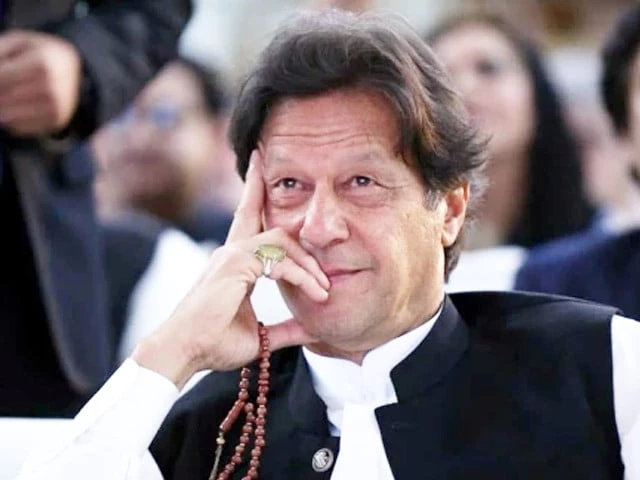
Lawyers say cases involving civil liberties were not prioritized during CJP Yahya Afridi’s tenure
ISLAMABAD:
The Supreme Court will decide the contempt case related to non-implementation of a court order allowing meetings with PTI founder Imran Khan in line with the court’s new case fixing policy.
A senior Supreme Court official told The Express PK Press Club that the contempt petition over the denial of meetings with Khan, despite an Islamabad High Court order allowing them, would be included in the court’s new policy.
Earlier, on May 20, PTI general secretary Salman Akram Raja, a senior lawyer, called on Chief Justice of Pakistan Yahya Afridi and urged the court to expedite the listing of cases involving Imran Khan.
Speaking to the media after the meeting, Raja said the chief justice had assured him that cases related to Khan would be heard soon after Eid.
In November last year, Raja filed an appeal in the Supreme Court against the Islamabad High Court’s dismissal of his contempt petition over non-implementation of its March 24 order directing prison authorities to allow meetings between Khan and his family members and lawyers.
It is learned that the contempt case is number 60 in the list of Supreme Court cases, with the chief justice strictly following the court’s fixation policy, under which contempt cases are dealt with in turn.
However, senior lawyers have expressed concerns, stressing that the case is of considerable importance as it concerns the former prime minister, whose meetings with his family members and lawyers have been almost completely restricted since December.
The government, meanwhile, claims that Imran Khan frequently holds meetings with his wife Bushra Bibi in Adiala prison.
Lawyers say cases involving civil liberties are not given priority during the tenure of Pakistan’s Chief Justice Yahya Afridi.
Since the passage of the 26th Amendment, the PTI has struggled to obtain relief from higher courts, with key petitions involving its imprisoned founder and top leaders remaining in limbo, deepening its legal and political uncertainty.
The party, whose founder and leader Imran Khan remains incarcerated, continues to approach the courts to hear its cases, but progress has been slow, with petitions remaining in limbo on several forums.
Despite filing several petitions, the party could not get any relief from the Islamabad High Court.
Interestingly, despite dozens of important constitutional petitions, the PTI is reluctant to approach the FCC.
After the meeting between Chief Justice of Pakistan Yahya Afridi and Salman Akram Raja, the PTI had renewed its hopes in the Supreme Court, but these expectations have since dissipated.
Political analysts suggest that meetings with Imran Khan can only be restored if he avoids criticizing the security establishment during his interactions with his family members in detention.


