
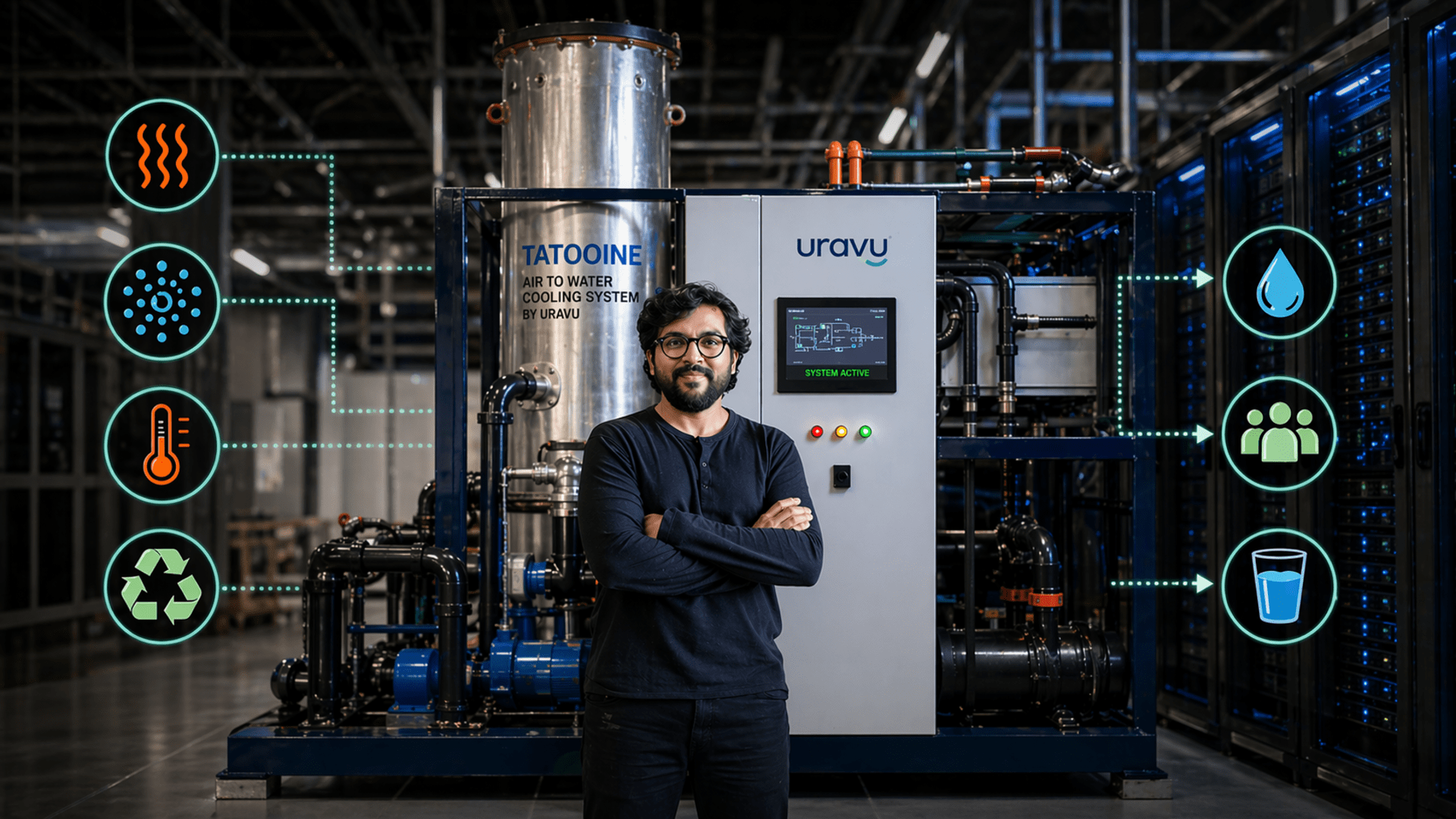
- Uravu Tatooine converts data center waste heat into usable clean water
- The liquid desiccant absorbs moisture and allows for continuous water harvesting cycles.
- Cooling systems operate within acceptable temperature ranges for modern servers
Growing demand for computing continues to strain all data centers, especially as cooling systems consume large amounts of energy and water simultaneously.
A startup called Uravu has developed a cooling system that uses a liquid saltwater desiccant to extract water from hot air, potentially transforming data centers from water consumers into water producers.
Since data centers currently release massive amounts of waste heat into the atmosphere, the Uravu system captures this heat and puts it to good use.
Article continues below
How Salt Water and Waste Heat Work Together to Create Fresh Water
The system, called Tatooine, uses a liquid desiccant to absorb moisture from hot air.
When this desiccant is heated using waste heat from the data center, it releases pure water vapor which can be condensed and collected.
The absorber operates at room temperature plus four degrees, which is already cold enough to replace a conventional cooling tower in many locations.
This liquid desiccant helps maintain a very low temperature, meaning operators can potentially replace their chiller or dry cooler entirely.
The salt solution then releases pure water into the desorber as vapor, with a vacuum pump lowering the pressure to allow evaporation at lower temperatures.
Cooling water can be returned between 27 and 32 degrees Celsius, which is within the range allowed by ASHRAE for server operation.
The system uses waste heat that would otherwise be rejected, keeping energy costs lower than conventional cooling methods.
“This is quickly becoming an efficient and economically feasible solution,” said Swapnil Shrivastav, CEO and co-founder of Uravu.
“This allows users to maintain low energy use efficiency (PUE), and you can also claim negative water use efficiency (WUE) because you have excess water that can be supplied to communities.”
What the numbers look like for a typical data center
Uravu claims that for every megawatt of data center power, the system can generate up to 30 cubic meters of excess pure distilled water per day.
This figure fluctuates depending on ambient humidity levels, but Shrivastav says the system generates at least five cubic meters of water at the lower end of the spectrum.
This water is pure enough for drinking or other industrial processes, and its energy consumption is one-fifth the power of an air-cooled chiller and half the power of a water-cooled chiller.
Uravu already has 40 customers in the hospitality sector, supplying bottled water from a machine installed in its Bangalore laboratories that produces five cubic meters of pure water per day.
The company has developed a 125-kilowatt unit for small deployments and pilot projects, and its next goal is a one-megawatt block that can become a modular solution.
Although the technology appears promising, generating 5 to 30 cubic meters of water per megawatt means that to consume 100 megawatts you would need 100 of these units.
Additionally, the liquid desiccation system introduces salt water into a facility designed for dry air and electronics, which poses a non-trivial technical challenge.
However, for data centers located in water-stressed regions where cooling represents a considerable portion of operational costs, a system that simultaneously cools and creates water deserves special consideration.
The next 12 months of pilot deployments will determine whether this system lives up to the hype or remains a desert mirage.
Via Data center dynamics
Follow TechRadar on Google News And add us as your favorite source to get our news, reviews and expert opinions in your feeds.


