The 2026 Global Report on Food Crises, released Friday by an alliance of United Nations agencies, the European Union (EU) and partners, reveals that 266 million people in 47 countries experienced high levels of acute food insecurity in 2025 – almost a quarter of the population analyzed and almost double the share recorded in 2016.
The report paints a grim picture: hunger is no longer a series of short-term emergencies, but a persistent and increasingly concentrated global challenge.
“Today, acute food insecurity is not only widespread: it is also persistent and recurring.said Qu Dongyu, Director-General of the Food and Agriculture Organization of the United Nations (FAO), warning that the crisis has become structural rather than temporary.
Conflict with main pilot
Conflict remains the main cause of this situation, accounting for more than half of the people facing severe famine.
Ten countries – Afghanistan, Bangladesh, Democratic Republic of Congo, Myanmar, Nigeria, Pakistan, South Sudan, Sudan, Syrian Arab Republic and Yemen – accounted for two-thirds of all people facing high levels of acute hunger.
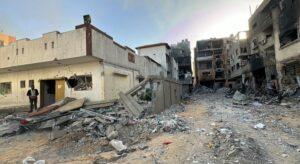
At the most extreme end, famine has been confirmed in 2025 in Gaza and parts of Sudan – this is the first time since the start of the report that two distinct famines have been recorded in a single year.
“This report is a call to action,” said UN Secretary-General António Guterres in the foreword: “mobilize the political will needed to rapidly increase investments in life-saving aid and work to end the conflicts that inflict so much suffering on so many people..”
The report also highlights a sharp increase in severity of hunger. More than 39 million people in 32 countries face emergency levels of food insecurity, while the number of people facing catastrophic famine has increased nine-fold since 2016.
Number of people facing high levels of acute food insecurity.
The children who bear the brunt
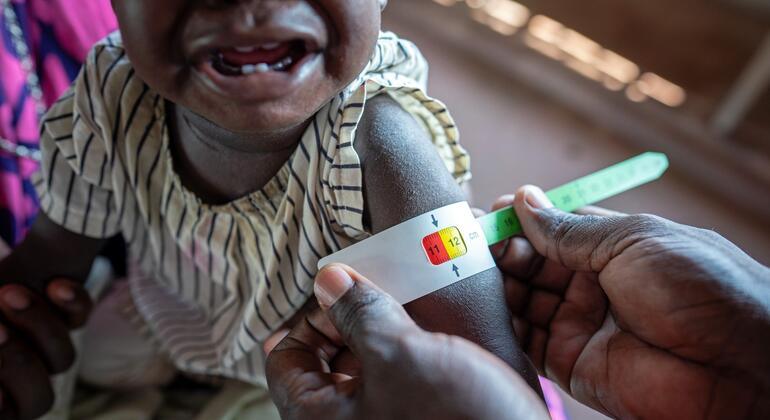
Children are among the most affected. In 2025, 35.5 million children suffered from acute malnutrition, of which almost 10 million suffered from severe acute malnutrition – a potentially fatal disease that significantly increases the risk of death.
“Children with severe wasting are too thin for their height. Their immune systems have weakened to the point where ordinary childhood illnesses can become fatal,» warned the spokesperson for the United Nations Children’s Fund (UNICEF), Ricardo Pires.
In the worst-affected areas – including Gaza, Myanmar, South Sudan and Sudan – overlapping crises of conflict, disease and limited access to services are leading to extreme levels of malnutrition and increasing the risk of death.
Displacement worsens the crisis
Forced displacement is worsening the crisis.
More than 85 million people were displaced by food crises last year, with displaced populations consistently facing higher levels of hunger than host communities.
“Forced displacement and food insecurity are deeply linked, forming a vicious cycle,said UN High Commissioner for Refugees Barham Salih, warning that humanitarian aid alone is not enough to break the pattern.
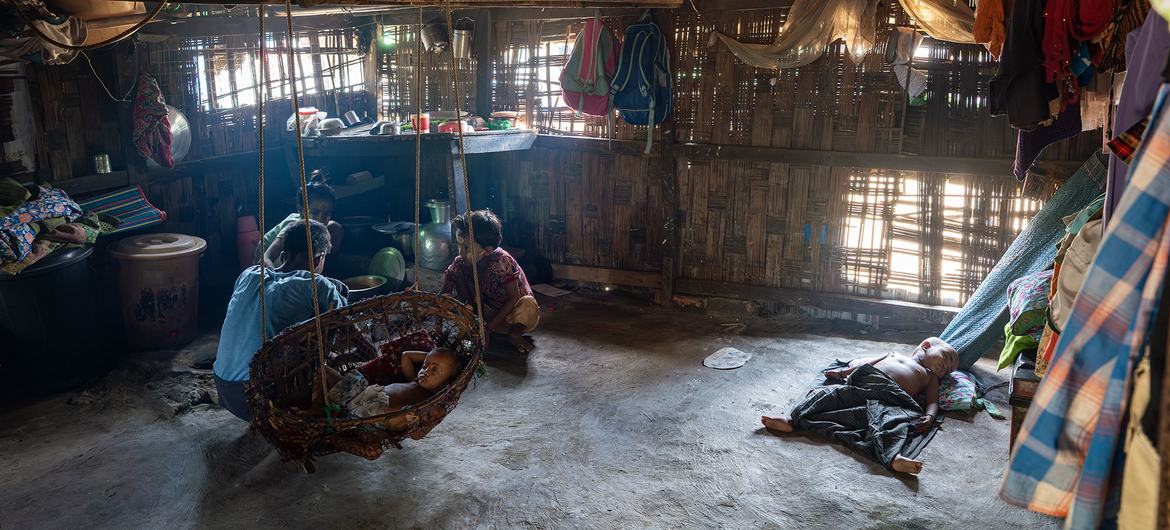
Myanmar is one of the countries where a very large number of people suffer from acute food insecurity. Pictured here is a family in a displaced persons camp in the east of the country.
Funding collapse
Despite the scale of the crisis, the report warns that funding is moving in the opposite direction.
Humanitarian and development funding for food and nutrition interventions has fallen to levels last seen almost a decade agolimiting the ability of governments and humanitarian organizations to respond effectively.
At the same time, data gaps are widening. The number of countries able to produce reliable food security assessments has fallen to its lowest level in a decade, meaning the true scale of hunger may be even greater than current estimates suggest.
Gloomy outlook for 2026
Looking ahead, the outlook for 2026 remains bleak. Ongoing conflicts, climate shocks and economic instability are expected to persist food insecurity at critical levels in many countries.
The report also flags new risks from global market disruptions, including those arising from the ongoing crisis in the Middle East, which could further increase food prices and strain supply chains.
Humanitarian agencies warn that without a change in approach, the world risks becoming locked in a cycle of worsening crises, with hunger no longer a temporary emergency but an increasingly persistent feature of global instability.
“We need to move from reacting too late to acting early, and stop relying solely on food aid to protect local food production – because that is how we reduce need, save lives and build resilience over time.» said FAO Director-General Qu.