
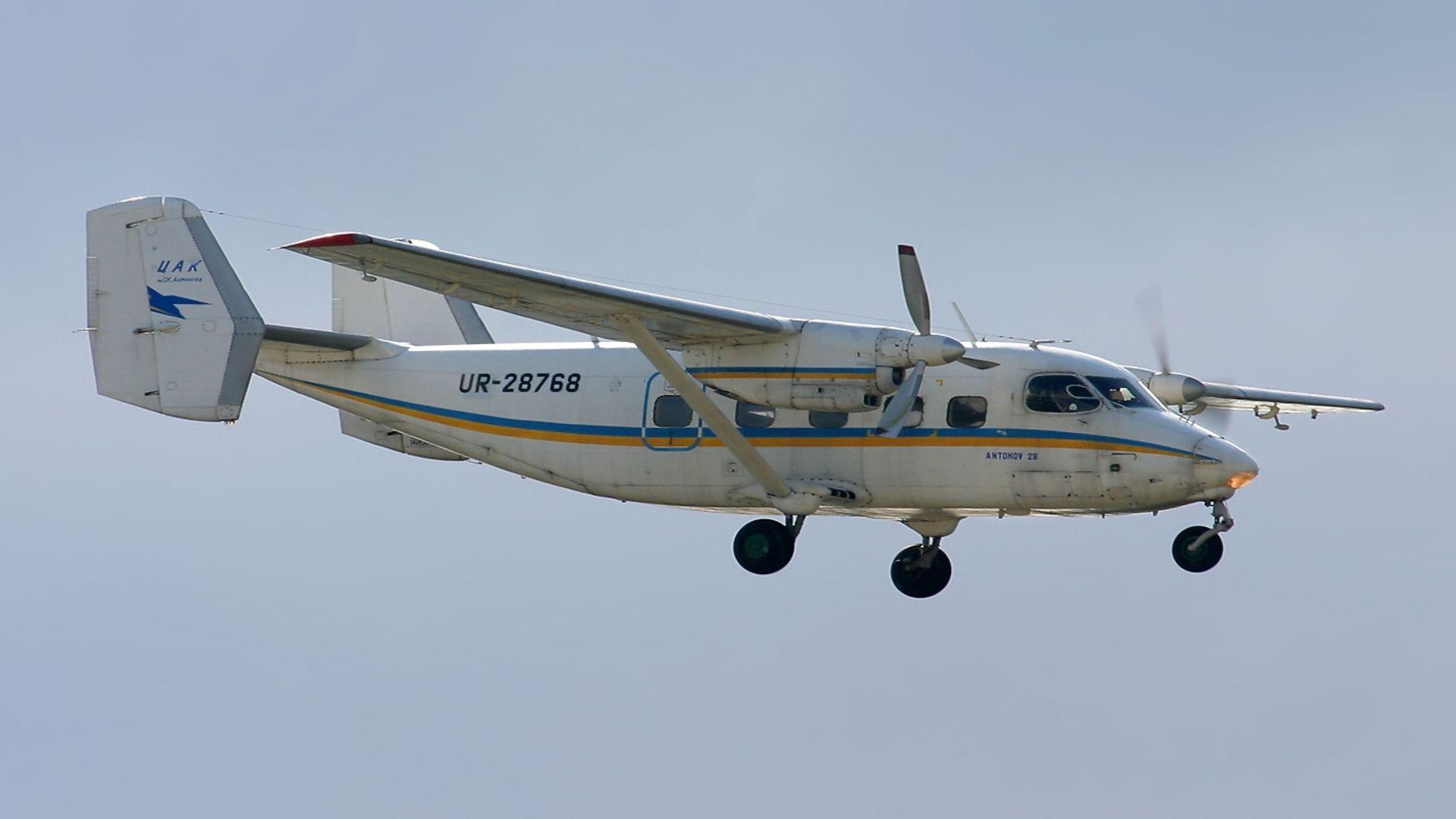
- Vintage Antonov An-28 now functions as a mobile anti-drone platform
- Ukrainian crews report destroying 222 Russian Shahed drones using onboard minigun
- The Antonov An-28 supports two drone models, SkyFall P1-Sun and Merops AS-3 Surveyor
A 55-year-old turboprop plane, originally designed for short-haul cargo and passenger flights, has found a whole new purpose in Ukrainian skies.
The Antonov An-28, a Russian-designed, Soviet-era twin-propeller aircraft, now functions as a mobile anti-drone weapons platform.
Ukrainian forces equipped this vintage airframe with a six-barrel M134 minigun, underwing interceptor drones and virtual reality headsets for nighttime targeting.
Article continues below
From utility transport to drone hunter
The An-28 was never intended for combat; its initial mission was to transport supplies and people from short, unimproved airstrips.
The aircraft’s short takeoff and landing capability now serves a different purpose, allowing it to operate from austere forward bases close to the front lines.
Ukrainian pilot Tymur Fatkullin, who has documented numerous improvised aerial initiatives, was the first to post video of the armed An-28.
Its crew relies on air traffic controllers to guide them to areas where Russian Shahed drones are active, then uses infrared cameras and night vision goggles to spot primarily nocturnal targets.
The aircraft carries an M134 Minigun, a six-barrel Gatling-class weapon capable of shredding slow-moving drones with sustained fire, such as the A-10 Thunderbolt II.
Fatkullin reports that the An-28 has already destroyed 222 Russian drones using only firearms.
Although the minigun has proven effective, it requires the An-28 to fly within visual range of the target.
Russian Shaheds often travel in swarms and a gun can only engage one drone at a time, a limitation that has pushed Ukrainian crews to experiment with a different method.
Instead of relying solely on bullets, the An-28 now carries small interceptor drones under its wings.
These drones take off from the aircraft and fly towards hostile Shaheds autonomously or under remote control.
“We also tested several other interceptor drones during training flights. You could call it a cheap air-to-air missile,” said Tymur Fatkullin.
There are two models of these cost-effective drones: the SkyFall P1-Sun, which uses a 3D-printed modular airframe and reaches speeds of up to 280 miles per hour, and the Merops AS-3 Surveyor, which carries an explosive warhead for proximity detonation.
Why this old cell?
Launching interceptor drones from a turboprop offers several practical advantages over ground-based systems.
The An-28 brings the small drone closer to the target before launching, reducing response time.
When launching from an altitude, it gives the interceptor additional range and kinetic energy.
The aircraft also provides loitering time for standing anti-drone patrols, which crews can set up as a protective screen along the Russians’ predictable flight paths.
However, the main advantage of this old cell is its cost. A single Shahed drone costs Russia between $30,000 and $50,000.
According to the U.S. military, an interceptor drone made by Merops costs about $15,000, with potential reductions of between $3,000 and $5,000 in large-scale production.
The minigun, which fires conventional ammunition, offers an even lower cost per kill.
This technology appears to be suitable for Russia’s Shahed drones, but its real test will come not in the number of casualties today, but in how quickly Russia adapts to this makeshift solution.
If Moscow deploys electronic warfare or faster drones that defeat the An-28’s current configuration, the usefulness of this vintage turboprop could disappear almost overnight.
Via TWZ
Follow TechRadar on Google News And add us as your favorite source to get our news, reviews and expert opinions in your feeds.


