
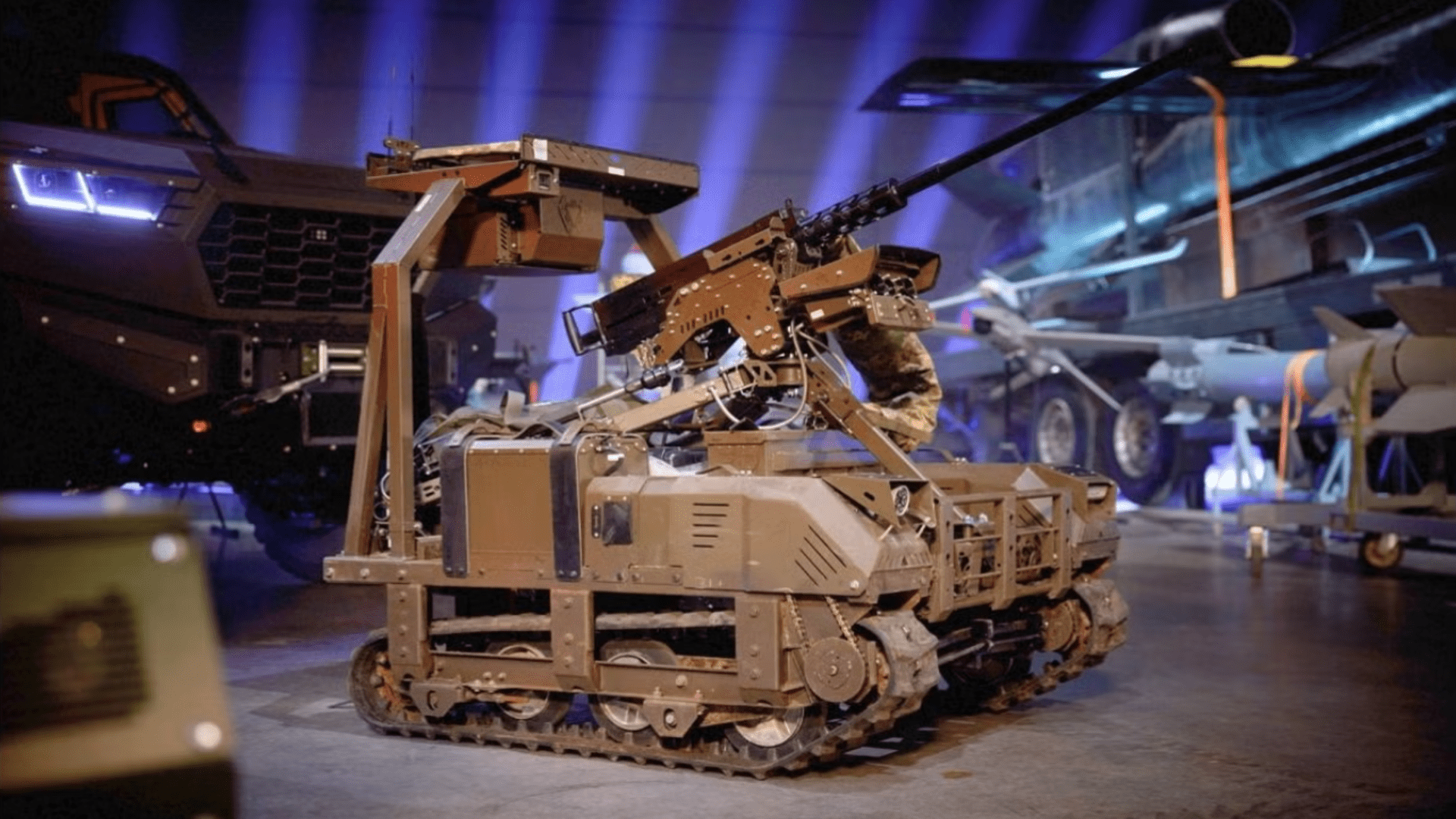
- Ukraine deploys robotic units to reduce exposure of frontline soldiers
- Ground robots now provide logistics and combat roles on the battlefield
- Commanders see machines replacing nearly a third of infantry
More than four years after the start of this bitter war, remote-controlled ground robots are fundamentally reshaping the battlefield.
Ukrainian commanders and engineers now say unmanned ground vehicles represent the next major phase of modern combat.
The future of warfare has already arrived, they argue, and it is happening on rails rather than legs.

A unit built around machines rather than men
Ukraine’s 3rd Separate Assault Brigade intends to replace about 30% of its infantry with unmanned ground vehicles (UGVs).
“The logic is simple: where the risk to humans is high, a robot must be used. Because the life of an infantryman is priceless and robots do not bleed”, Mykola Zinkevych, commander of the UGV strike unit “NC13”.
“We are working toward a model in which UGVs take on the most dangerous tasks, while infantry becomes a highly specialized force focused on what UGVs cannot accomplish.”
His unit now claims to be the world’s first strike UGV formation operating without any existing military doctrine.
Last year, in the northeastern region of Kharkiv, Ukrainian forces executed a mission using only drones and ground robots.
President Volodymyr Zelensky described how the Russian occupiers surrendered in an operation that did not involve any infantry advances.
“The occupiers surrendered and the operation took place without infantry and without losses on our side,” he said.
Logistics and firepower transformed
A modern infantryman can carry around 20 kg of equipment a distance, but logistics UGVs transport between 200 and 600 kg to frontline positions.
These machines deliver essential supplies, evacuate wounded troops, occupy territorial positions and destroy enemy shelters.
According to Ukrainian military leaders, the increasing use of UGVs has already significantly eased the burden on infantry.
“It’s easier to control an area for 24 hours when you’re sitting in a safe zone 50 km from the UGV, and you can trade with your team and another guy does it,” says Oleg Fedoryshyn, head of research and design at DevDroid.
The average UGV costs the Ukrainian military around $30,000, rising to $50,000 with a Browning machine gun mounted on it.
Commander Zinkevych estimates his unit has conducted more than 100 strike operations using UGVs in recent months
“During these missions, we destroyed enemy troops, shelters, command posts and other high-value targets,” he said.
He warns, however, that Ukraine simply cannot allow the pace of development to slow down.
About 10 to 15 percent of deployed robots are lost in combat, although many are later repaired and returned to service.
Ukrainian forces celebrate the machines as life-saving innovations, but there are fears that remote warfare will unnecessarily escalate the scope of the war.
“When we have an instrument for the application of force, operated remotely, there is a risk that the threshold for the use of force is lowered,” explained Professor Elke Schwarz, a military technology expert at Queen Mary University.
“…and civilian populations are potentially at risk of bearing the brunt of the use of force. »
However, she concludes that kyiv is developing these tactics out of sheer necessity in the face of an existential threat.
It remains an open question whether robots will save lives or simply make war more sustainable.
Via Independent

Follow TechRadar on Google News And add us as your favorite source to get our news, reviews and expert opinions in your feeds.


