
- Pilot Describes Drones Moving in Unified Jellyfish-Like Aerial Formation
- Intelligence officials remain divided on accuracy of combat observations
- Concussion in crash raises questions about reliability of pilot perception
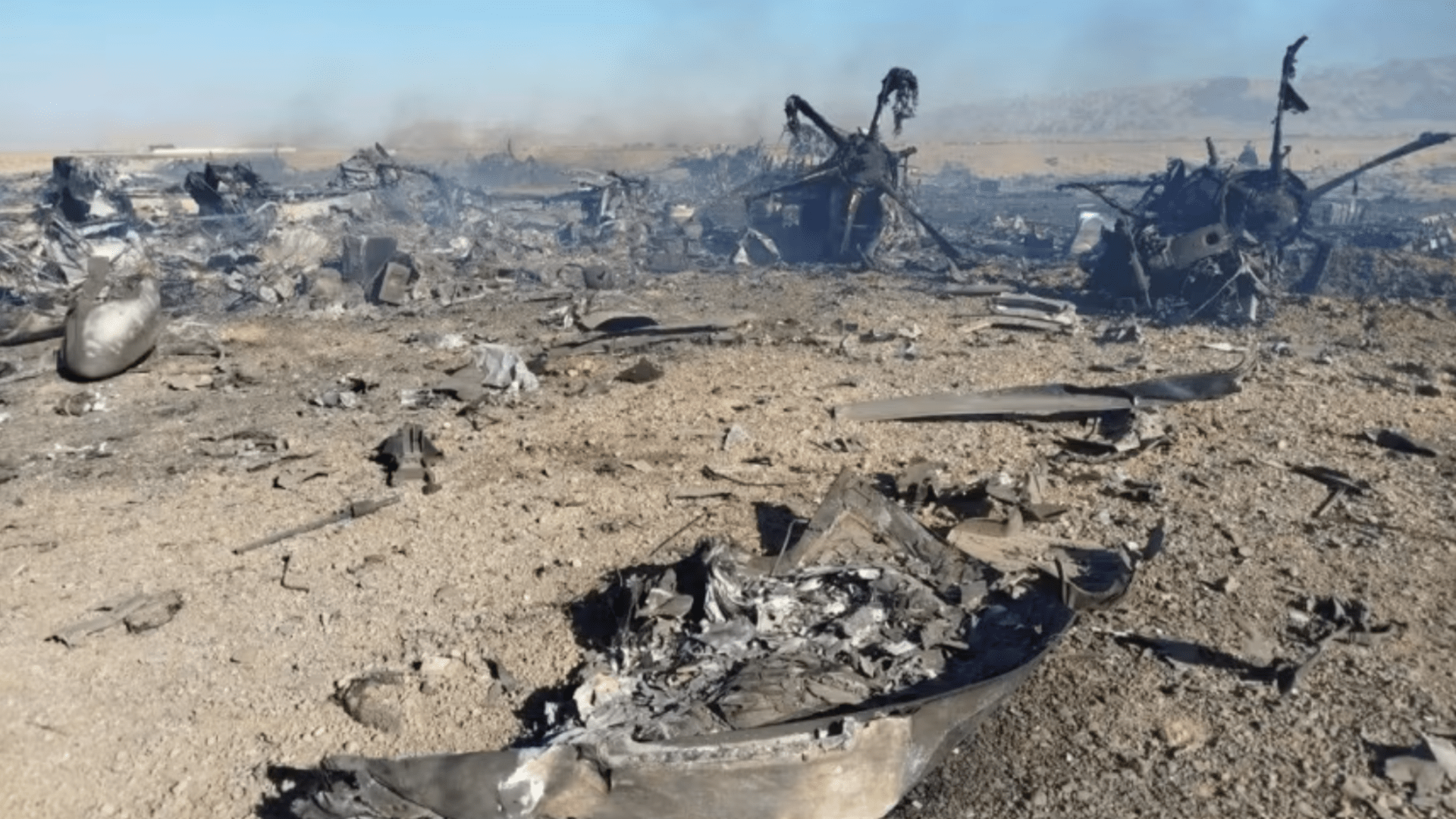
A US F-15 pilot was shot down over Iranian territory during the US-Israeli war with Iran in April 2026, and he spent several hours on the ground before special operations forces completed his rescue.
In a subsequent debriefing, the pilot reportedly described unusual aerial activity involving Iranian drones during combat operations preceding his landing.
He claimed the drones adopted a jellyfish-like formation, with multiple units moving together in coordinated patterns in the airspace above him.

Debriefing story and contested interpretation
Intelligence officials reportedly debated this account at length, with one source describing the scene internally as “real alien shit.”
Officials sharply disagreed on how to interpret the events, pointing out that the pilot suffered a concussion during the crash itself.
He had also previously been involved in a friendly fire incident earlier in the conflict, so some analysts questioned whether he had accurately perceived events or whether sensory distortion due to extreme stress had shaped his account.
Some intelligence analysts, however, have also questioned whether the reported trend may reflect an emerging form of coordinated drone control rather than a misperception.
The technical concept referenced throughout the internal analysis was described as a one-to-many mesh network, a system for controlling multiple drones simultaneously.
Mesh Network Capacity Questions
Reports suggest that Iran may have received external assistance from China and Russia to develop its drone technologies during the wider conflict period.
Iranian forces have reportedly used attack drones as asymmetric weapons during weeks of operations against US, Israeli and Gulf state forces.
Defense expert Emma Bates told CNN that countering this type of coordination would require enormous resources.
“We will spend huge dollars, like a lot of blood and treasure, to protect ourselves from something that can coordinate like that,” said Emma Bates, an expert on drone warfare and defense modernization.
She noted that drones maintaining a coordinated shape while carrying explosives and reserving capacity for later strikes would represent a truly effective approach.
Officials separately noted that mesh networks could theoretically support Internet connectivity in remote regions lacking infrastructure, although such civilian applications remain largely hypothetical for now.
The Office of the Director of National Intelligence declined to comment publicly on the pilot’s account or any ongoing internal assessment.
The question of whether the pilot witnessed actual drone coordination, misperceived events under extreme stress, or described something that intelligence agencies have not yet fully understood remains unresolved.
By CNN

Follow TechRadar on Google News And add us as your favorite source to get our news, reviews and expert opinions in your feeds.


