
As U.S. senators kicked off the long-awaited hearing aimed at advancing cryptocurrency market structure legislation, they acknowledged that there was still disagreement between Republicans and Democrats over the latest version of the Digital Asset Market Clarity Act.
Thursday’s Senate Banking Committee hearing, known as a “mark-up” hearing to evaluate dozens of amendments to revise and rework the bill’s language, represents a key moment in the process of moving this policy effort past a long-standing hurdle. Republican senators may be the only supporters at the moment, but the end goal is to come up with a bipartisan version that can pass the full Senate with sufficient Democratic support.
Committee members began their session with a nod to the difficult bipartisan talks that apparently again led to an impasse Thursday on the latest version of the legislation.
“We won’t agree on this today, but I hope we end up with a legislative product that is good now and has another bite of the apple when it comes up,” Chairman Tim Scott said. “It’s not over, and I hope no one thinks it’s over. This process has been transparent. It’s been difficult and clear, and it’s good news for the American people who are going through this process.”
To the end, lawmakers and their teams sought to resolve remaining issues, including the bill’s treatment of decentralized finance (DeFi) and a major government ethics provision aimed at keeping high-ranking officials out of the crypto industry. If the bill passes along party lines at the end of the hearing, 13 votes to 11, it nevertheless moves on to the next steps, including merging with a similar bill already passed by the Senate Agriculture Committee.
“This is by far the most difficult bill I have ever worked on,” said Sen. Cynthia Lummis, a Wyoming Republican who leads the panel’s digital assets subcommittee. She noted that this is a “case of first impression” and that she seeks to address new innovations. Lummis said lawmakers negotiating the bill will continue to work on “the remaining 1 percent of issues that did not come to fruition before today, despite our round-the-clock negotiations.”
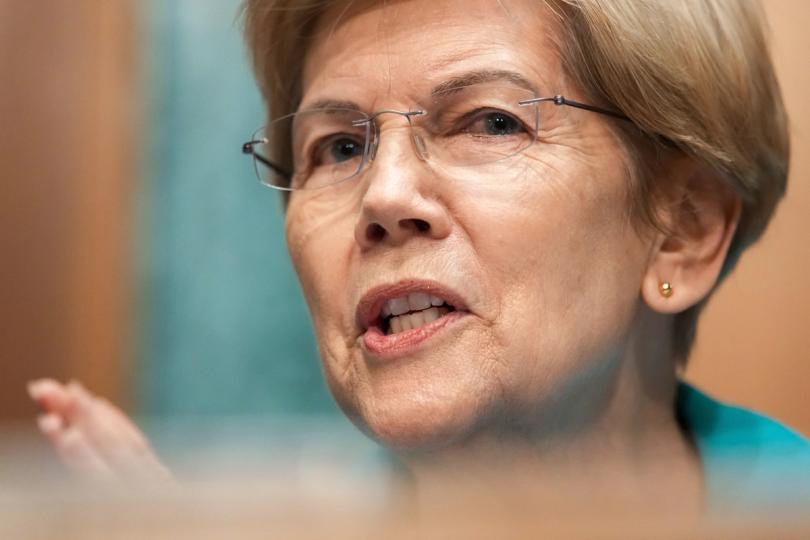
A fundamental divide emerged during the hearing, as the most influential Democrats — including ranking member Elizabeth Warren — were the legislation’s most vocal critics, while the many Democrats who actively participated in negotiations with Republicans did not participate in the opening remarks.
“This bill is just not ready for prime time,” Warren said. “First, the bill before us would blow a hole in our securities laws that have protected investors since 1929. Most Americans don’t want their retirements at risk so a few crypto billionaires can make their own profits. Second, this bill declares the open court to defraud American consumers who use crypto.”
Democrats objected to numerous amendments that were dropped on procedural grounds before the hearing began, although Scott argued the procedural dispute began with Democrats targeting a Republican amendment.
The hearing began by rejecting most of the Democratic amendments one by one along partisan lines, with lawmakers briefly laying out their arguments for each. This partisanship is reminiscent of a similar markup earlier this year on the agriculture panel, although some provisions received favorable votes Thursday, such as an amendment regarding the extension of government protections involving the practice of calculating margin between portfolios.
While Democrats continue to express resistance to the Clarity Act’s language and say it failed to answer important questions about illicit financing and consumer protections, Republicans argued that much of the bill addresses those concerns — which currently have no federal protections — for the first time.
Sen. Thom Tillis, the Republican who helped lead negotiations on a long-standing sticking point over stablecoin yields, countered that “the status quo, in all honesty, is unacceptable.”
Read more: The Clarity Act, in the flesh, revealed by the US Senate Banking Committee before the hearing


