
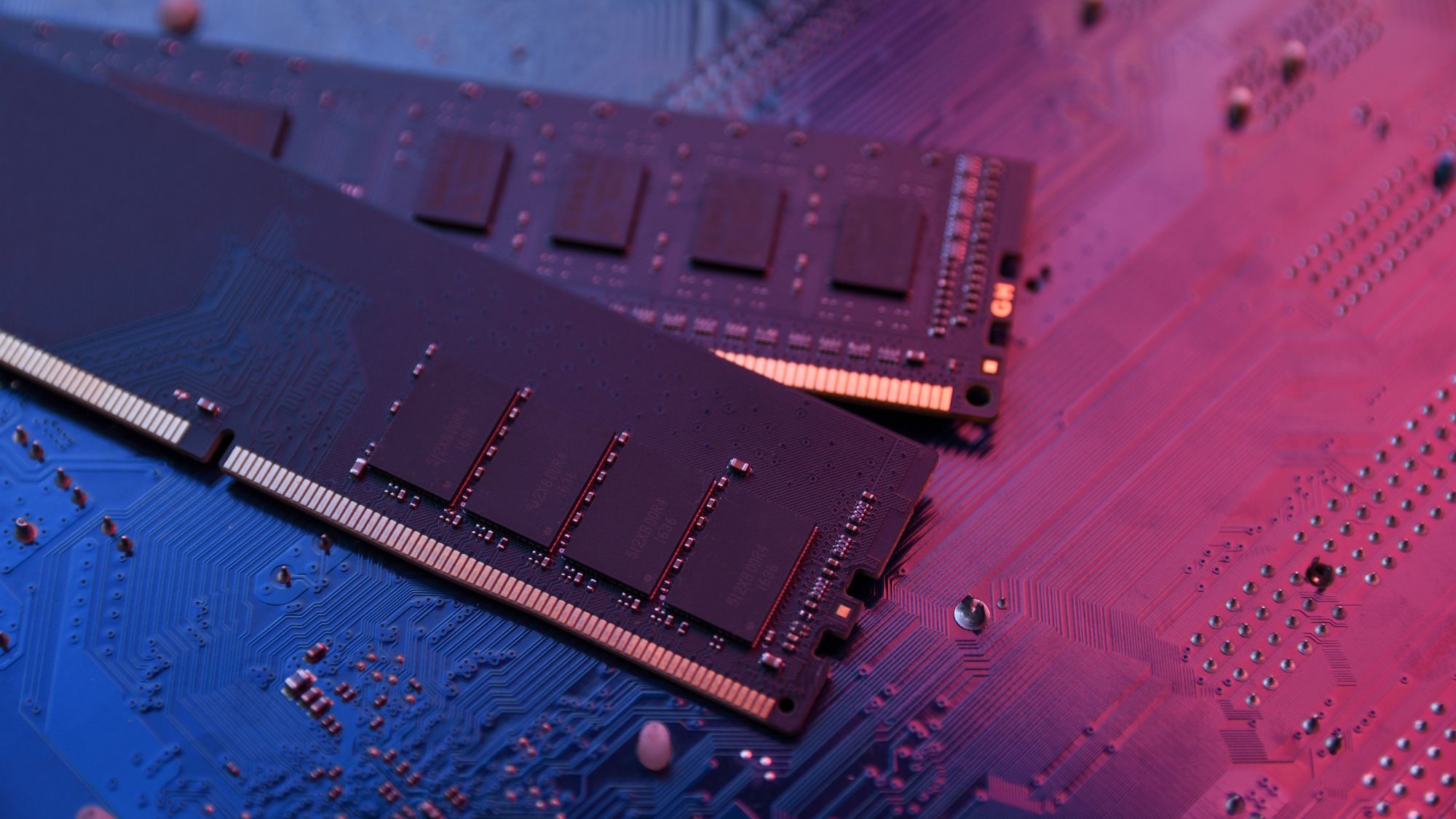
- Former head of Samsung’s semiconductor business made a more optimistic prediction about the RAM crisis
- The memory situation will improve thanks to an increase in RAM production from Chinese companies and some deflation in the AI bubble.
- Due to the combination of these factors, we are told: “It is possible that the market will change from the second half of next year or the first half of 2028.”
Could the AMR crisis be over sooner than you thought – and perhaps even in just over a year? A former Samsung executive said this could be a possibility.
Wccftech pointed to a report from Seoul Economic Daily (via PC Gamer), which cited Kye-hyun Kyung, who led Samsung’s semiconductor business until a few years ago.
In a speech at the Korea National Academy of Engineering in Seoul, Kyung observed that “Chinese companies are aggressively increasing their production capacity” to make RAM.

He then added: “It is possible that the market will change from the second half of next year or the first half of 2028, when the supply of memory increases.” (Keep in mind that this is translated from Korean).
The former Samsung boss further pointed out that it is also possible that the “return on investment of big tech” will decline relative to the capital invested in AI, which could lead to a weakening of the AI boom. This, combined with the mentioned increase in RAM production in China, could mean a faster than expected correction in the balance between supply and demand.
Or at least, faster than the predictions made so far, according to which no one had dared to predict that the AMR crisis could be over before 2028.
Analysis: a certain welcome optimism, but against the grain

Granted, Kyung only indicated that we could see the beginning of the end (so to speak) of sky-high RAM prices in the second half of 2027, but that’s still a more optimistic line of thinking than we’ve seen before. And I will take that feeling, certainly.
I’m not convinced that the AI industry, currently booming, will start to fall off anytime soon, but the observation that the amount of money spent on AI far exceeds the profits made is a good point.
Other feedback we’ve had this month on the RAM crisis has been decidedly darker. Indeed, we’ve seen warnings of one sort or another from the big three memory chip makers – including Samsung – that predict the crisis will last at least until 2028, and in one case, perhaps until 2030. And they should be in a pretty good position to know.
So for now, talking about a recovery starting in just over a year is like looking through rather rosy glasses, but I’m happy to entertain the idea – and hope that other, more positive forecasts might be around the corner.

The best laptops for every budget

Follow TechRadar on Google News And add us as your favorite source to get our news, reviews and expert opinions in your feeds.


